Great Depression Mass Unemployment — Reading Comprehension
Rate this|
1
Premium Resource
Present
Present in classroom. No work saved
Assign
Classroom with student accounts, Track progress
Quick Play
No student accounts, assign with a link
Grades
6
7
8
Standards
D2.HIS.2.3-5
D2.HIS.3.3-5
RI.4.3
RI.4.4
W.4.2
PRINT+DIGITAL RESOURCE
This learning resource is available in interactive and printable formats. The interactive worksheet can be played online and assigned to students. The Printable PDF version can be downloaded and printed for completion by hand.
This U.S. history reading passage explores the critical issue of unemployment during the Great Depression, when nearly 25 percent of Americans were left jobless. Students will analyze the causes, impacts, and responses to this economic crisis, encountering multiple perspectives from workers, government officials, and families. The passage is structured for deep comprehension and historical thinking, incorporating a primary source quote and academic vocabulary. Activities include a multiple-choice quiz, writing prompts, and a graphic organizer for comparing causes and effects. This resource is aligned with C3 Framework and Common Core standards (D2.His.2.3-5, RI.4.3), and features a Spanish translation and read aloud audio, making it accessible for diverse learners. Ideal for building understanding of economic history and critical analysis skills.
CONTENT PREVIEW
Expand content preview
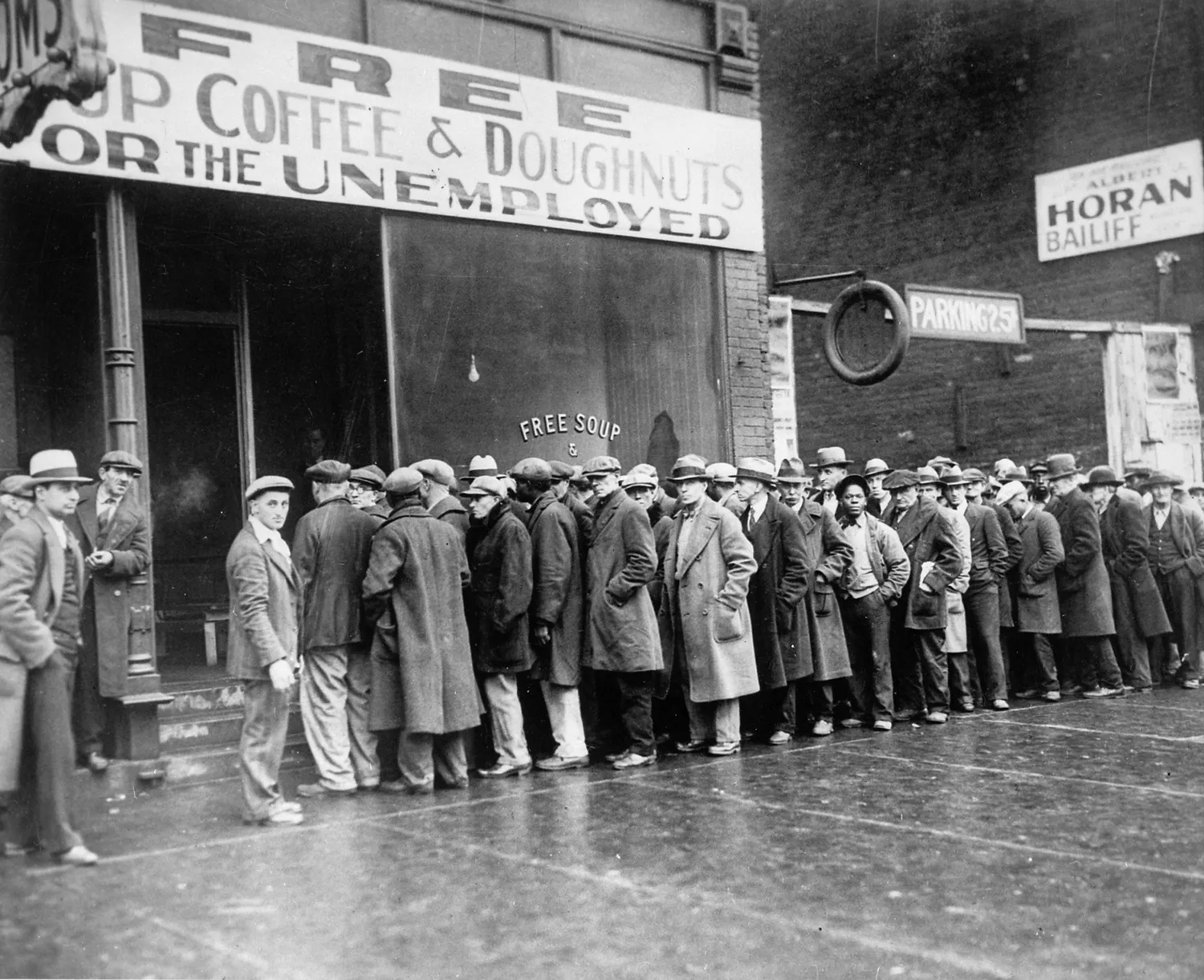
Unemployed men queued outside a depression soup kitchen opened in Chicago by Al Capone, 02-1931 - NARA - 541927.jpg / Source: Wikimedia Commons -Unknown author or not provided
The Great Depression was the worst economic crisis in United States history. From 1929 to the early 1940s, the nation’s economy collapsed. By 1933, unemployment reached nearly 25%. Millions of Americans lost their jobs as factories, farms, and businesses shut down. Many families were left jobless and struggled to afford basic necessities like food, clothing, and shelter.
The causes of this mass unemployment were complex. The stock market crash of 1929 triggered panic and led to the closure of thousands of banks, which caused people to lose their savings. As businesses lost money, they laid off workers to cut costs. Farmers were hit by falling crop prices and severe drought, which created the Dust Bowl in the Midwest. These factors combined to create a downward spiral of lost jobs and declining spending.
The effects of unemployment were severe and far-reaching. Cities saw long lines at soup kitchens, where people waited for free meals. Homelessness increased as families lost their homes. Many men traveled from town to town searching for work, while children sometimes had to leave school to help support their families. The emotional impact was also great, leading to feelings of hopelessness and despair for many Americans.
Communities responded to the crisis in different ways. Local charities and religious groups tried to provide relief, but the scale of need was overwhelming. The federal government eventually stepped in. President Franklin D. Roosevelt launched the New Deal, a series of programs aimed at creating jobs and providing support for the unemployed. Agencies like the Works Progress Administration (WPA) and Civilian Conservation Corps (CCC) hired millions of people for public works projects, such as building roads, parks, and schools.
These government programs brought some relief, but recovery was slow. By the end of the 1930s, unemployment had decreased, but it was not until World War II that the economy fully recovered and job opportunities returned for most Americans. The experience of mass unemployment during the Great Depression changed the way the government and citizens thought about economic security and the need for a social safety net.
The Great Depression’s mass unemployment teaches us about the importance of economic stability and the impact of government action during crises. It remains a powerful reminder of how quickly lives can change in the face of economic disaster, and how communities and governments can work together to respond.
Interesting Fact: During the Great Depression, some cities created their own local currencies, called "scrip," so people could trade goods and services when regular money was scarce.
What percent was U.S. unemployment in 1933?
25%10%50%5%
What event started the Great Depression?
Stock market crashWorld War IINew DealDust Bowl
Who was president during the New Deal?
Franklin D. RooseveltHerbert HooverAbraham LincolnJohn F. Kennedy
Why did businesses lay off workers?
Lost moneyToo many workersNew technologyHigh profits
How did unemployment affect families?
Lost homesGained wealthTraveled abroadHad more jobs
What was a soup kitchen?
Free meal placeJob centerSchoolFactory
The Dust Bowl was caused by drought.
TrueFalse
What does 'unemployment' mean?
No jobMany jobsOwning a businessRetiring
Perfect For:
👩🏫 Teachers
• Reading comprehension practice
• Auto-graded assessments
• Literacy skill development
👨👩👧👦 Parents
• Reading practice at home
• Comprehension improvement
• Educational reading time
🏠 Homeschoolers
• Reading curriculum support
• Independent reading practice
• Progress monitoring
Reading Features:
📖
Reading Passage
Engaging fiction or nonfiction text
❓
Comprehension Quiz
Auto-graded questions
📊
Instant Feedback
Immediate results and scoring
📄
Printable Version
Download for offline reading
🔊
Read Aloud
Voice-over with word highlighting
Reviews & Ratings
No reviews yet. Be the first to share your experience!
Related Content
Native American Tribes Across America
This engaging history reading passage introduces students to Native American tribes across America, focusing on their da...
D2.HIS.1.3-5D2.HIS.2.3-5RI.4.1RI.4.2
Teepees: Homes on the Great Plains
This engaging history reading passage introduces students to teepees, the unique homes of Native American tribes on the ...
D2.HIS.2.3-5D2.HIS.14.3-5RI.4.1RI.4.2RI.4.4
Traditional Native American Clothing
This engaging history passage explores traditional Native American clothing and how it reflected the environment, values...
D2.HIS.2.3-5D2.HIS.3.3-5RI.4.3RI.4.4
The Iroquois Confederacy: A System of Peace
This engaging U.S. History reading passage introduces students to the Iroquois Confederacy, a powerful alliance of Nativ...
D2.HIS.2.3-5D2.HIS.3.3-5RI.4.3RI.4.4
The Cherokee Nation: History and Culture
This reading passage explores the rich history and culture of the Cherokee Nation, one of the largest Native American tr...
D2.HIS.2.3-5D2.HIS.14.3-5RI.4.3RI.4.4RI.4.10
The Sioux: Warriors and Tribal Leaders
This history reading passage explores the Sioux Nation, focusing on their roles as warriors and tribal leaders. Students...
D2.HIS.1.3-5D2.HIS.2.3-5RI.4.1RI.4.3
Native American Respect for Nature
This engaging history reading passage explores Native American respect for nature, emphasizing the close relationship be...
D2.HIS.2.3-5D2.HIS.3.3-5RI.4.3RI.4.4
Jamestown: The First Permanent English Colony
This engaging history passage explores the founding of Jamestown, the first permanent English colony in America. Aligned...
D2.HIS.1.3-5D2.HIS.2.3-5RI.4.3RI.4.4
Pocahontas and the Powhatan People
This engaging reading passage explores the life of Pocahontas and the Powhatan people and their important role in early ...
D2.HIS.1.3-5D2.HIS.2.3-5RI.4.1RI.4.3
Colonial Children: School and Chores
This reading passage explores the daily lives of colonial children, focusing on their experiences at school and their ma...
D2.HIS.2.3-5D2.HIS.3.3-5RI.4.1RI.4.2RI.4.4
Colonial Clothing and Homemade Goods
This engaging U.S. history passage explores the daily life of early American colonists with a focus on colonial clothing...
D2.HIS.2.3-5RI.4.3RI.4.4
Colonial Jobs: Blacksmiths, Bakers, and Craftsmen
This engaging history reading passage explores the vital roles of blacksmiths, bakers, and craftsmen in colonial America...
D2.HIS.2.3-5D2.HIS.3.3-5RI.4.3RI.4.4
Colonial Towns and Village Life
This engaging history reading passage explores the daily life, work, and unity found in colonial towns and villages. Ali...
D2.HIS.1.3-5D2.HIS.2.3-5RI.4.3RI.4.4
Colonial Trade with England and Africa
This history reading passage explores colonial trade between the American colonies, England, and Africa, focusing on the...
D2.HIS.2.3-5D2.HIS.14.3-5RI.4.3RI.4.4
Benjamin Franklin: Printer, Inventor, and Leader
This history reading passage explores the life and achievements of Benjamin Franklin, one of America's most important ea...
D2.HIS.2.3-5D2.HIS.3.3-5RI.4.1RI.4.3
George Washington Leads the Army
This engaging history reading passage explores how George Washington bravely led the Continental Army during the America...
D2.HIS.1.3-5D2.HIS.2.3-5RI.4.3RI.4.4
Women and Children During the Revolutionary War
This reading passage explores the important roles women and children played during the Revolutionary War. Students will ...
D2.HIS.2.3-5RI.4.3RI.5.3
African Americans Fight for Freedom
This educational passage explores the brave and inspiring story of how African Americans fought for freedom in the Unite...
D2.HIS.2.3-5D2.HIS.3.3-5RI.4.3RI.4.4
The Battle of Yorktown Ends War
This engaging U.S. history reading passage explores the Battle of Yorktown, a key event that ended the American Revoluti...
D2.HIS.1.3-5D2.HIS.2.3-5RI.4.1RI.4.3
Loyalists vs. Patriots: Divided Families
This engaging U.S. history reading passage explores the division between Loyalists and Patriots during the American Revo...