Handmade to Machine-Made: The Rise of Industry — Reading Comprehension
Rate this|
1
Premium Resource
Present
Present in classroom. No work saved
Assign
Classroom with student accounts, Track progress
Quick Play
No student accounts, assign with a link
Grades
3
4
5
Standards
D2.HIS.2.3-5
D2.HIS.3.3-5
RI.4.3
RI.4.4
W.4.2
PRINT+DIGITAL RESOURCE
This learning resource is available in interactive and printable formats. The interactive worksheet can be played online and assigned to students. The Printable PDF version can be downloaded and printed for completion by hand.
This engaging passage explores the transformation of the United States from a land of handmade goods to a nation powered by machines during the Industrial Revolution and Progressive Era. Students will learn about key inventions, the rise of factories, and the important changes that affected everyday life. The passage highlights the bravery and problem-solving of inventors and workers, explaining cause and effect in the shift from handwork to machine work. Aligned with C3 Framework and Common Core standards, the reading supports foundational literacy skills and historical understanding. The activity set includes a glossary, timeline, quiz, writing prompts, and graphic organizers, making it ideal for classroom use. A Spanish translation and read aloud audio are provided for accessibility. Students will be inspired by the stories of unity and progress in U.S. history, gaining insight into how industry shaped the nation. Keywords include Industrial Revolution, factories, inventions, and U.S. History.
CONTENT PREVIEW
Expand content preview
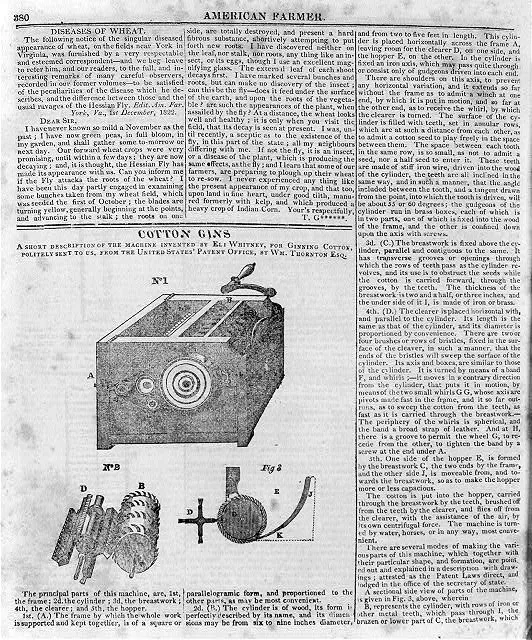
Cotton Gins...the machine invented by Eli Whitney, for ginning cotton, politely sent to us from the U.S. Patent Office. Source: Library of Congress
The way products are made in the United States has changed greatly over time. Before the late 1800s, most goods such as shoes and clothes were made by skilled people using their hands. These workers were called craftsmen. They took pride in their work. Each item was special, and making it took a long time.
In the late 1800s, new technology began to change everything. Machines were invented to help people work faster and easier. Factories were built in cities. In these factories, many workers used machines to make products. This new way of making goods is called mass production.
Mass production meant that many of the same items could be made quickly. For example, a shoe factory could make hundreds of shoes in one day. Before, a single craftsman might only make a few pairs each week. With machines, products became cheaper and easier for people to buy.
This change affected many people's lives. Some craftsmen lost their jobs because machines could do the work faster. But factories also created many new jobs. People moved from farms to cities to work in factories. Cities grew very quickly during this time.
There were good things and bad things about this change. More people could afford to buy things they needed. But factory work was hard and sometimes dangerous. Workers had to do the same task over and over. Many people, including children, worked long hours for little pay. Over time, people worked together to improve factory conditions and pass new laws to protect workers.
The change from handmade to machine-made products is a big part of American history. It shows how new ideas and inventions can change the way people live and work. Today, most of the things we use every day—like our shoes and clothes—are made by machines in factories all over the world.
Interesting Fact: In 1913, Henry Ford used moving assembly lines to build cars even faster, changing factories everywhere.
Who were craftsmen?
Skilled workers who made goods by handPeople who sold shoesMachine operatorsChildren in factories
What is mass production?
Making one special itemMaking many goods quicklySelling goods in marketsRepairing old machines
Who used moving assembly lines in 1913?
Henry FordThomas EdisonA craftsmanA shoemaker
Why did people move to cities?
To visit familyTo work in factoriesTo become farmersFor better weather
What was one bad thing about factory work?
It was easyIt was always safeIt was sometimes dangerousIt paid a lot
Why did products become cheaper?
Machines made many products fastCraftsmen asked for less moneyStores closedPeople made goods at home
Most goods are handmade today. True or false?
TrueFalse
What does 'assembly line' mean?
A line of storesA system to make products fasterA group of craftsmenA way to sell shoes
Perfect For:
👩🏫 Teachers
• Reading comprehension practice
• Auto-graded assessments
• Literacy skill development
👨👩👧👦 Parents
• Reading practice at home
• Comprehension improvement
• Educational reading time
🏠 Homeschoolers
• Reading curriculum support
• Independent reading practice
• Progress monitoring
Reading Features:
📖
Reading Passage
Engaging fiction or nonfiction text
❓
Comprehension Quiz
Auto-graded questions
📊
Instant Feedback
Immediate results and scoring
📄
Printable Version
Download for offline reading
🔊
Read Aloud
Voice-over with word highlighting
Reviews & Ratings
No reviews yet. Be the first to share your experience!
Related Content
Native American Tribes Across America
This engaging history reading passage introduces students to Native American tribes across America, focusing on their da...
D2.HIS.1.3-5D2.HIS.2.3-5RI.4.1RI.4.2
Teepees: Homes on the Great Plains
This engaging history reading passage introduces students to teepees, the unique homes of Native American tribes on the ...
D2.HIS.2.3-5D2.HIS.14.3-5RI.4.1RI.4.2RI.4.4
Traditional Native American Clothing
This engaging history passage explores traditional Native American clothing and how it reflected the environment, values...
D2.HIS.2.3-5D2.HIS.3.3-5RI.4.3RI.4.4
The Iroquois Confederacy: A System of Peace
This engaging U.S. History reading passage introduces students to the Iroquois Confederacy, a powerful alliance of Nativ...
D2.HIS.2.3-5D2.HIS.3.3-5RI.4.3RI.4.4
The Cherokee Nation: History and Culture
This reading passage explores the rich history and culture of the Cherokee Nation, one of the largest Native American tr...
D2.HIS.2.3-5D2.HIS.14.3-5RI.4.3RI.4.4RI.4.10
The Sioux: Warriors and Tribal Leaders
This history reading passage explores the Sioux Nation, focusing on their roles as warriors and tribal leaders. Students...
D2.HIS.1.3-5D2.HIS.2.3-5RI.4.1RI.4.3
Native American Respect for Nature
This engaging history reading passage explores Native American respect for nature, emphasizing the close relationship be...
D2.HIS.2.3-5D2.HIS.3.3-5RI.4.3RI.4.4
Jamestown: The First Permanent English Colony
This engaging history passage explores the founding of Jamestown, the first permanent English colony in America. Aligned...
D2.HIS.1.3-5D2.HIS.2.3-5RI.4.3RI.4.4
Pocahontas and the Powhatan People
This engaging reading passage explores the life of Pocahontas and the Powhatan people and their important role in early ...
D2.HIS.1.3-5D2.HIS.2.3-5RI.4.1RI.4.3
Colonial Children: School and Chores
This reading passage explores the daily lives of colonial children, focusing on their experiences at school and their ma...
D2.HIS.2.3-5D2.HIS.3.3-5RI.4.1RI.4.2RI.4.4
Colonial Clothing and Homemade Goods
This engaging U.S. history passage explores the daily life of early American colonists with a focus on colonial clothing...
D2.HIS.2.3-5RI.4.3RI.4.4
Colonial Jobs: Blacksmiths, Bakers, and Craftsmen
This engaging history reading passage explores the vital roles of blacksmiths, bakers, and craftsmen in colonial America...
D2.HIS.2.3-5D2.HIS.3.3-5RI.4.3RI.4.4
Colonial Towns and Village Life
This engaging history reading passage explores the daily life, work, and unity found in colonial towns and villages. Ali...
D2.HIS.1.3-5D2.HIS.2.3-5RI.4.3RI.4.4
Colonial Trade with England and Africa
This history reading passage explores colonial trade between the American colonies, England, and Africa, focusing on the...
D2.HIS.2.3-5D2.HIS.14.3-5RI.4.3RI.4.4
Benjamin Franklin: Printer, Inventor, and Leader
This history reading passage explores the life and achievements of Benjamin Franklin, one of America's most important ea...
D2.HIS.2.3-5D2.HIS.3.3-5RI.4.1RI.4.3
George Washington Leads the Army
This engaging history reading passage explores how George Washington bravely led the Continental Army during the America...
D2.HIS.1.3-5D2.HIS.2.3-5RI.4.3RI.4.4
Women and Children During the Revolutionary War
This reading passage explores the important roles women and children played during the Revolutionary War. Students will ...
D2.HIS.2.3-5RI.4.3RI.5.3
African Americans Fight for Freedom
This educational passage explores the brave and inspiring story of how African Americans fought for freedom in the Unite...
D2.HIS.2.3-5D2.HIS.3.3-5RI.4.3RI.4.4
The Battle of Yorktown Ends War
This engaging U.S. history reading passage explores the Battle of Yorktown, a key event that ended the American Revoluti...
D2.HIS.1.3-5D2.HIS.2.3-5RI.4.1RI.4.3
Loyalists vs. Patriots: Divided Families
This engaging U.S. history reading passage explores the division between Loyalists and Patriots during the American Revo...