This learning resource is available in interactive and printable formats. The interactive worksheet can be played online and assigned to students. The Printable PDF version can be downloaded and printed for completion by hand.
This history reading passage explores the Hartford Convention of 1814, focusing on the Federalist Party’s opposition to the War of 1812. Students learn about the causes, motivations, and consequences of the event, analyzing multiple perspectives from New England Federalists and other Americans. The passage uses disciplinary vocabulary, integrates a primary source quote, and models historical reasoning. Activities include a reading quiz, writing prompts, timeline, and vocabulary support. A Spanish translation and read aloud audio are provided for accessibility. The passage aligns with history standards D2.His.2.3-5, D2.His.3.3-5 and literacy standards RI.4.3, RI.4.4, W.4.2, ensuring students practice close reading and analytical skills while mastering content about early U.S. political debates. The included timeline, graphic organizer, and glossary help students understand the sequence and complexity of the Hartford Convention and its impact on American history.
CONTENT PREVIEW
Expand content preview
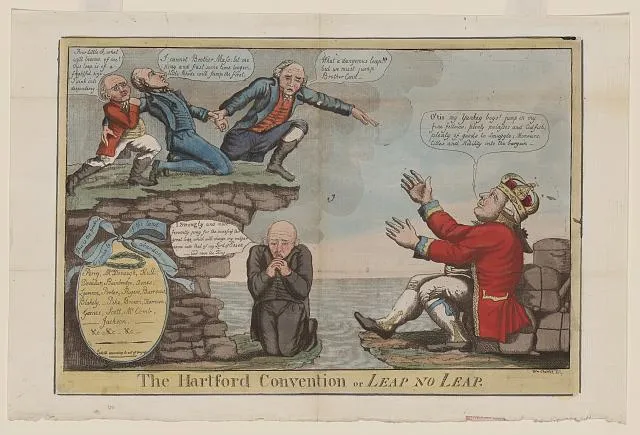
The Hartford Convention or Leap no leap Source: Library of Congress - Charles, William, 1776-1820
The Hartford Convention of 1814 was a major event in early United States history. In December 1814, a group of Federalist delegates from New England states gathered in Hartford, Connecticut. Their main purpose was to discuss their opposition to the War of 1812, which they believed was harming their region’s economy and interests. The delegates felt the federal government was failing to protect New England and that the war was unnecessary and costly. The convention represented a fundamental conflict between regional interests and national policy.
At the time, the War of 1812 was unpopular in New England for several reasons. Many New Englanders depended on trade with Britain, which the war severely disrupted. The British naval blockade hurt the region’s merchants and shipowners. Additionally, the federal government’s embargoes and military demands angered local leaders. These problems led to a growing sense of frustration and alienation among New Englanders, especially Federalists, who disagreed with President James Madison’s decisions.
The delegates at the convention debated several possible responses. Some even discussed the controversial idea of secession—the act of formally leaving the United States. However, most delegates decided to seek peaceful changes instead. They drafted a series of amendments to the Constitution. These proposals aimed to limit the power of the federal government and protect the rights of the states. Some of the suggested changes included requiring a two-thirds vote in Congress for declaring war, admitting new states, or imposing trade restrictions. The delegates hoped these amendments would prevent future conflicts and protect their region.
The timing of the Hartford Convention proved unfortunate for the Federalists. As delegates traveled to Washington, D.C. to present their demands, news arrived that the Treaty of Ghent had ended the War of 1812. At the same time, Americans celebrated the victory at the Battle of New Orleans. The Federalists’ actions seemed unpatriotic, and many accused them of disloyalty. The convention’s proposals were ignored by Congress, and the Federalist Party’s reputation suffered seriously across the nation.
In the aftermath, the Federalist Party quickly declined as a major political force. The Hartford Convention became a symbol of regional division and political miscalculation. It demonstrated the dangers of placing local interests above national unity. The events also showed the difficulty of balancing states’ rights with the needs of a strong federal government. The story of the Hartford Convention remains important for understanding the challenges the United States faced in its early years.
Interesting Fact: After the Hartford Convention, the word “Hartford” became a negative label used to accuse others of disloyalty to the United States.
Where was the Hartford Convention held?
Hartford, ConnecticutBoston, MassachusettsPhiladelphia, PennsylvaniaNew York City, New York
What year did the Hartford Convention occur?
1814177618011820
Who were the main delegates at the convention?
Federalists from New EnglandDemocratic-RepublicansBritish diplomatsSouthern planters
Why was the War of 1812 unpopular in New England?
It hurt tradeIt improved tradeIt increased taxesIt brought peace
What was one proposed amendment at the convention?
Two-thirds vote for warFree trade with all nationsA new capital cityEnding all taxes
How did the timing of the convention affect the Federalists?
It hurt their reputationIt helped them winIt created new statesIt stopped the war
The Hartford Convention led to the Federalist Party’s decline.
TrueFalse
What does 'secession' mean?
Leaving a nationWinning a warTrading goodsChanging a law
Perfect For:
👩🏫 Teachers
• Reading comprehension practice
• Auto-graded assessments
• Literacy skill development
👨👩👧👦 Parents
• Reading practice at home
• Comprehension improvement
• Educational reading time
🏠 Homeschoolers
• Reading curriculum support
• Independent reading practice
• Progress monitoring
Reading Features:
📖
Reading Passage
Engaging fiction or nonfiction text
❓
Comprehension Quiz
Auto-graded questions
📊
Instant Feedback
Immediate results and scoring
📄
Printable Version
Download for offline reading
🔊
Read Aloud
Voice-over with word highlighting
Reviews & Ratings
No reviews yet. Be the first to share your experience!
Related Content
Native American Tribes Across America
This engaging history reading passage introduces students to Native American tribes across America, focusing on their da...
D2.HIS.1.3-5D2.HIS.2.3-5RI.4.1RI.4.2
Teepees: Homes on the Great Plains
This engaging history reading passage introduces students to teepees, the unique homes of Native American tribes on the ...
D2.HIS.2.3-5D2.HIS.14.3-5RI.4.1RI.4.2RI.4.4
Traditional Native American Clothing
This engaging history passage explores traditional Native American clothing and how it reflected the environment, values...
D2.HIS.2.3-5D2.HIS.3.3-5RI.4.3RI.4.4
The Iroquois Confederacy: A System of Peace
This engaging U.S. History reading passage introduces students to the Iroquois Confederacy, a powerful alliance of Nativ...
D2.HIS.2.3-5D2.HIS.3.3-5RI.4.3RI.4.4
The Cherokee Nation: History and Culture
This reading passage explores the rich history and culture of the Cherokee Nation, one of the largest Native American tr...
D2.HIS.2.3-5D2.HIS.14.3-5RI.4.3RI.4.4RI.4.10
The Sioux: Warriors and Tribal Leaders
This history reading passage explores the Sioux Nation, focusing on their roles as warriors and tribal leaders. Students...
D2.HIS.1.3-5D2.HIS.2.3-5RI.4.1RI.4.3
Native American Respect for Nature
This engaging history reading passage explores Native American respect for nature, emphasizing the close relationship be...
D2.HIS.2.3-5D2.HIS.3.3-5RI.4.3RI.4.4
Jamestown: The First Permanent English Colony
This engaging history passage explores the founding of Jamestown, the first permanent English colony in America. Aligned...
D2.HIS.1.3-5D2.HIS.2.3-5RI.4.3RI.4.4
Pocahontas and the Powhatan People
This engaging reading passage explores the life of Pocahontas and the Powhatan people and their important role in early ...
D2.HIS.1.3-5D2.HIS.2.3-5RI.4.1RI.4.3
Colonial Children: School and Chores
This reading passage explores the daily lives of colonial children, focusing on their experiences at school and their ma...
D2.HIS.2.3-5D2.HIS.3.3-5RI.4.1RI.4.2RI.4.4
Colonial Clothing and Homemade Goods
This engaging U.S. history passage explores the daily life of early American colonists with a focus on colonial clothing...
D2.HIS.2.3-5RI.4.3RI.4.4
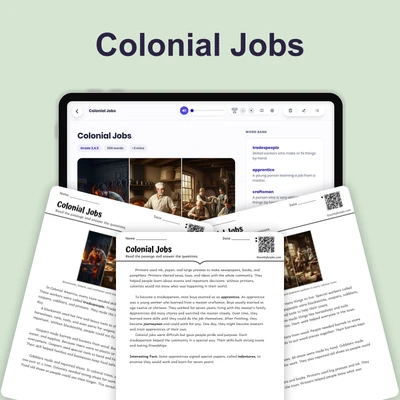
Colonial Jobs: Blacksmiths, Bakers, and Craftsmen
This engaging history reading passage explores the vital roles of blacksmiths, bakers, and craftsmen in colonial America...
D2.HIS.2.3-5D2.HIS.3.3-5RI.4.3RI.4.4
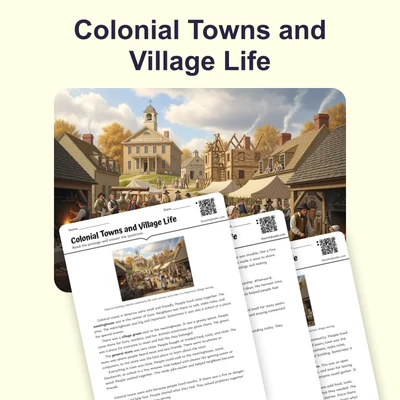
Colonial Towns and Village Life
This engaging history reading passage explores the daily life, work, and unity found in colonial towns and villages. Ali...
D2.HIS.1.3-5D2.HIS.2.3-5RI.4.3RI.4.4
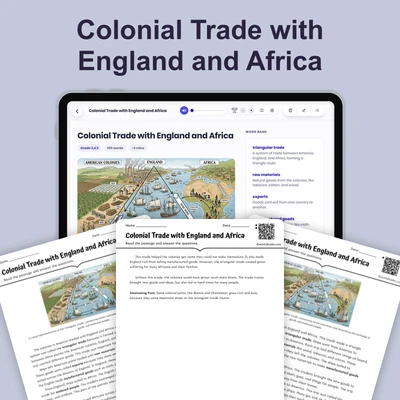
Colonial Trade with England and Africa
This history reading passage explores colonial trade between the American colonies, England, and Africa, focusing on the...
D2.HIS.2.3-5D2.HIS.14.3-5RI.4.3RI.4.4
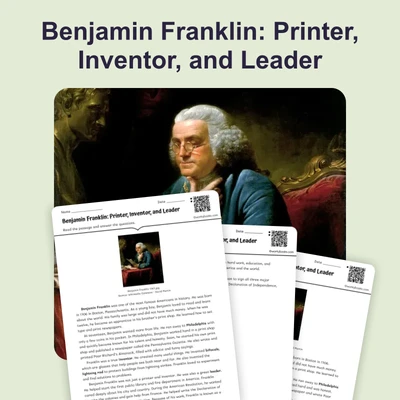
Benjamin Franklin: Printer, Inventor, and Leader
This history reading passage explores the life and achievements of Benjamin Franklin, one of America's most important ea...
D2.HIS.2.3-5D2.HIS.3.3-5RI.4.1RI.4.3
George Washington Leads the Army
This engaging history reading passage explores how George Washington bravely led the Continental Army during the America...
D2.HIS.1.3-5D2.HIS.2.3-5RI.4.3RI.4.4
Women and Children During the Revolutionary War
This reading passage explores the important roles women and children played during the Revolutionary War. Students will ...
D2.HIS.2.3-5RI.4.3RI.5.3
African Americans Fight for Freedom
This educational passage explores the brave and inspiring story of how African Americans fought for freedom in the Unite...
D2.HIS.2.3-5D2.HIS.3.3-5RI.4.3RI.4.4
The Battle of Yorktown Ends War
This engaging U.S. history reading passage explores the Battle of Yorktown, a key event that ended the American Revoluti...
D2.HIS.1.3-5D2.HIS.2.3-5RI.4.1RI.4.3
Loyalists vs. Patriots: Divided Families
This engaging U.S. history reading passage explores the division between Loyalists and Patriots during the American Revo...