Henry Ford and the Model T — Reading Comprehension
Rate this|
14
Present
Present in classroom. No work saved
Assign
Classroom with student accounts, Track progress
Quick Play
No student accounts, assign with a link
Grades
3
4
5
Standards
D2.HIS.1-4.3-5
RI.4.3
RI.4.4
RI.5.3
RI.5.4
PRINT+DIGITAL RESOURCE
This learning resource is available in interactive and printable formats. The interactive worksheet can be played online and assigned to students. The Printable PDF version can be downloaded and printed for completion by hand.
This engaging history reading passage explores the life of Henry Ford and the invention of the Model T. Students learn how Ford's ideas changed the way cars were made and made automobiles affordable for many American families. The passage follows a clear, chronological sequence, highlighting Ford's use of the assembly line and its impact on American society. Grade-appropriate vocabulary is integrated and explained in a glossary to support literacy development. The passage aligns with C3 Framework standards and Common Core ELA standards, making it ideal for classroom use. Activities include a multiple-choice quiz and writing prompts that encourage critical thinking about cause and effect, historical significance, and connections to the present. A timeline provides students with a visual sequence of key events. Read aloud audio and Spanish translation are included for accessibility and language support.
CONTENT PREVIEW
Expand content preview
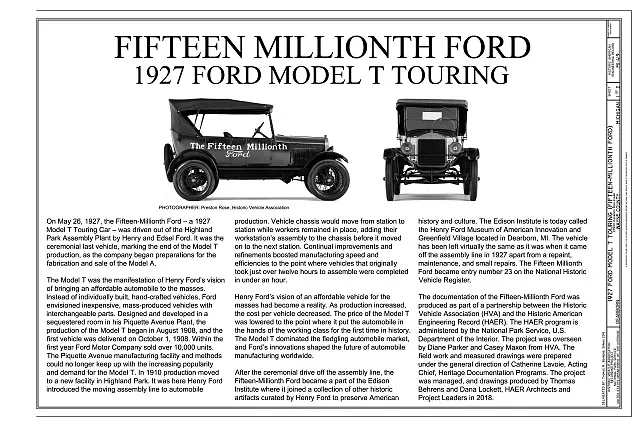
1927 Ford Model T Touring, 20900 Oakwood Boulevard, Dearborn, Wayne County, MI Source: Library of Congress - Historic American Engineering Record
The automobile was once a luxury only wealthy people could own. In 1908, Henry Ford changed this with the Model T. Ford’s goal was to make a car that ordinary families could afford. He wanted to help more people travel quickly and easily across the country.
To achieve this, Ford introduced the assembly line in his factory. This was a new way of making things. Instead of each worker building a whole car, each worker did one small job as the car moved down the line. This process made building cars much faster and cheaper.
The Model T quickly became popular. By using the assembly line, Ford lowered the price of each car. The first Model T cost about $850, but soon the price dropped to less than $300. More Americans could now buy cars. This was the first time in history that many families could travel far from home, visit new places, or get to work faster.
The Model T was strong and easy to fix. Ford built it to last on rough, muddy roads. It could handle country and city travel. People used the Model T for work, school, and fun. Many rural families were able to get to town and markets much more easily.
The success of the Model T did more than make cars popular. It changed how things were made in America. Other factories copied Ford’s assembly line to build goods more quickly and cheaply. Factories could now produce everything from radios to toys in less time. This helped the United States grow as a modern, industrial nation.
By 1927, over 15 million Model Ts had been built. They helped shape a new way of life. People could live farther from their jobs and travel for fun. Roads and towns grew. The Model T showed how innovation and efficiency could solve big problems and improve lives.
Interesting Fact: The Model T came in only one color for many years—black—because it dried fastest on the assembly line.
Who created the Model T?
Henry FordThomas EdisonAlexander BellWright Brothers
What year was the Model T first made?
1908192718901915
How many Model Ts were built by 1927?
Over 15 million1,000100,000500,000
Why did Ford use the assembly line?
To make cars fasterTo make cars heavierTo make cars slowerTo make trains
What was an effect of affordable cars?
More families could travelCars broke easilyFewer people droveTrains became popular
How did the Model T change factories?
Other factories used assembly linesFactories stopped making thingsFactories became smallerWorkers built cars alone
The Model T was always blue. True or false?
TrueFalse
What does 'innovation' mean?
A new ideaA large factoryA type of carA group of workers
Perfect For:
👩🏫 Teachers
• Reading comprehension practice
• Auto-graded assessments
• Literacy skill development
👨👩👧👦 Parents
• Reading practice at home
• Comprehension improvement
• Educational reading time
🏠 Homeschoolers
• Reading curriculum support
• Independent reading practice
• Progress monitoring
Reading Features:
📖
Reading Passage
Engaging fiction or nonfiction text
❓
Comprehension Quiz
Auto-graded questions
📊
Instant Feedback
Immediate results and scoring
📄
Printable Version
Download for offline reading
🔊
Read Aloud
Voice-over with word highlighting
Reviews & Ratings
No reviews yet. Be the first to share your experience!
Related Content
Trade and Trading Routes Between Tribes
This engaging history reading passage explores the important role of trade and trading routes between Native American tr...
D2.HIS.1-4.3-5RI.4.1RI.4.3RI.4.4
The 13 Original Colonies: An Overview
This engaging U.S. history reading passage introduces students to the 13 original colonies. It presents the story of how...
D2.HIS.1-4.3-5RI.4.3RI.4.4RI.4.10
The French and Indian War
This educational history reading passage explores the French and Indian War, a major conflict in North America before th...
D2.HIS.1-4.3-5RI.4.1RI.4.3RI.4.4
Unfair Taxes and the Stamp Act
This engaging U.S. history reading passage explores the story of the Stamp Act and unfair taxes in colonial America. Ali...
D2.HIS.1-4.3-5RI.4.1RI.4.3
Paul Revere's Midnight Ride
This U.S. History reading passage explores the famous Midnight Ride of Paul Revere, a key event in the American Revoluti...
D2.HIS.1-4.3-5RI.4.3RI.4.4RI.4.10
The Declaration of Independence and Thomas Jefferson
This engaging passage teaches students about the Declaration of Independence and Thomas Jefferson, one of America's Foun...
D2.HIS.1-4.3-5RI.4.1RI.4.2RI.4.3
Soldiers at Valley Forge in Winter
Explore the inspiring story of the Continental Army at Valley Forge during the harsh winter of 1777-1778. This history r...
D2.HIS.1-4.3-5RI.4.3RI.4.4RI.5.3
The Treaty of Paris 1783
This passage introduces students to the Treaty of Paris 1783, the important agreement that officially ended the American...
D2.HIS.1-4.3-5RI.4.3RI.4.4RI.4.10
The Star-Spangled Banner and War
This reading passage explores the inspiring story of 'The Star-Spangled Banner' and its origins during the War of 1812. ...
D2.HIS.1-4.3-5RI.4.1RI.4.3RI.4.4
Thomas Jefferson and the Louisiana Purchase
This engaging U.S. history reading passage teaches students about Thomas Jefferson and the Louisiana Purchase, one of th...
D2.HIS.1-4.3-5RI.4.3RI.5.3
James Madison and the War of 1812
This engaging U.S. history reading passage focuses on James Madison and the War of 1812. Students learn about key events...
D2.HIS.1-4.3-5RI.4.1RI.4.3RI.4.4
The First Political Parties Form
This engaging passage explores the formation of America's first political parties, highlighting the Federalists and Demo...
D2.HIS.1-4.3-5RI.4.3RI.4.4
James Monroe and the Monroe Doctrine
This engaging U.S. history reading passage introduces students to President James Monroe and the Monroe Doctrine, a key ...
D2.HIS.1-4.3-5RI.4.1RI.4.2RI.4.3
Americans Move West: The Oregon Trail
This engaging history passage explores the Oregon Trail and the westward movement of Americans in the 1800s. Students wi...
D2.HIS.1-4.3-5RI.4.3RI.4.4RI.5.3
Cowboys and Cattle Drives
This engaging U.S. History reading passage introduces students to the world of cowboys and cattle drives, a key part of ...
D2.HIS.1-4.3-5RI.4.3RI.4.4RI.5.3
Life in a Frontier Town
This passage explores the daily life and challenges faced by people living in a frontier town in the early United States...
D2.HIS.1-4.3-5RI.4.3RI.4.4W.4.2
Homestead Act: Free Land for Settlers
This engaging history reading passage explores the Homestead Act and its impact on American settlers moving west. Studen...
D2.HIS.1-4.3-5RI.4.3RI.4.4
Dangers on the Oregon Trail
This reading passage explores the many dangers faced by pioneers on the Oregon Trail, one of the most significant journe...
D2.HIS.1-4.3-5RI.4.1RI.4.3RI.4.4
Native Americans Lose Their Lands: The Trail of Tears
This reading passage explores the story of the Trail of Tears, focusing on the experiences of Native Americans as they l...
D2.HIS.1-4.3-5RI.4.3RI.4.4RI.4.7
Sherman's March to the Sea
This U.S. history reading passage explores Sherman's March to the Sea, a turning point during the Civil War. Students wi...