How Ancient Cultures Mapped the Sky
Interactive passage with audio narration, comprehension questions, and printable PDF.
By completing this purchase you agree to our Terms of Use and Privacy Policy. Your subscription renews automatically until you cancel. You can cancel anytime from your account settings. All sales are final and non-refundable. Digital content is available for download in your account immediately upon purchase.
What's included
How Ancient Cultures Mapped the Sky preview and details
About this printable How Ancient Cultures Mapped the Sky science reading passage, NGSS-aligned (Grades 5-8)
Sample passage and quiz from How Ancient Cultures Mapped the Sky
Reading passage and comprehension quiz preview
How Ancient Cultures Mapped the Sky
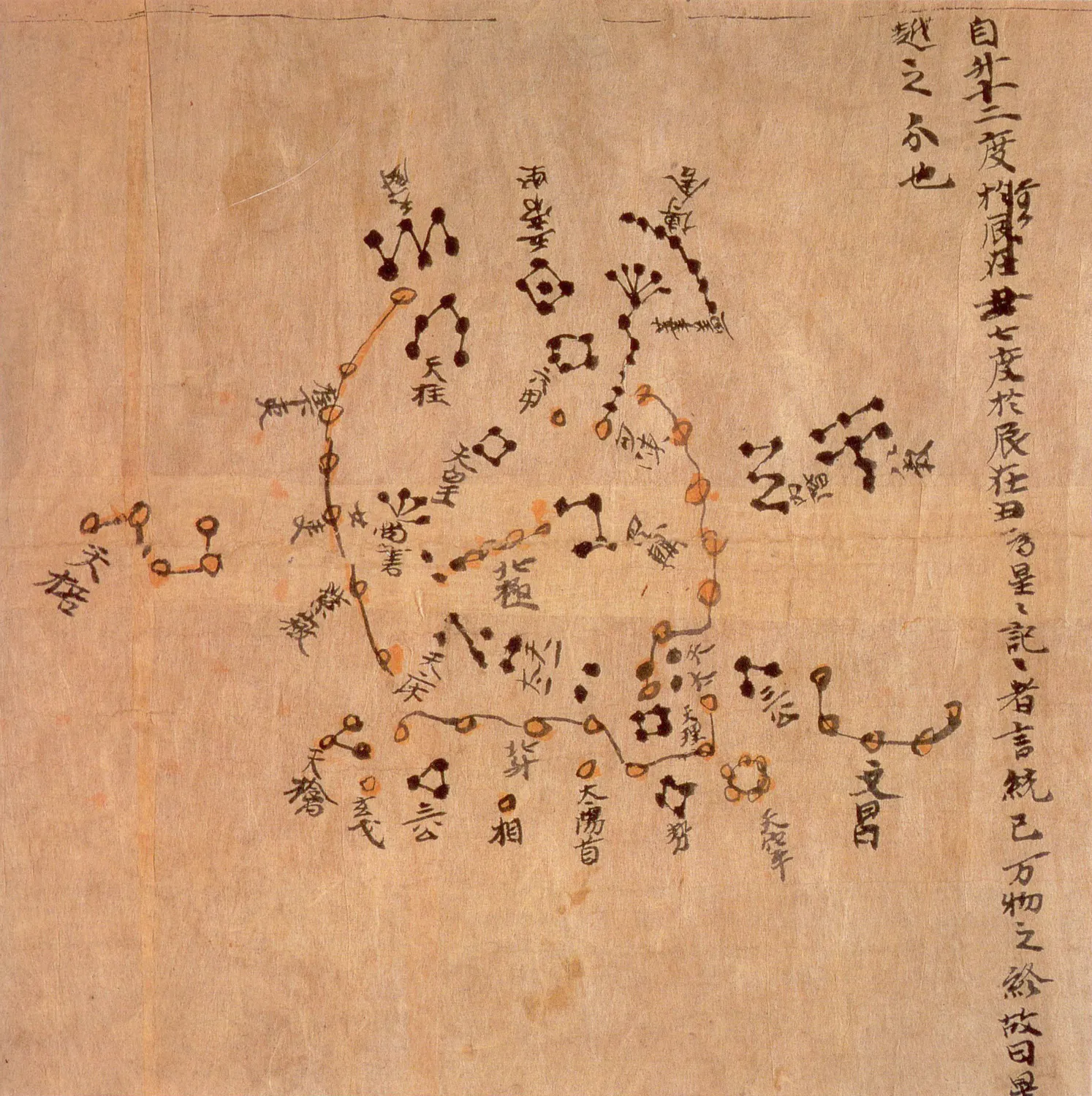
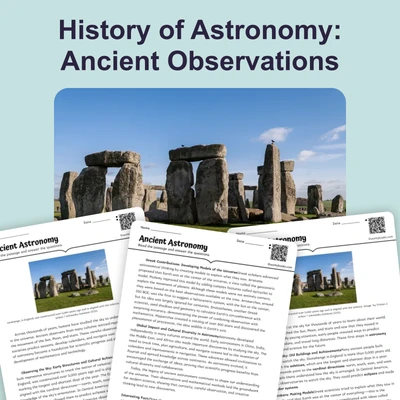
Ancient cultures around the world created detailed sky maps long before telescopes existed. These civilizations observed celestial objects with their eyes alone. They tracked patterns across seasons and years. Evidence shows that different cultures developed unique systems to understand the same night sky.
Scientists explain that ancient astronomers used careful observation and record-keeping. The Maya civilization in Central America tracked the planet Venus for centuries. They calculated its cycle with accuracy that matched modern measurements. Mayan priests recorded Venus positions in books called codices. They predicted when Venus would appear in the morning or evening sky. This knowledge helped them plan ceremonies and agricultural activities. Their observations were so precise that their calendar differed from the actual Venus cycle by only two hours every 500 years.
Polynesian navigators developed a different approach to sky mapping. They sailed across the Pacific Ocean for thousands of miles without instruments. These sailors memorized the positions of over 200 stars. They created mental maps connecting stars to specific islands. Navigators also observed wave patterns and bird behavior. They passed this knowledge through oral traditions and special training schools. One navigator could guide a canoe from Hawaii to Tahiti, covering 2,400 miles of open ocean. The stars served as their compass and map combined.
Chinese astronomers kept detailed records of comets, eclipses, and unusual sky events. They documented observations for over 3,000 years. These records represent the longest continuous astronomical data in human history. Chinese scientists organized stars into groups called constellations. Their system differed from Greek and Roman patterns. They also built instruments to measure star positions and track the sun's movement. One Chinese astronomer named Gan De may have observed Jupiter's moons around 364 BCE, nearly 2,000 years before Galileo.
These ancient sky maps matter because they show how humans develop scientific knowledge. Different cultures asked similar questions about the sky. Each group created systems based on careful observation and testing. Modern astronomers still use some ancient records. Chinese comet observations help scientists track objects that return every few centuries. Polynesian navigation techniques are being revived and taught today. Ancient astronomy demonstrates that scientific thinking develops across all cultures when people observe nature systematically.
Interesting Fact: The ancient Babylonians created the first known star catalog around 1200 BCE. They identified and named many constellations we still recognize today, including the zodiac patterns.
Comprehension quiz (10 questions)
1. What did ancient cultures use to observe celestial objects before telescopes were invented?
2. How accurate were the Mayan observations of Venus?
3. What does the word 'codices' mean in the context of this passage?
4. What does 'systematically' mean in the passage?
5. Why did Polynesian navigators memorize star positions?
6. Based on the passage, what can we infer about ancient Chinese astronomical records?
7. How did different ancient cultures approach sky mapping?
8. If an ancient Polynesian navigator needed to sail from Hawaii to Tahiti, which method would be most useful?
9. True or False: Chinese astronomer Gan De may have observed Jupiter's moons before Galileo did.
10. True or False: Ancient sky mapping shows that scientific thinking only developed in one culture.
Perfect for the way you teach
- Build comprehension skills
- Auto-graded quiz
- Differentiated reading
- Read together at home
- Improve fluency
- Quiet reading time
- Reading curriculum support
- Independent practice
- Track Lexile growth