How Did Ancient Cultures Observe and Explain Earth
Interactive passage with audio narration, comprehension questions, and printable PDF.
By completing this purchase you agree to our Terms of Use and Privacy Policy. Your subscription renews automatically until you cancel. You can cancel anytime from your account settings. All sales are final and non-refundable. Digital content is available for download in your account immediately upon purchase.
What's included
How Did Ancient Cultures Observe and Explain Earth preview and details
About this printable How Did Ancient Cultures Observe and Explain Earth science reading passage, NGSS-aligned (Grades 6-8)
Sample passage and quiz from How Did Ancient Cultures Observe and Explain Earth
Reading passage and comprehension quiz preview
How Ancient Cultures Shaped Earth
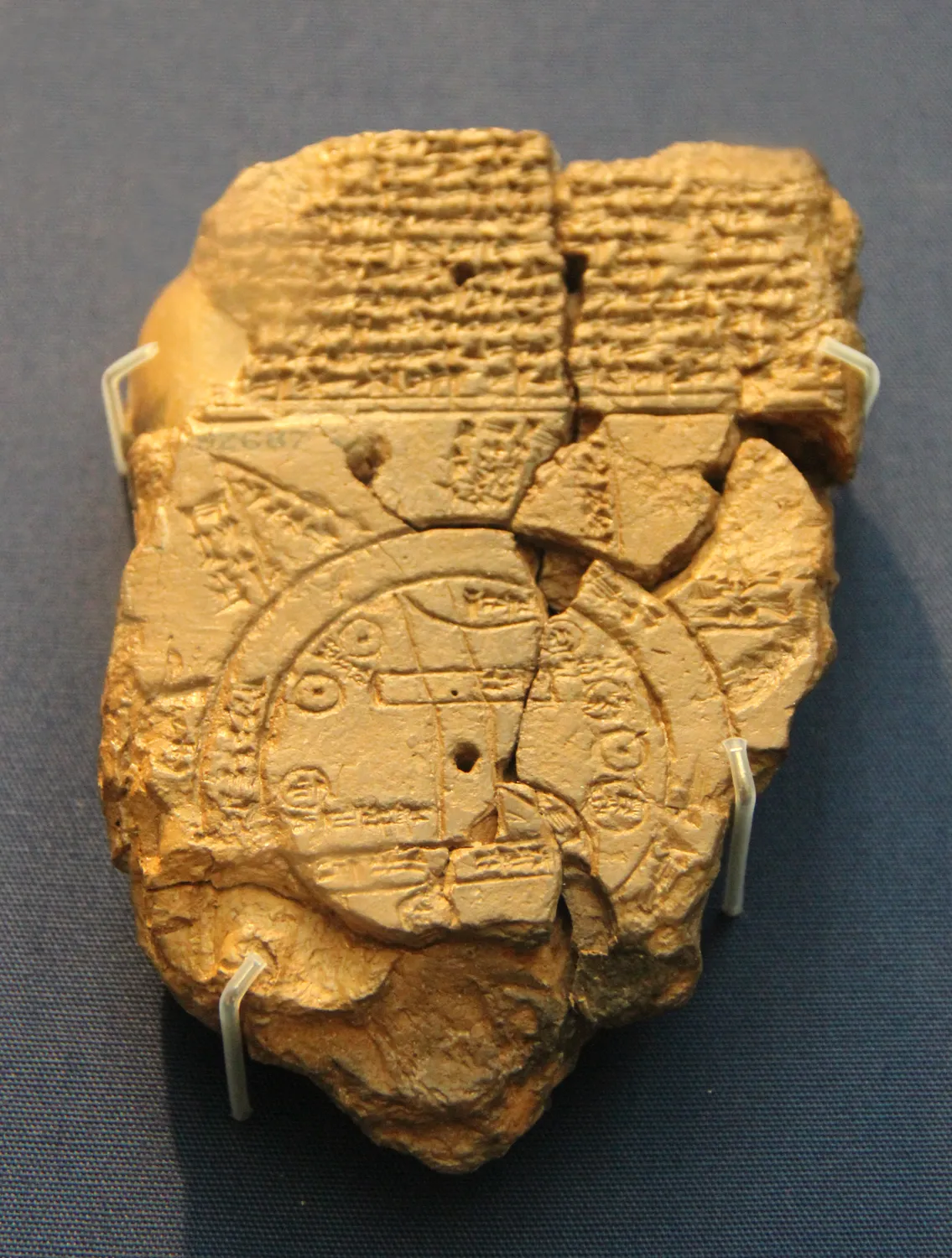
"Babylonian Map of the World, 700-500 BC" Image by Gary Todd / Wikimedia Commons.
Long before modern scientific instruments existed, ancient civilizations developed detailed knowledge about Earth through careful observation. These early cultures studied natural patterns to solve practical problems like growing food, predicting weather, and traveling across vast distances. Astronomy, the study of celestial objects, began when people noticed that stars and planets moved in predictable ways. This observational knowledge from diverse cultures worldwide became the foundation for modern Earth science.
Ancient Babylonians living in Mesopotamia around 3000 BCE created one of the first detailed systems for tracking time and seasons. They observed that certain star patterns appeared at specific times of year. By recording these celestial patterns on clay tablets, they developed accurate calendars that helped farmers know when to plant and harvest crops. The Babylonians also tracked the movements of planets and predicted lunar eclipses, events when Earth's shadow falls on the moon. Their careful records showed that natural events followed regular cycles that could be measured and predicted.
In ancient Egypt, understanding Earth's systems was essential for survival. Egyptian farmers depended on the annual flooding of the Nile River to water their crops and deposit nutrient-rich sediment on their fields. Through generations of observation, Egyptians discovered that the Nile floods occurred shortly after the star Sirius appeared on the horizon just before sunrise. This connection between celestial events and Earth processes allowed them to create a 365-day calendar and predict floods months in advance. Egyptian priests kept detailed records of flood levels, creating an early form of hydrological data that tracked water patterns over time.
Polynesian navigators developed extraordinary knowledge of ocean and atmospheric systems without written records or instruments. These seafarers traveled thousands of miles across the Pacific Ocean using a complex understanding of star positions, ocean currents, wave patterns, and wind directions. They recognized that different islands created specific wave patterns and that certain stars always rose and set at particular points on the horizon. Polynesian navigators also observed cloud formations, bird flight patterns, and water color to locate distant islands. This sophisticated knowledge of Earth's interconnected systems—ocean, atmosphere, and biosphere—was passed down through oral traditions and practical training.
Ancient Chinese astronomers made systematic observations of celestial phenomena for over 3,000 years. They recorded sunspots, comets, and supernovae (exploding stars) centuries before European scientists. Chinese scholars also developed seismoscopes, early instruments that detected earthquakes, showing their interest in understanding Earth's internal processes. Their detailed records of astronomical and geological events provide valuable historical data that modern scientists still use today to study long-term patterns in Earth's systems.
These ancient practices demonstrate that scientific knowledge develops through careful observation, record-keeping, and pattern recognition—methods still central to Earth science today. Ancient cultures worldwide contributed unique insights based on their local environments, from desert astronomers tracking stars to island navigators reading ocean currents. Modern Earth science builds upon this global foundation, using advanced technology to study the same natural systems that ancient peoples observed. The questions these early observers asked about seasons, floods, and celestial movements remain fundamental to understanding how Earth's systems interact and change over time.
Interesting Fact: The ancient Maya developed a calendar so accurate that their calculation of the solar year (365.2420 days) differs from modern measurements by only 0.0002 days, demonstrating the precision possible through sustained observation without telescopes or computers.
Comprehension quiz (10 questions)
1. What did ancient Babylonians use to record their observations of celestial patterns?
2. How did ancient Egyptians predict when the Nile River would flood?
3. What does the term 'hydrological data' refer to in the passage?
4. Based on the passage, what is the main reason Polynesian navigators observed wave patterns?
5. Which ancient culture developed seismoscopes to detect earthquakes?
6. What can be inferred from the passage about the development of scientific knowledge?
7. How would the observational methods of ancient cultures apply to modern environmental monitoring?
8. What evidence from the passage supports the idea that ancient cultures shared similar scientific approaches?
9. Ancient Babylonians were able to predict lunar eclipses by observing celestial patterns.
10. Polynesian navigators used only written maps to travel across the Pacific Ocean.
Perfect for the way you teach
- Build comprehension skills
- Auto-graded quiz
- Differentiated reading
- Read together at home
- Improve fluency
- Quiet reading time
- Reading curriculum support
- Independent practice
- Track Lexile growth