How Digestion Starts in the Mouth — Reading Comprehension
Rate this
Premium Resource
Present
Present in classroom. No work saved
Assign
Classroom with student accounts, Track progress
Quick Play
No student accounts, assign with a link
Grades
3
4
5
Standards
NGSS 4-LS1-1
LS1.A
PRINT+DIGITAL RESOURCE
This learning resource is available in interactive and printable formats. The interactive worksheet can be played online and assigned to students. The Printable PDF version can be downloaded and printed for completion by hand.
This engaging 250-word reading passage introduces fourth-grade students to the digestive process, specifically focusing on how digestion begins in the mouth. Aligned with NGSS standard 4-LS1-1 and Disciplinary Core Idea LS1.A, the passage explains the mechanical and chemical breakdown of food through chewing, saliva production, and tongue movement. Students discover how teeth grind food into smaller pieces, how saliva contains special enzymes that start breaking down food chemically, and how the tongue mixes food and helps with swallowing. The passage uses age-appropriate language and relatable examples to help students understand these complex biological processes. Audio integration supports diverse learners by providing text-to-speech functionality, making the content accessible to students with different reading levels and learning preferences. The passage includes bolded vocabulary terms with immediate definitions, helping students build scientific literacy. Accompanying activities include multiple-choice comprehension questions, writing prompts that encourage students to apply their knowledge, and graphic organizers that help visualize the sequence of digestion and the structure-function relationships of mouth parts. This resource provides teachers with a complete lesson foundation for teaching about internal body structures and their functions in processing food for energy and growth.
CONTENT PREVIEW
Expand content preview
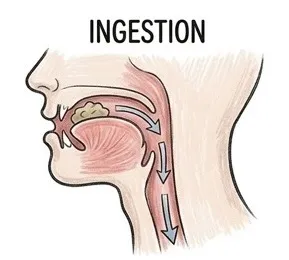
Digestion is the process your body uses to break down food into tiny pieces it can use for energy and growth. This important process starts the moment you take your first bite of food. Your mouth is the first stop in your digestive system, and it does two important jobs at once.
Your teeth work like tools to break food into smaller pieces. When you chew, your teeth grind and crush food into bits that are easier to swallow. This is called mechanical digestion—breaking food down by physically crushing it. At the same time, your mouth makes saliva, which is the watery liquid you might call spit. Saliva does more than just make food wet. It contains special chemicals called enzymes that start breaking down food in a different way. This is called chemical digestion—breaking food down by changing it with chemicals.
Your tongue is also hard at work. It moves food around your mouth so your teeth can chew it from all sides. The tongue mixes the food with saliva, turning it into a soft, mushy ball. When the food is ready, your tongue pushes it to the back of your mouth so you can swallow it.
All these parts—teeth, saliva, and tongue—work together like a team. They prepare food so the rest of your digestive system can finish the job.
Interesting Fact: You make about one to two liters of saliva every day—that's enough to fill a large soda bottle! Your mouth is always working, even when you're not eating.
Where does digestion begin?
In the stomachIn the mouthIn the throatIn the intestines
What do teeth do to food?
Make it wet and softGrind and crush it smallerPush it down the throatAdd chemicals to it
What are enzymes?
Tiny pieces of foodParts of your teethSpecial chemicals in salivaMuscles in your tongue
Why does the tongue mix food?
To taste it betterTo make it colorfulTo combine it with salivaTo make it crunchy
What happens during mechanical digestion?
Chemicals change the foodFood is physically crushedSaliva makes food wetFood moves to the stomach
How do saliva and teeth work differently?
Saliva crushes, teeth add chemicalsTeeth crush, saliva adds chemicalsBoth crush food the same wayBoth add chemicals to food
Digestion only happens after you swallow food.
TrueFalse
What does chemical digestion mean?
Crushing food with teethMoving food with your tongueChanging food with chemicalsSwallowing food into your stomach
Perfect For:
👩🏫 Teachers
• Reading comprehension practice
• Auto-graded assessments
• Literacy skill development
👨👩👧👦 Parents
• Reading practice at home
• Comprehension improvement
• Educational reading time
🏠 Homeschoolers
• Reading curriculum support
• Independent reading practice
• Progress monitoring
Reading Features:
📖
Reading Passage
Engaging fiction or nonfiction text
❓
Comprehension Quiz
Auto-graded questions
📊
Instant Feedback
Immediate results and scoring
📄
Printable Version
Download for offline reading
🔊
Read Aloud
Voice-over with word highlighting
Reviews & Ratings
No reviews yet. Be the first to share your experience!
Related Content
What Are Bones Made Of
This engaging 250-word reading passage introduces Grade 4 students to the structure and function of bones, aligned with ...
NGSS 4-LS1-1LS1.A
How Bones Protect Organs
This engaging 250-word reading passage helps Grade 4 students understand how bones protect organs, aligned with NGSS sta...
NGSS 4-LS1-1LS1.A
How Joints Connect Bones
This 250-word reading passage teaches fourth-grade students about joints and their role in the human skeletal system. Al...
NGSS 4-LS1-1LS1.A
Layers of the Skin
This engaging 250-word reading passage introduces fourth-grade students to the three layers of skin and their functions....
NGSS 4-LS1-1LS1.A
Parts of Plant Stems
This engaging 250-word reading passage introduces fourth-grade students to the internal structure and function of plant ...
NGSS 4-LS1-1LS1.A
Parts of a Flower
This comprehensive 250-word reading passage introduces fourth-grade students to the essential parts of a flower and thei...
NGSS 4-LS1-1LS1.A
How Leaves Make Food
This engaging Grade 4 science reading passage explains how leaves make food through photosynthesis. Students discover th...
NGSS 4-LS1-1LS1.A
How Animal Hearts Work
This 250-word audio-integrated reading passage introduces fourth-grade students to the essential function of the heart a...
NGSS 4-LS1-1LS1.A
Animal Skeleton Structure
This 250-word reading passage introduces fourth grade students to animal skeleton structure, aligned with NGSS 4-LS1-1 a...
NGSS 4-LS1-1LS1.A
How Animal Lungs Work
This 250-word reading passage introduces fourth-grade students to how animal lungs work, aligned with NGSS standard 4-LS...
NGSS 4-LS1-1LS1.A
Parts of a Leaf
This 250-word reading passage introduces Grade 4 students to the internal structure of leaves, aligned with NGSS standar...
NGSS 4-LS1-1LS1.A
Stamen and Pistil
This 250-word reading passage introduces fourth-grade students to the stamen and pistil, the key reproductive structures...
NGSS 4-LS1-1LS1.A
How Internal Structures Help Plants Survive
This 250-word informational reading passage is designed for Grade 4 students and aligns with NGSS standard 4-LS1-1 (LS1....
NGSS 4-LS1-1LS1.A
How Stems Support Plants
This engaging 250-word reading passage helps Grade 4 students understand how stems support plants and contribute to thei...
NGSS 4-LS1-1LS1.A
How Plants Reproduce
This 250-word reading passage introduces fourth-grade students to plant reproduction aligned with NGSS 4-LS1-1 and the D...
NGSS 4-LS1-1LS1.A
How External Structures Help Plants Survive
This 250-word reading passage introduces fourth-grade students to how external plant structures help plants survive, gro...
NGSS 4-LS1-1LS1.A
How Internal Structures Keep Animals Alive
This engaging 250-word reading passage introduces fourth-grade students to the essential internal structures that keep a...
NGSS 4-LS1-1LS1.A
Animal External Structures
This engaging 250-word reading passage introduces fourth-grade students to the concept of animal external structures ali...
NGSS 4-LS1-1LS1.A
What Are Exoskeletons
This engaging 250-word reading passage introduces fourth-grade students to the concept of exoskeletons, aligning with NG...
NGSS 4-LS1-1LS1.A
How Skin Protects Animals
This engaging 250-word reading passage introduces fourth-grade students to the protective functions of skin, the largest...