How Plants Pull Carbon From the Air
Interactive passage with audio narration, comprehension questions, and printable PDF.
By completing this purchase you agree to our Terms of Use and Privacy Policy. Your subscription renews automatically until you cancel. You can cancel anytime from your account settings. All sales are final and non-refundable. Digital content is available for download in your account immediately upon purchase.
What's included
How Plants Pull Carbon From the Air preview and details
About this printable How Plants Pull Carbon From the Air science reading passage, NGSS-aligned (Grades 6-8)
Sample passage and quiz from How Plants Pull Carbon From the Air
Reading passage and comprehension quiz preview
How Plants Pull Carbon From Air
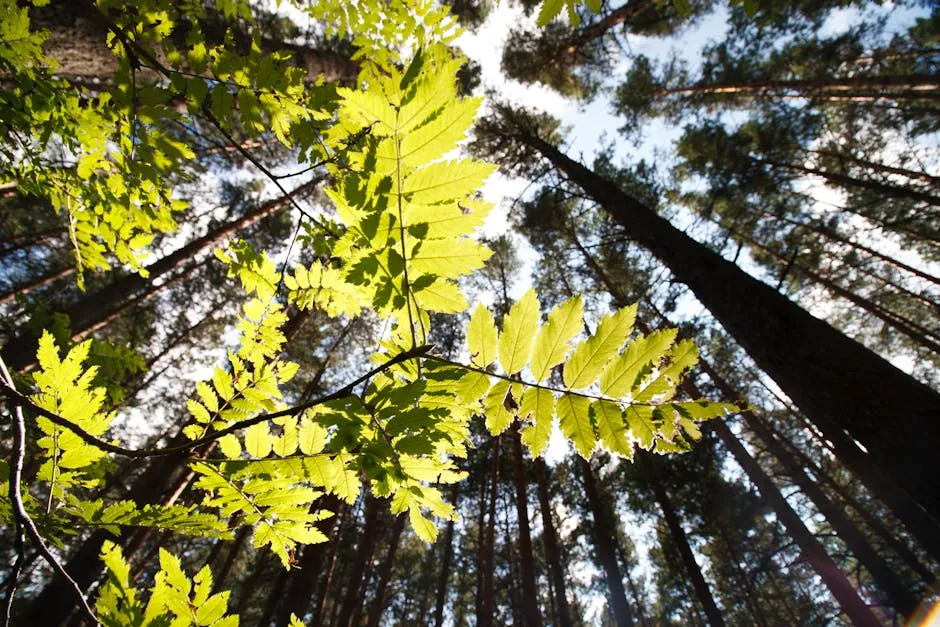
Plants act as natural air filters, removing carbon dioxide (CO₂) from the atmosphere every day. This process, called photosynthesis, allows plants to capture carbon from the air and convert it into food. Image by Mikhail Peace / Pexels.
Plants act as natural air filters, removing carbon dioxide (CO₂) from the atmosphere every day. This process, called photosynthesis, allows plants to capture carbon from the air and convert it into food. During photosynthesis, plants take in carbon dioxide through tiny openings in their leaves called stomata. They combine this CO₂ with water absorbed by their roots, using energy from sunlight to create glucose, a simple sugar that serves as food for the plant. Oxygen is released as a byproduct of this process, which is essential for animals and humans to breathe.
The photosynthesis process occurs inside specialized structures within plant cells called chloroplasts. These chloroplasts contain a green pigment called chlorophyll, which captures light energy from the sun. The chlorophyll absorbs mostly red and blue light while reflecting green light, which is why plants appear green to our eyes. The captured light energy powers a chemical reaction that breaks apart CO₂ and water molecules, rearranging their atoms to form glucose and oxygen. The chemical equation for photosynthesis is: 6CO₂ + 6H₂O + light energy → C₆H₁₂O₆ + 6O₂. This equation shows that six molecules of carbon dioxide and six molecules of water, combined with light energy, produce one molecule of glucose and six molecules of oxygen.
When plants create glucose through photosynthesis, they are essentially pulling carbon atoms out of the atmosphere and incorporating them into their own tissues. Plants use some of this glucose immediately for energy to grow and function. However, they also convert much of it into other organic compounds like cellulose, which forms the structure of plant cell walls, and starch, which serves as stored energy. All of these compounds contain carbon atoms that were originally part of atmospheric CO₂. This means the carbon is no longer in the air as a greenhouse gas but is now locked inside the plant's living tissue.
As plants grow larger, they continue to pull more carbon from the atmosphere and store it in their stems, branches, leaves, and roots. A single large tree can store hundreds of pounds of carbon over its lifetime. Forests, which contain millions of trees, act as massive carbon sinks—areas that absorb more carbon than they release. Scientists estimate that forests worldwide store approximately 861 billion tons of carbon in their biomass. This carbon storage is critical for regulating Earth's climate because it prevents CO₂ from accumulating in the atmosphere, where it would trap heat and contribute to global warming.
The carbon stored in plant tissue remains there as long as the plant is alive and growing. When plants die and decompose, or when they are burned, much of this stored carbon is released back into the atmosphere as CO₂. However, some dead plant material becomes buried in soil or sediment, where it can remain stored for thousands or even millions of years. Over geological time, this buried plant matter can transform into fossil fuels like coal and oil. Understanding how plants capture and store carbon helps scientists develop strategies to combat climate change, such as planting more trees and protecting existing forests.
The rate at which plants perform photosynthesis depends on several environmental factors. Plants need adequate sunlight, water, and carbon dioxide to photosynthesize efficiently. Temperature also plays a role, as most plants photosynthesize best in moderate temperatures. When any of these factors is limited, the rate of photosynthesis slows down, and plants capture less carbon from the atmosphere. This is why protecting plant ecosystems and ensuring they have the resources they need is important for maintaining Earth's carbon cycle.
Interesting Fact: A single mature tree can absorb approximately 48 pounds of carbon dioxide from the atmosphere each year, which is roughly the amount of CO₂ produced by driving a car for 100 miles.
Comprehension quiz (10 questions)
1. What is the main purpose of photosynthesis in plants?
2. Where does photosynthesis take place inside plant cells?
3. What is the term for the tiny openings in leaves that allow carbon dioxide to enter?
4. According to the passage, why do plants appear green to our eyes?
5. What happens to the carbon atoms that plants pull from the atmosphere during photosynthesis?
6. Why are forests considered important carbon sinks?
7. What environmental factors affect the rate of photosynthesis in plants?
8. According to the passage, approximately how much carbon dioxide can a single mature tree absorb each year?
9. True or False: When plants die and decompose, all the carbon stored in their tissues remains locked in the soil forever.
10. True or False: Photosynthesis produces oxygen as a byproduct, which is essential for animals and humans to breathe.
Perfect for the way you teach
- Build comprehension skills
- Auto-graded quiz
- Differentiated reading
- Read together at home
- Improve fluency
- Quiet reading time
- Reading curriculum support
- Independent practice
- Track Lexile growth