How Do Scientists Find Exoplanets
Interactive passage with audio narration, comprehension questions, and printable PDF.
By completing this purchase you agree to our Terms of Use and Privacy Policy. Your subscription renews automatically until you cancel. You can cancel anytime from your account settings. All sales are final and non-refundable. Digital content is available for download in your account immediately upon purchase.
What's included
How Do Scientists Find Exoplanets preview and details
About this printable How Do Scientists Find Exoplanets science reading passage, NGSS-aligned (Grades 5-8)
Sample passage and quiz from How Do Scientists Find Exoplanets
Reading passage and comprehension quiz preview
How Do Scientists Find Exoplanets
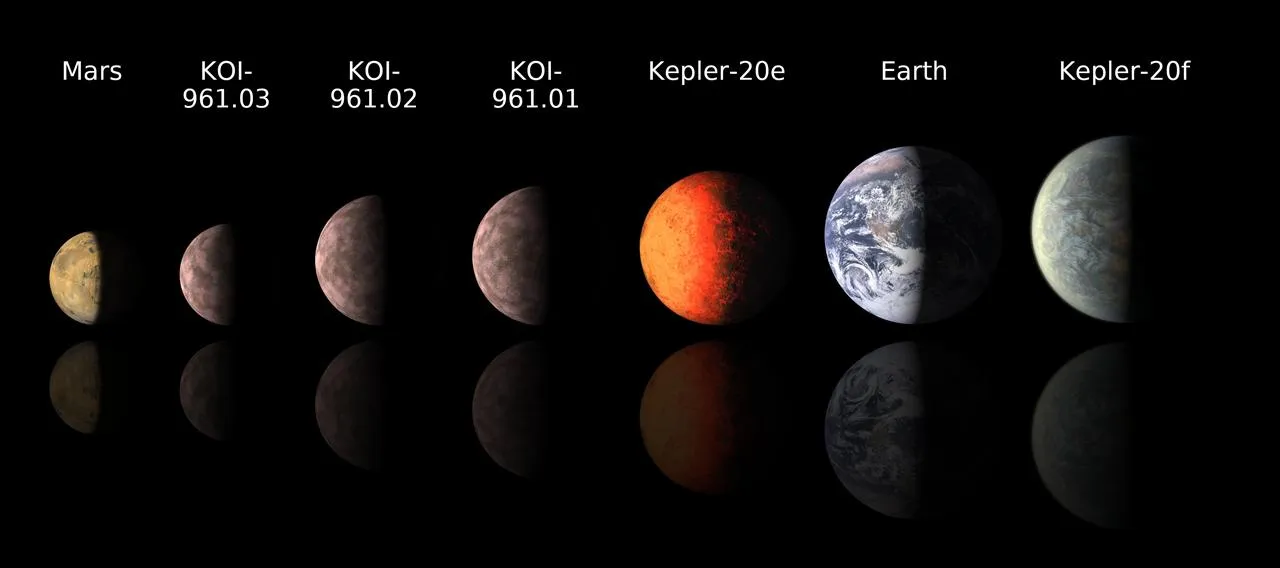
Scientists find exoplanets by using clever methods that detect tiny changes around distant stars. An exoplanet is any planet that orbits a star outside our solar system. Since 1992, astronomers have confirmed over 5,000 exoplanets. These planets are too far away and too dim to see directly with telescopes. Instead, scientists look for indirect evidence that reveals their presence.
The most successful method is called the transit method. This technique works by watching a star's brightness over time. When a planet passes in front of its star, it blocks a small amount of light. Scientists observe this dimming as a brief dip in brightness. The amount of dimming tells scientists how large the planet is. If the dimming happens regularly, scientists can calculate the planet's orbital period—how long it takes to circle its star. This method is similar to watching a moth fly in front of a streetlight.
Another important method measures the radial velocity of stars. Gravity works both ways between a star and its planet. While the star's gravity keeps the planet in orbit, the planet's gravity also pulls on the star. This causes the star to wobble slightly in space. Scientists use special instruments called spectrometers to detect these tiny wobbles. The wobble reveals information about the planet's mass and orbit. Larger planets cause bigger wobbles that are easier to detect.
NASA's Kepler Space Telescope used the transit method to discover thousands of exoplanets between 2009 and 2018. Kepler watched more than 150,000 stars continuously. It detected even tiny changes in brightness that lasted just a few hours. Scientists analyzed this data to confirm planets ranging from rocky worlds smaller than Earth to gas giants larger than Jupiter. Evidence shows that planets are common throughout our galaxy.
Finding exoplanets matters because it helps scientists understand how planetary systems form and change. Each discovery provides clues about whether other planets might have conditions suitable for life. Scientists continue developing new methods to find smaller planets and study their atmospheres. This research expands our knowledge of Earth's place in the universe.
Interesting Fact: The closest known exoplanet is Proxima Centauri b, located about 4.2 light-years from Earth. Scientists detected it using the radial velocity method in 2016.
Comprehension quiz (10 questions)
1. What is an exoplanet?
2. How many exoplanets have scientists confirmed since 1992?
3. In the passage, what does the term 'dimming' mean?
4. What does the transit method detect?
5. Why does a star wobble when it has a planet orbiting it?
6. Which NASA telescope discovered thousands of exoplanets using the transit method?
7. Based on the passage, what can scientists learn from the amount of dimming during a transit?
8. If a planet causes a bigger wobble in its star, what can scientists infer about that planet?
9. True or False: Scientists can see exoplanets directly with telescopes because they are very bright.
10. True or False: Finding exoplanets helps scientists understand how planetary systems form and whether other planets might have conditions suitable for life.
Perfect for the way you teach
- Build comprehension skills
- Auto-graded quiz
- Differentiated reading
- Read together at home
- Improve fluency
- Quiet reading time
- Reading curriculum support
- Independent practice
- Track Lexile growth