How Does a Hydroelectric Dam Work? — Reading Comprehension
Rate this
Premium Resource
Present
Present in classroom. No work saved
Assign
Classroom with student accounts, Track progress
Quick Play
No student accounts, assign with a link
Grades
3
4
5
6
7
Standards
MS-ESS3-1
PRINT+DIGITAL RESOURCE
This learning resource is available in interactive and printable formats. The interactive worksheet can be played online and assigned to students. The Printable PDF version can be downloaded and printed for completion by hand.
This NGSS-aligned science passage for middle school students explains how hydroelectric dams work to produce clean, renewable electricity. It describes the process step-by-step—from water stored in a reservoir flowing through turbines to spinning a generator and sending power through electrical lines. The text highlights the environmental benefits of using water power, along with challenges such as flooding and changes to river habitats. This passage supports NGSS standard MS-ESS3-1 and helps build student understanding of renewable energy systems, sustainability, and real-world engineering solutions through vocabulary-rich, age-appropriate content.
CONTENT PREVIEW
Expand content preview
A hydroelectric dam is a special structure that makes electricity from moving water. It is a powerful source of renewable energy because it uses the natural flow of rivers to produce clean electricity without polluting the air.
The process starts with a dam built across a river. The dam holds back the water, creating a deep pool called a reservoir. When electricity is needed, water from the reservoir is released through large pipes at the bottom of the dam. As the water flows down, it picks up speed and energy.
This fast-moving water hits a machine called a turbine, causing it to spin. The turbine is connected to a generator. When the turbine spins, it turns the generator, which produces electricity. The electricity then travels through power lines to homes, schools, and businesses.
Hydroelectric dams are used all over the world. They are especially useful in places with large rivers or lots of rainfall. These dams can make a lot of electricity and are very reliable. Since water is constantly replaced by rain, hydroelectric energy is a steady and renewable resource.
However, building a dam can also cause problems. It can change the natural flow of rivers, block fish from swimming upstream, and flood nearby land. Scientists and engineers work to reduce these effects while still using this clean energy source.
A hydroelectric dam shows how we can use the force of water to power our world in a way that is both smart and sustainable.
Fun Fact: One large hydroelectric dam can produce enough electricity to power over a million homes!
What does a hydroelectric dam use to make electricity?
WindSunlightMoving waterFossil fuels
What is the name of the pool of water behind the dam?
RiverOceanReservoirLake
What spins when water flows through the dam?
FanPipeTurbineBlade
What machine makes electricity in a hydroelectric dam?
EngineGeneratorInverterCooler
Why is hydroelectric power renewable?
Water can be used again and againDams run on batteriesIt uses oilThe sun charges it
What is one problem caused by building dams?
They make air dirtyThey can flood nearby landThey cause earthquakesThey melt snow
What is the main idea of the passage?
Dams are built to stop riversHydroelectric dams waste waterHydroelectric dams make clean energy from waterWater should not be used for power
A town near a big river needs clean energy. What should they consider building?
A gas stationA hydroelectric damA windmillA coal factory
Perfect For:
👩🏫 Teachers
• Reading comprehension practice
• Auto-graded assessments
• Literacy skill development
👨👩👧👦 Parents
• Reading practice at home
• Comprehension improvement
• Educational reading time
🏠 Homeschoolers
• Reading curriculum support
• Independent reading practice
• Progress monitoring
Reading Features:
📖
Reading Passage
Engaging fiction or nonfiction text
❓
Comprehension Quiz
Auto-graded questions
📊
Instant Feedback
Immediate results and scoring
📄
Printable Version
Download for offline reading
🔊
Read Aloud
Voice-over with word highlighting
Reviews & Ratings
No reviews yet. Be the first to share your experience!
Related Content
How Do Solar Panels Work?
This middle school reading passage explains how solar panels work by turning sunlight into electricity. The passage desc...
MS-ESS3-1
How Do Wind Turbines Work?
This NGSS-aligned reading passage for middle school students explains how wind turbines convert the energy of moving air...
MS-ESS3-1
What Is Biofuel?
This NGSS-aligned middle school science passage explains what biofuel is, how it is made, and why it is important as a c...
MS-ESS3-1
What Is Tidal Energy?
This engaging reading passage for middle school students introduces tidal energy, a form of renewable energy that uses t...
MS-ESS3-1
What Is Wave Energy?
This passage introduces middle school students to wave energy—a clean, renewable energy source that comes from the movem...
MS-ESS3-1
What Is Green Energy?
This science passage introduces middle school students to the concept of green energy—clean, renewable energy that comes...
MS-ESS3-1
Igneous Rocks
This comprehensive passage introduces middle school students to igneous rocks, focusing on how these rocks form from mol...
MS-ESS2-1MS-ESS3-1
Sedimentary Rocks
This comprehensive middle school science passage introduces students to sedimentary rocks, detailing their step-by-step ...
MS-ESS2-1MS-ESS2-3MS-ESS3-1
Metamorphic Rocks
This engaging middle school science passage introduces students to the fascinating world of metamorphic rocks. Aligned w...
MS-ESS2-1MS-ESS3-1
Topographic Maps
This comprehensive passage introduces middle school students to topographic maps, with a focus on how these maps represe...
MS-ESS2-2MS-ESS3-1SEP.4SEP.7
Minerals and Rocks as Resources
This middle school science passage, aligned to NGSS standards MS-ESS3-1 and MS-ESS3-4, explores the critical role that m...
MS-ESS3-1MS-ESS3-4
Benefits of Volcanic Activity
This middle school science passage explores the many positive impacts of volcanic activity, aligning with NGSS standards...
MS-ESS2-2MS-ESS3-1
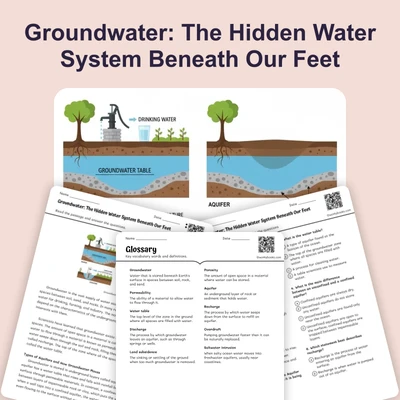
Groundwater
This middle school science passage explores the essential topic of groundwater, aligned to NGSS standards MS-ESS2-4 and ...
MS-ESS2-4MS-ESS3-1
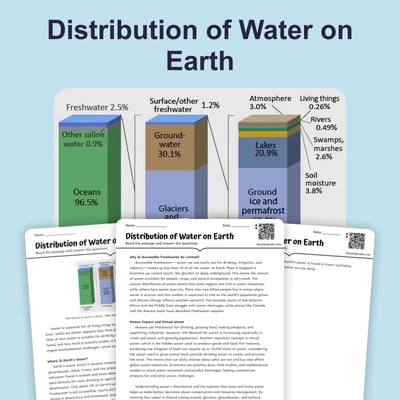
Distribution of Water on Earth
This middle school science reading passage explores the distribution of water on Earth, aligned with NGSS standards MS-E...
MS-ESS2-4MS-ESS3-1
Water as a Resource
This middle school science passage examines water as a critical resource, focusing on how it is used, managed, and conse...
MS-ESS3-1MS-ESS3-4
Water Quality
This middle school science reading passage covers the topic of water quality, aligned with NGSS standards MS-ESS3-1 and ...