This learning resource is available in interactive and printable formats. The interactive worksheet can be played online and assigned to students. The Printable PDF version can be downloaded and printed for completion by hand.
This middle school science reading passage covers the topic of water quality, aligned with NGSS standards MS-ESS3-1 and MS-ESS3-3. Students learn why clean water is essential for drinking, agriculture, industry, and ecosystems, and how different types of pollutants (such as pathogens, nutrients, toxic chemicals, sediments, and heat) affect freshwater sources. The passage explains the difference between point and nonpoint source pollution, how scientists measure water quality using dissolved oxygen, pH, turbidity, and biological indicators, and the role of water treatment and regulations like the Clean Water Act. Real-world examples and scientific thinking are integrated, helping students understand how protecting water quality supports public health and the environment. This resource includes audio integration for accessibility, a glossary, comprehension and writing activities, and graphic organizers to deepen understanding.
CONTENT PREVIEW
Expand content preview
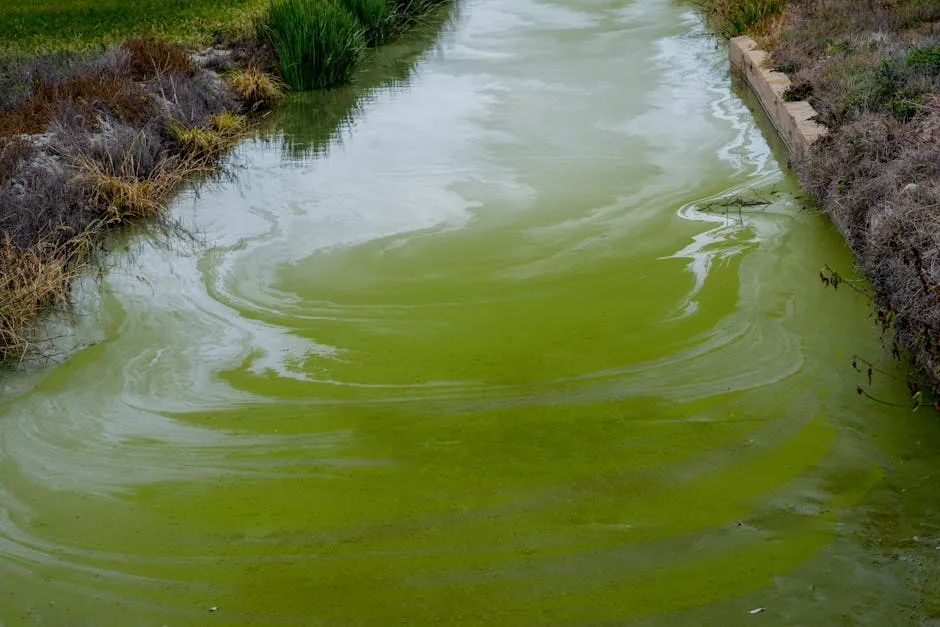
Eutrophication—the overgrowth of algae. Image by Victor Moragriega / Pexels.
Water quality determines whether freshwater can safely support drinking, farming, industry, and natural ecosystems. In many communities, water from rivers, lakes, or underground aquifers must meet specific standards to be safe for humans, animals, and plants. However, pollutants can enter water sources from many places, sometimes making water unsafe or damaging to the environment. Understanding what affects water quality and how we measure it helps people, governments, and scientists protect this critical resource.
How Pollutants Enter Waterways Some pollutants come from point sources, which are single, identifiable places such as a factory outfall pipe or a sewage treatment plant. Other pollutants arrive through nonpoint sources, which are widespread and not easily traced, like fertilizer runoff from farms or oil washed off city streets by rain. The types of pollution include pathogens (harmful bacteria and viruses), nutrients (nitrogen and phosphorus, which can cause eutrophication—the overgrowth of algae), toxic chemicals (like pesticides and heavy metals), sediment (soil particles that cloud water), and thermal pollution (heated water from factories or power plants). For example, when excess nutrients enter a lake, they can cause algae blooms that reduce oxygen in the water, killing fish and making the water unsafe for recreation.
Measuring and Monitoring Water Quality Scientists and water managers use several methods to assess water quality. They measure dissolved oxygen to see if water can support fish and other aquatic life. The pH tells us if water is acidic or basic, and turbidity indicates how clear or cloudy the water is. Chemical tests detect contaminants such as nitrates, phosphates, or heavy metals. Biological indicators—like the presence or absence of certain insects or fish—reveal long-term water health. For instance, a river with many mayflies usually has good water quality, while their absence can signal pollution.
Protecting and Treating Water Communities use different methods to ensure water is safe. Municipal water treatment systems use filtration to remove sediment, and chlorination or other disinfectants to kill pathogens. Laws like the Clean Water Act set standards for pollutants and require regular monitoring. Best practices such as preserving wetlands, reducing fertilizer use, and managing stormwater runoff help prevent pollution before it starts. Healthy wetlands filter pollutants naturally, supporting both wildlife and people.
Clean water is essential for all living things. By understanding the sources of pollution, how to measure water quality, and ways to prevent contamination, we can help protect freshwater for future generations. This connects to broader scientific ideas about how human activities affect Earth's systems and the importance of sustainable resource management.
Interesting Fact: Less than 1% of Earth's water is easily available as freshwater for people, animals, and plants!
What is the main reason communities care about water quality?
To make sure water is safe for people, animals, and the environmentTo increase the number of factories near riversTo make water look more colorfulTo use more fertilizer in farming
Which is an example of point source pollution?
Runoff from many farms after rainA pipe from a factory releasing chemicalsOil spread from cars on roadsFertilizer carried by wind
What happens during eutrophication?
There is too much oxygen in the waterAlgae grow very quickly and reduce oxygenFish grow larger than normalThe water becomes colder
What is measured by turbidity tests?
How clear or cloudy the water isHow much oxygen is in the waterThe water's temperatureThe number of bacteria
What is a nonpoint source of pollution?
A city stormwater drainA single sewage plantRunoff from lawns and streets over a large areaA leaking oil tanker
What do municipal water treatment systems use to kill pathogens?
Heavy metalsNutrientsChlorinationSediment
A river with many mayflies probably has...
Bad water qualityGood water qualityNo dissolved oxygenHigh levels of toxic chemicals
True or False: Wetlands can help naturally filter pollutants from water.
TrueFalse
True or False: Only humans are affected by poor water quality.
TrueFalse
Why do scientists check for dissolved oxygen in water?
To see if fish and other aquatic animals can surviveTo test if water is clearTo measure the amount of sedimentTo see if the water is cold
Perfect For:
👩🏫 Teachers
• Reading comprehension practice
• Auto-graded assessments
• Literacy skill development
👨👩👧👦 Parents
• Reading practice at home
• Comprehension improvement
• Educational reading time
🏠 Homeschoolers
• Reading curriculum support
• Independent reading practice
• Progress monitoring
Reading Features:
📖
Reading Passage
Engaging fiction or nonfiction text
❓
Comprehension Quiz
Auto-graded questions
📊
Instant Feedback
Immediate results and scoring
📄
Printable Version
Download for offline reading
🔊
Read Aloud
Voice-over with word highlighting
Reviews & Ratings
No reviews yet. Be the first to share your experience!
Related Content
How Do Solar Panels Work?
This middle school reading passage explains how solar panels work by turning sunlight into electricity. The passage desc...
MS-ESS3-1
How Do Wind Turbines Work?
This NGSS-aligned reading passage for middle school students explains how wind turbines convert the energy of moving air...
MS-ESS3-1
How Does a Hydroelectric Dam Work?
This NGSS-aligned science passage for middle school students explains how hydroelectric dams work to produce clean, rene...
MS-ESS3-1
What Is Biofuel?
This NGSS-aligned middle school science passage explains what biofuel is, how it is made, and why it is important as a c...
MS-ESS3-1
What Is Tidal Energy?
This engaging reading passage for middle school students introduces tidal energy, a form of renewable energy that uses t...
MS-ESS3-1
What Is Wave Energy?
This passage introduces middle school students to wave energy—a clean, renewable energy source that comes from the movem...
MS-ESS3-1
What Is Green Energy?
This science passage introduces middle school students to the concept of green energy—clean, renewable energy that comes...
MS-ESS3-1
Igneous Rocks
This comprehensive passage introduces middle school students to igneous rocks, focusing on how these rocks form from mol...
MS-ESS2-1MS-ESS3-1
Sedimentary Rocks
This comprehensive middle school science passage introduces students to sedimentary rocks, detailing their step-by-step ...
MS-ESS2-1MS-ESS2-3MS-ESS3-1
Metamorphic Rocks
This engaging middle school science passage introduces students to the fascinating world of metamorphic rocks. Aligned w...
MS-ESS2-1MS-ESS3-1
Topographic Maps
This comprehensive passage introduces middle school students to topographic maps, with a focus on how these maps represe...
MS-ESS2-2MS-ESS3-1SEP.4SEP.7
Minerals and Rocks as Resources
This middle school science passage, aligned to NGSS standards MS-ESS3-1 and MS-ESS3-4, explores the critical role that m...
MS-ESS3-1MS-ESS3-4
Benefits of Volcanic Activity
This middle school science passage explores the many positive impacts of volcanic activity, aligning with NGSS standards...
MS-ESS2-2MS-ESS3-1
Groundwater
This middle school science passage explores the essential topic of groundwater, aligned to NGSS standards MS-ESS2-4 and ...
MS-ESS2-4MS-ESS3-1
Distribution of Water on Earth
This middle school science reading passage explores the distribution of water on Earth, aligned with NGSS standards MS-E...
MS-ESS2-4MS-ESS3-1
Water as a Resource
This middle school science passage examines water as a critical resource, focusing on how it is used, managed, and conse...
MS-ESS3-1MS-ESS3-4
Natural Disaster: Volcanic Eruptions
Volcanoes can erupt with lava and ash, changing the landscape. While dangerous, they also create fertile land and new la...
RI.3.1RI.4.4RI.4.2RI.5.2
Human Impacts: Pollution
This middle school science reading passage, aligned with NGSS standards MS-LS2-4 and MS-ESS3-3, examines the mechanisms ...
MS-LS2-4MS-ESS3-3
Human Impacts: Habitat Destruction
This grade 6-8 science passage explores human impacts on ecosystems, focusing on habitat destruction as the leading caus...