This learning resource is available in interactive and printable formats. The interactive worksheet can be played online and assigned to students. The Printable PDF version can be downloaded and printed for completion by hand.
This science passage introduces middle school students to the concept of green energy—clean, renewable energy that comes from natural sources like the sun, wind, water, and plants. The passage explains the environmental benefits of green energy, contrasts it with fossil fuels, and gives real-world examples including solar, wind, hydro, geothermal, and biomass energy. Supporting NGSS standard MS-ESS3-1, the text promotes science literacy, sustainability awareness, and understanding of clean energy systems, making it ideal for science comprehension practice and classroom discussion.
CONTENT PREVIEW
Expand content preview
Green energy is a type of clean, renewable energy that comes from natural sources like the sun, wind, water, and plants. It is called “green” because it does not pollute the air or harm the environment like fossil fuels do. Green energy helps reduce greenhouse gases, which cause climate change.
There are many types of green energy. Solar energy uses sunlight to make electricity with solar panels. Wind energy uses wind turbines to capture energy from the air. Hydroelectric power comes from moving water in rivers and dams. Geothermal energy comes from heat deep inside the Earth. Biomass uses natural materials like wood or crops to produce power.
Green energy is important because it is renewable, meaning it won’t run out. The sun will shine, the wind will blow, and rivers will flow every day. These energy sources can be used again and again, unlike coal, oil, and gas, which take millions of years to form and can cause pollution when burned.
Many homes, schools, and businesses now use green energy to power lights, heat, and machines. Countries around the world are building more green energy systems to create a sustainable future and protect our planet.
Green energy is a smart choice. It uses what nature gives us to meet our energy needs in a safe and healthy way.
Fun Fact: The world’s largest solar farm in India can power over 700,000 homes using just sunlight!
What is green energy?
Energy from coalEnergy that pollutes the airClean, renewable energy from natureEnergy that uses batteries
Which of these is a green energy source?
OilWindGasolineCoal
What does solar energy use to make power?
WindWaterSunlightFossil fuels
What is geothermal energy?
Energy from deep inside EarthEnergy from treesEnergy from wavesEnergy from batteries
Why is green energy important?
It is cheaper than waterIt can’t be used againIt causes air pollutionIt is renewable and doesn’t harm the environment
What is one example of biomass energy?
Using wood or crops to make energyUsing sun to charge a phoneBurning gasolineDigging for coal
What is the main idea of the passage?
Green energy only works at nightGreen energy is bad for the environmentGreen energy is a clean, renewable way to make electricityGreen energy is made from gasoline
A school wants to use clean power and protect nature. What should they use?
Oil heatersGreen energy like solar or windCoal stovesGas lamps
Perfect For:
👩🏫 Teachers
• Reading comprehension practice
• Auto-graded assessments
• Literacy skill development
👨👩👧👦 Parents
• Reading practice at home
• Comprehension improvement
• Educational reading time
🏠 Homeschoolers
• Reading curriculum support
• Independent reading practice
• Progress monitoring
Reading Features:
📖
Reading Passage
Engaging fiction or nonfiction text
❓
Comprehension Quiz
Auto-graded questions
📊
Instant Feedback
Immediate results and scoring
📄
Printable Version
Download for offline reading
🔊
Read Aloud
Voice-over with word highlighting
Reviews & Ratings
No reviews yet. Be the first to share your experience!
Related Content
How Do Solar Panels Work?
This middle school reading passage explains how solar panels work by turning sunlight into electricity. The passage desc...
MS-ESS3-1
How Do Wind Turbines Work?
This NGSS-aligned reading passage for middle school students explains how wind turbines convert the energy of moving air...
MS-ESS3-1
How Does a Hydroelectric Dam Work?
This NGSS-aligned science passage for middle school students explains how hydroelectric dams work to produce clean, rene...
MS-ESS3-1
What Is Biofuel?
This NGSS-aligned middle school science passage explains what biofuel is, how it is made, and why it is important as a c...
MS-ESS3-1
What Is Tidal Energy?
This engaging reading passage for middle school students introduces tidal energy, a form of renewable energy that uses t...
MS-ESS3-1
What Is Wave Energy?
This passage introduces middle school students to wave energy—a clean, renewable energy source that comes from the movem...
MS-ESS3-1
Igneous Rocks
This comprehensive passage introduces middle school students to igneous rocks, focusing on how these rocks form from mol...
MS-ESS2-1MS-ESS3-1
Sedimentary Rocks
This comprehensive middle school science passage introduces students to sedimentary rocks, detailing their step-by-step ...
MS-ESS2-1MS-ESS2-3MS-ESS3-1
Metamorphic Rocks
This engaging middle school science passage introduces students to the fascinating world of metamorphic rocks. Aligned w...
MS-ESS2-1MS-ESS3-1
Topographic Maps
This comprehensive passage introduces middle school students to topographic maps, with a focus on how these maps represe...
MS-ESS2-2MS-ESS3-1SEP.4SEP.7
Minerals and Rocks as Resources
This middle school science passage, aligned to NGSS standards MS-ESS3-1 and MS-ESS3-4, explores the critical role that m...
MS-ESS3-1MS-ESS3-4
Benefits of Volcanic Activity
This middle school science passage explores the many positive impacts of volcanic activity, aligning with NGSS standards...
MS-ESS2-2MS-ESS3-1
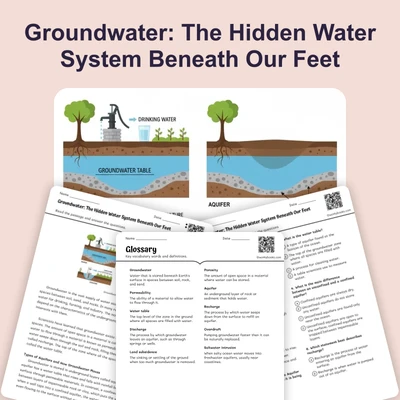
Groundwater
This middle school science passage explores the essential topic of groundwater, aligned to NGSS standards MS-ESS2-4 and ...
MS-ESS2-4MS-ESS3-1
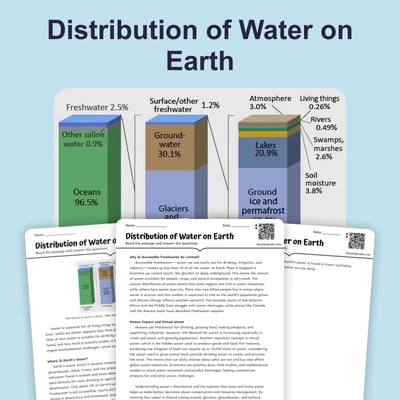
Distribution of Water on Earth
This middle school science reading passage explores the distribution of water on Earth, aligned with NGSS standards MS-E...
MS-ESS2-4MS-ESS3-1
Water as a Resource
This middle school science passage examines water as a critical resource, focusing on how it is used, managed, and conse...
MS-ESS3-1MS-ESS3-4
Water Quality
This middle school science reading passage covers the topic of water quality, aligned with NGSS standards MS-ESS3-1 and ...