Benefits of Volcanic Activity
Interactive passage with audio narration, comprehension questions, and printable PDF.
By completing this purchase you agree to our Terms of Use and Privacy Policy. Your subscription renews automatically until you cancel. You can cancel anytime from your account settings. All sales are final and non-refundable. Digital content is available for download in your account immediately upon purchase.
What's included
Benefits of Volcanic Activity preview and details
About this printable Benefits of Volcanic Activity science reading passage, NGSS-aligned (Grades 5-8)
Sample passage and quiz from Benefits of Volcanic Activity
Reading passage and comprehension quiz preview
Benefits of Volcanic Activity
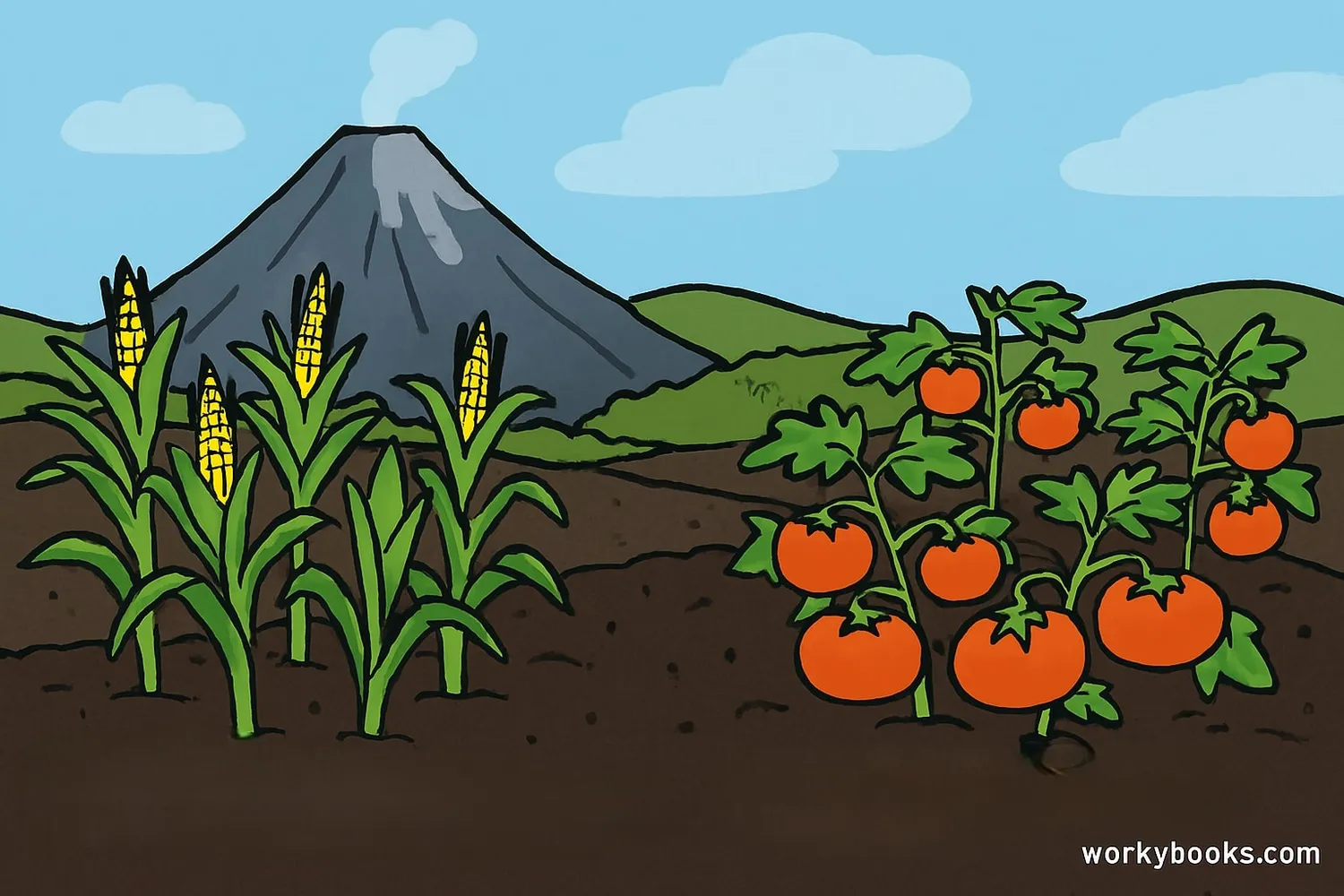
Volcanic activity plays a key role in shaping Earth's surface and supporting life. While volcanoes are often known for their dangers, such as eruptions and lava flows, they also provide many important benefits to people and ecosystems. Scientists study these benefits to understand why people continue to live near volcanoes and how volcanic processes interact with natural and human systems. Understanding the positive effects of volcanoes helps us see the complex relationship between Earth's processes and human society.
How Volcanic Processes Create Fertile Soils and Resources
One major benefit of volcanic activity is the creation of fertile soils. When volcanic ash and rocks break down over time, they release minerals like potassium, phosphorus, and calcium. These nutrients are essential for plant growth. For example, regions around Mount Vesuvius in Italy and Mount Fuji in Japan are famous for their productive farmland, thanks to volcanic soil. Volcanic activity also concentrates minerals such as copper, gold, and silver in certain areas. These mineral deposits form when hot fluids from magma move through rocks, dissolving and redepositing valuable elements. Mining these resources supports local economies and technology industries.
Geothermal Energy, New Land, and Scientific Research
Another benefit is geothermal energy. Heat from underground magma can be harnessed to produce electricity or provide heating. In Iceland, 90% of homes are heated with geothermal energy, reducing the need for fossil fuels. Volcanic eruptions can also create new land, like the island of Surtsey, which formed off the coast of Iceland in 1963. These new islands provide unique habitats for plants and animals and opportunities for scientists to study how life colonizes new environments. Volcanic rocks such as pumice, obsidian, and basalt have been used as building materials for thousands of years.
Tourism and the Balance Between Hazards and Benefits
Volcanic landscapes attract millions of tourists each year, supporting jobs and local businesses. People visit locations like Yellowstone National Park in the United States to see geysers and hot springs, which are powered by volcanic heat. Scientists use volcanoes as natural laboratories to study Earth's interior and the processes that shape our planet. However, living near volcanoes also means facing hazards such as eruptions, ashfall, and earthquakes. Communities must weigh the benefits, like fertile soils and energy, against the risks. Careful monitoring and planning help people stay safe while taking advantage of what volcanoes offer.
By examining the benefits provided by volcanic activity, we gain a deeper appreciation for Earth's dynamic systems. Volcanism demonstrates how natural processes can be both hazardous and helpful, shaping environments and supporting human development.
Interesting Fact: The island of Surtsey, created by a volcanic eruption in 1963, is now a UNESCO World Heritage Site and a unique place for studying the first stages of life on new land.
Comprehension quiz (10 questions)
1. What is one reason why volcanic soils are very good for farming?
2. How do volcanic processes create valuable mineral deposits?
3. What percentage of homes in Iceland use geothermal energy for heating?
4. Which volcanic rocks have been used as building materials?
5. What is the meaning of the word 'geothermal energy' as used in the passage?
6. In the passage, what does 'fertile soil' mean?
7. Why do people continue to live near volcanoes, according to the passage?
8. How do volcanic islands like Surtsey help scientists?
9. True or False: Volcanic activity only brings danger and has no positive effects.
10. True or False: Volcanic landscapes attract millions of tourists every year.
Perfect for the way you teach
- Build comprehension skills
- Auto-graded quiz
- Differentiated reading
- Read together at home
- Improve fluency
- Quiet reading time
- Reading curriculum support
- Independent practice
- Track Lexile growth