This learning resource is available in interactive and printable formats. The interactive worksheet can be played online and assigned to students. The Printable PDF version can be downloaded and printed for completion by hand.
This middle school science reading passage introduces students to the intertidal zone, the area between high and low tide marks on the coast. Aligned to NGSS MS-LS2-1 and MS-LS4-4, the passage explains why conditions in the intertidal are harsh and details how organisms have developed remarkable adaptations to survive. Students will learn about the system of zonation, the effects of temperature change, wave action, and salinity on tide pool life, and examples of organisms such as sea stars, barnacles, and anemones. The passage integrates scientific thinking, cause-and-effect relationships, and applications to environmental science. Activities include a multiple-choice quiz, writing prompts, and graphic organizers. Audio support is integrated to enhance accessibility. This resource is suitable for grades 6-8 and supports comprehension, vocabulary, and critical thinking.
CONTENT PREVIEW
Expand content preview
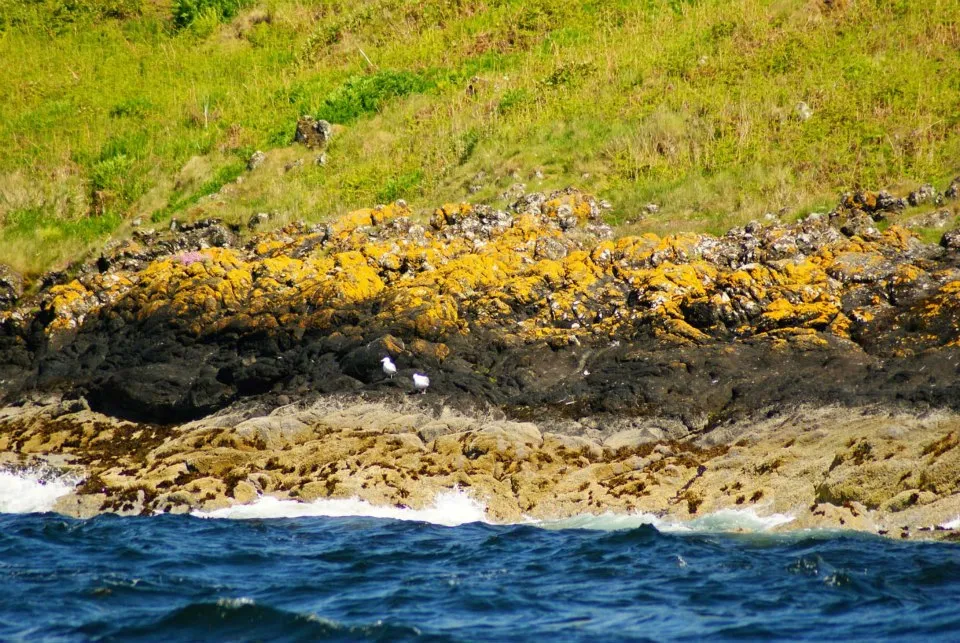
Photograph showing intertidal zonation on the island of Greater Cumbrae, Scotland. Image by Jrockley / Wikimedia Commons (CC0).
The intertidal zone is a unique coastal area located between the highest high tide and the lowest low tide marks. This region is exposed to air at low tide and covered by seawater at high tide, creating a constantly changing environment. Scientists study the intertidal zone because it demonstrates clear examples of how living things respond to environmental challenges. The dynamic conditions in this zone make it a powerful model for understanding adaptation and survival in nature.
Zonation and Environmental Challenges The intertidal zone is divided into several bands or zones: the upper, middle, and lower intertidal. Each zone faces different degrees of wave action, exposure to air, and changes in salinity (saltiness). For example, the upper intertidal zone is exposed to air for up to 80% of the day, while the lower zone is covered by water most of the time. Organisms here must survive intense waves, rapidly changing temperatures (sometimes by more than 20°C in a single day), and fluctuating salinity caused by rain or evaporation. These harsh conditions create strong selection pressures that shape which organisms can survive in each zone.
Adaptations of Intertidal Organisms To thrive in the intertidal, organisms have evolved remarkable adaptations. Barnacles cement themselves to rocks, closing their shells tightly to avoid drying out. Sea stars have tube feet that help them grip surfaces and resist being washed away by waves. Anemones can retract their bodies and close up during low tide to conserve moisture. Many intertidal species also have tough, flexible bodies to handle the physical force of crashing waves. Scientific studies have shown that barnacle populations can be reduced by up to 50% during heat waves, demonstrating how sensitive these organisms are to environmental change.
Ecological Interactions and Broader Significance Interactions among intertidal organisms are shaped by both environmental factors and competition for space. For example, barnacles compete with mussels for rock surfaces, and sea stars are important predators that help control populations. The health of intertidal zones can indicate the overall health of coastal ecosystems. Human activities, such as pollution and coastal development, can threaten these vital habitats. Understanding the intertidal zone helps scientists predict how climate change and sea level rise may impact biodiversity and ecosystem services worldwide.
In summary, the intertidal zone is a dynamic ecosystem where living things must continually adapt to survive. It provides clear examples of natural selection and the interconnectedness of organisms and their environment. Studying the intertidal zone deepens our knowledge of ecology and helps us protect valuable coastal resources.
Interesting Fact: Some intertidal snails can survive temperatures above 40°C during low tides by hiding in cracks and producing a special mucus that prevents water loss.
What is the intertidal zone?
The area between the highest high tide and lowest low tide marksThe deep part of the oceanA freshwater river zoneThe area above the high tide mark
Which of the following is NOT a challenge faced by intertidal organisms?
Constant warm temperaturesStrong wavesChanging salinityExposure to air
What is one way sea stars adapt to life in the intertidal zone?
They use tube feet to grip surfacesThey build shellsThey fly away from wavesThey photosynthesize
According to the passage, what can cause barnacle populations to decrease by up to 50%?
Heat wavesMore rainPredation by sea starsLack of oxygen
What does 'adaptation' mean in the context of the passage?
A special feature or behavior that helps survivalA type of tideA rock formationA kind of plant
What is the role of sea stars as 'predators' in the intertidal zone?
They help control populations of other organismsThey provide shelter for barnaclesThey clean the rocksThey create new zones
Which statement is an inference based on the passage?
If the intertidal zone is unhealthy, coastal ecosystems may also be at riskSea stars are always found above the high tide markBarnacles can live only in freshwaterTide pools never change temperature
If pollution increases in the intertidal zone, what might happen?
Organisms may struggle to survive, reducing biodiversityMore barnacles will appearWaves will get smallerTemperatures will stay the same
True/False: The lower intertidal zone is exposed to air for most of the day.
TrueFalse
True/False: Natural selection in the intertidal zone is influenced by environmental conditions.
TrueFalse
Perfect For:
👩🏫 Teachers
• Reading comprehension practice
• Auto-graded assessments
• Literacy skill development
👨👩👧👦 Parents
• Reading practice at home
• Comprehension improvement
• Educational reading time
🏠 Homeschoolers
• Reading curriculum support
• Independent reading practice
• Progress monitoring
Reading Features:
📖
Reading Passage
Engaging fiction or nonfiction text
❓
Comprehension Quiz
Auto-graded questions
📊
Instant Feedback
Immediate results and scoring
📄
Printable Version
Download for offline reading
🔊
Read Aloud
Voice-over with word highlighting
Reviews & Ratings
No reviews yet. Be the first to share your experience!
Related Content
The Narwhal: Arctic’s Unicorn of the Sea
This NGSS-aligned passage (MS-LS2-1) explores how narwhals survive in Arctic ecosystems. Students learn about specialize...
MS-LS2-1RI.6.3RI.7.3RI.8.8
The Blue-Ringed Octopus
This NGSS aligned passage explores how the tiny blue-ringed octopus impacts its ecosystem through predator-prey relation...
MS-LS2-1RI.6.3RI.7.3RI.8.8
The Giant Isopod: Biological Evolution
This NGSS passage examines how giant isopods evolved for deep-sea survival, including slow metabolism for food scarcity,...
MS-LS4-4RI.6.3RI.7.3RI.8.8
Tardigrades: Microscopic Superheroes
Aligned to MS-LS1-1, this passage examines how tardigrade cell structures (TDP proteins, DNA-repair enzymes) allow survi...
MS-LS2-1RI.6.3RI.7.3RI.8.8
The Leafy Sea Dragon: Nature's Living Seaweed
This NGSS-aligned passage explores how leafy sea dragons (Phycodurus eques) demonstrate key life science concepts for mi...
MS-LS2-1RI.6.3RI.7.3RI.8.8
What Do Axolotls Eat?
This science reading passage, titled "What Do Axolotls Eat?", offers an engaging exploration into the feeding habits of ...
MS-LS2-1
Where Do Axolotls Live?
This science reading passage, titled "The Axolotl's Home," delves into the specific natural environment of the fascinati...
MS-LS4-DMS-LS2-1
The Blobfish
This science reading passage, titled "The Blobfish: A Deep-Sea Mystery," introduces students to one of Earth's most pecu...
MS-LS4-DMS-LS2-1
What Do Blobfish Eat?
This science reading passage, titled "What Do Blobfish Eat?", offers an engaging exploration into the feeding habits of ...
MS-LS2-1
Where Do Penguins Live?
This engaging science reading passage, titled "Where Do Penguins Live? A Cold and Coastal World," clarifies the diverse ...
MS-LS2-1
The Emperor Penguin
This science reading passage, titled "The Emperor Penguin: Antarctica's Royal Survivor," introduces students to one of t...
MS-LS2-1
The Adélie Penguin
This engaging science reading passage, titled "The Adélie Penguin: Antarctica's Little Explorer," introduces students to...
MS-LS2-1
How Does Global Warming Affect Adélie Penguins?
This comprehensive science passage, titled "How Does Global Warming Affect Adélie Penguins?", details the significant im...
MS-LS2-1
What Is Biodiversity?
This comprehensive science reading passage for grades 6-8 introduces students to biodiversity and explores its importanc...
MS-LS2-5MS-LS4-4
Vertebrates: Fishes
This middle school science reading passage offers an in-depth look at fishes, a major group of vertebrates. It covers fi...
MS-LS4-2MS-LS4-4
Vertebrates: Amphibians
This comprehensive middle school science passage dives into the fascinating world of amphibians, a group of vertebrates ...
MS-LS4-2MS-LS4-4
Vertebrates: Reptiles
This comprehensive science passage for grades 6-8 introduces students to reptiles, a fascinating class of vertebrates. A...
MS-LS4-2MS-LS4-4
Vertebrates: Birds
This middle school science passage explores birds as vertebrates, focusing on their unique adaptations such as feathers,...
MS-LS4-2MS-LS4-4
Vertebrates: Mammals
This comprehensive passage introduces middle school students to the class Mammalia and their defining characteristics, i...
MS-LS4-2MS-LS4-4
Invertebrates: Arthropods
This comprehensive science passage introduces middle school students to the phylum Arthropoda, the largest and most dive...