How Energy Moves Through Earth Systems — Reading Comprehension
Premium Resource
Grades
6
7
8
Standards
MS-ESS2-1
PRINT+DIGITAL RESOURCE
This learning resource is available in interactive and printable formats. The interactive worksheet can be played online and assigned to students. The Printable PDF version can be downloaded and printed for completion by hand.
This comprehensive middle school science reading passage explores how energy and matter move through Earth's systems. Students discover how solar radiation drives surface processes while Earth's internal heat drives geological activity like plate movement. The passage explains three mechanisms of energy transfer—conduction, convection, and radiation—and how each operates differently across Earth's layers and spheres. Aligned with NGSS standard MS-ESS2-1, this audio-integrated resource includes differentiated versions for struggling readers, Spanish translations, vocabulary glossary, comprehension questions, and engaging writing activities. Students learn about mantle convection, heat transfer through Earth's layers, and the connection between energy flow and geological processes. Perfect for grades 6-8 science curriculum, this passage builds understanding of Earth's energy systems through clear explanations and real-world examples that help students visualize complex scientific concepts.
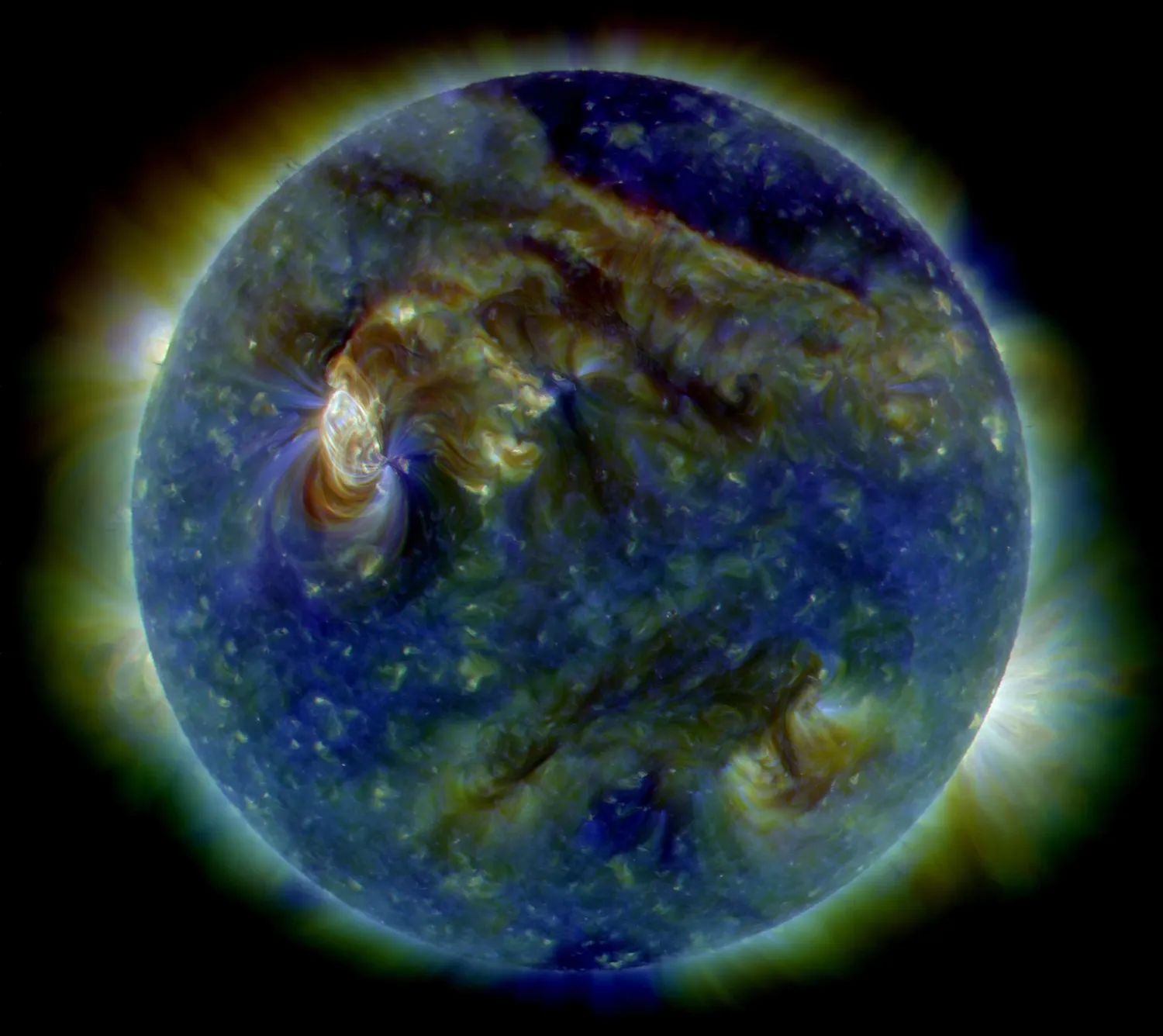
Energy moves through Earth in three main ways: conduction, convection, and radiation. "Sun - August 1, 2010" by NASA/SDO/AIA / Wikimedia Commons (Public domain).
Earth is constantly moving and changing because of energy. Two main sources of energy drive these changes: solar radiation from the Sun and internal heat from deep inside Earth. Solar radiation is energy from the Sun that travels through space and reaches Earth's surface. This energy powers weather, ocean currents, and the water cycle. Meanwhile, internal heat is energy stored deep within Earth that causes geological activity like earthquakes and volcanic eruptions. Understanding how energy moves through Earth's systems helps explain why our planet is so dynamic.
Energy moves through Earth in three main ways: conduction, convection, and radiation. Conduction is the transfer of heat through direct contact between materials. When you touch a hot pan, heat moves from the pan to your hand through conduction. In Earth, conduction happens when heat moves through solid rock layers. However, rock is not a good conductor, so this process is slow. Conduction is most important in Earth's rigid outer layer, called the lithosphere, where heat slowly moves from hot areas to cooler ones.
Convection is the transfer of heat through the movement of fluids, which include liquids and gases. This process is like boiling water in a pot. Hot water rises to the top while cooler water sinks to the bottom, creating a circular motion called a convection current. In Earth's mantle, the layer between the crust and core, rock behaves like a very thick fluid over long periods of time. Hot rock near the core slowly rises toward the surface, cools, and then sinks back down. These mantle convection currents are powerful enough to move Earth's tectonic plates, causing earthquakes, volcanic activity, and mountain formation. Convection is the primary way heat escapes from Earth's interior.
Radiation is the transfer of energy through electromagnetic waves that can travel through empty space. Unlike conduction and convection, radiation does not require matter to transfer energy. The Sun's energy reaches Earth through radiation, traveling 93 million miles through the vacuum of space. When solar radiation reaches Earth's surface, it warms the land and oceans. This energy then drives atmospheric convection, creating winds and weather patterns. Earth also releases energy back into space through radiation, maintaining an energy balance that keeps our planet's temperature relatively stable.
Each energy transfer mechanism operates differently across Earth's layers. In the solid inner and outer core, conduction dominates because the material is too dense for convection. In the mantle, convection is the main process because the rock can flow slowly over millions of years. At Earth's surface, radiation from the Sun provides energy that drives convection in the atmosphere and oceans. The atmosphere and hydrosphere (Earth's water systems) transfer heat primarily through convection, creating weather patterns and ocean currents that distribute energy around the planet.
The interaction between solar radiation and internal heat creates Earth's dynamic systems. Solar radiation drives surface processes by heating air and water unevenly, which causes convection currents in the atmosphere and oceans. This creates wind, rain, and ocean currents that shape Earth's surface through erosion and deposition. Internal heat drives geological processes by causing mantle convection, which moves tectonic plates. When plates collide, they form mountains. When they pull apart, they create new ocean floor. This constant movement recycles Earth's crust and releases internal heat to the surface through volcanoes and hot springs.
Understanding energy transfer helps scientists predict geological events and climate patterns. By studying how convection currents move in the mantle, scientists can better understand where earthquakes and volcanoes are likely to occur. By tracking how solar radiation affects ocean and atmospheric convection, meteorologists can forecast weather and study climate change. Energy and matter are constantly cycling through Earth's systems, connecting the surface to the deep interior in ways that make our planet unique in the solar system.
Interesting Fact: The mantle convection currents that move Earth's tectonic plates travel at about the same speed your fingernails grow—only a few centimeters per year!
What are the two main sources of energy that drive changes on Earth?
Wind and waterSolar radiation and internal heatGravity and magnetismTides and earthquakes
Which energy transfer mechanism does NOT require matter to move energy?
ConductionConvectionRadiationAll require matter
What is the primary way heat escapes from Earth's interior?
Conduction through the crustRadiation from volcanoesConvection in the mantleEvaporation of water
In the passage, what does the term 'lithosphere' refer to?
Earth's atmosphere and weather systemsEarth's rigid outer layer including crust and upper mantleThe layer of water covering EarthThe molten core of Earth
Based on the passage, why does rock in the mantle behave like a fluid?
It is actually liquid magmaIt contains a lot of waterIt can flow slowly over very long periods of timeIt is constantly melting and freezing
How does solar radiation drive surface processes on Earth?
By creating earthquakesBy heating air and water unevenly, causing convection currentsBy melting rocks in the mantleBy pulling on Earth's tides
What happens when tectonic plates collide according to the passage?
They create new ocean floorThey form mountainsThey cause the mantle to coolThey stop moving
Which statement about convection currents is supported by the passage?
They only occur in the atmosphereThey move faster than conductionThey are powerful enough to move tectonic platesThey require empty space to work
True or False: Conduction is the fastest way heat moves through Earth's interior.
TrueFalse
True or False: Earth releases energy back into space through radiation to maintain temperature balance.
TrueFalse
Perfect For:
👩🏫 Teachers
• Reading comprehension practice
• Auto-graded assessments
• Literacy skill development
👨👩👧👦 Parents
• Reading practice at home
• Comprehension improvement
• Educational reading time
🏠 Homeschoolers
• Reading curriculum support
• Independent reading practice
• Progress monitoring
Reading Features:
📖
Reading Passage
Engaging fiction or nonfiction text
❓
Comprehension Quiz
Auto-graded questions
📊
Instant Feedback
Immediate results and scoring
📄
Printable Version
Download for offline reading
🔊
Read Aloud
Voice-over with word highlighting
Reviews & Ratings
No reviews yet. Be the first to share your experience!
Related Content
Talus Slopes: Formation and Features
This earth science passage explains talus slope formation through mechanical weathering processes, aligning with NGSS MS...
MS-ESS2-1MS-ESS2-2RST.6-8.4
Biological Weathering: Types and Examples
This passage details biological weathering processes, connecting to NGSS MS-ESS2-1 (Earth's systems) and LS2.B (ecosyste...
MS-ESS2-1MS-PS1-2RST.6-8.3
Frost Wedging: How Ice Splits Rock
This passage explains frost wedging as a mechanical weathering process. Aligned with NGSS MS-ESS2-1 (Earth’s systems) a...
MS-ESS2-1MS-ESS2-2RST.6-8.3
Chemical Weathering: The Breakdown of Rocks Through Chemical Reactions
This passage explains chemical weathering processes, aligned with NGSS MS-ESS2-1 (Earth’s systems) and ESS2-2 (surface ...
MS-ESS2-1MS-ESS2-2RST.6-8.4
Limestone Caves: Nature’s Underground Wonders
This passage explains limestone cave formation through carbonation, aligned with NGSS MS-ESS2-1 (Earth’s systems) and L...
MS-ESS2-1LS2.CRST.6-8.7
The Coldest City in the World: Yakutsk
This NGSS-aligned science passage introduces middle school readers to Yakutsk, the coldest city on Earth. Students will ...
MS-ESS2-1
Igneous Rocks
This comprehensive passage introduces middle school students to igneous rocks, focusing on how these rocks form from mol...
MS-ESS2-1MS-ESS3-1
Sedimentary Rocks
This comprehensive middle school science passage introduces students to sedimentary rocks, detailing their step-by-step ...
MS-ESS2-1MS-ESS2-3MS-ESS3-1
Metamorphic Rocks
This engaging middle school science passage introduces students to the fascinating world of metamorphic rocks. Aligned w...
MS-ESS2-1MS-ESS3-1
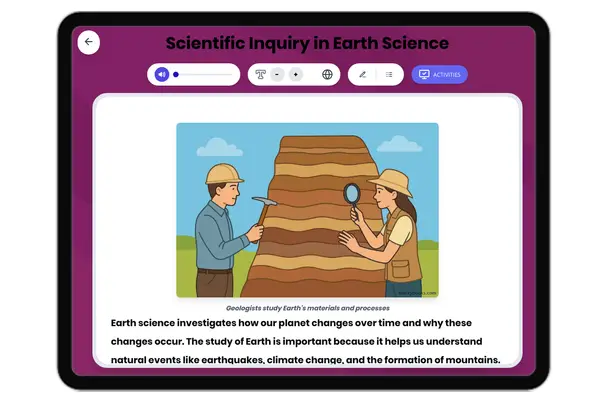
Scientific Inquiry in Earth Science
This passage explores scientific inquiry in Earth science for grades 6-8, aligned with NGSS standards MS-ESS1-4, MS-ESS2...
MS-ESS1-4MS-ESS2-1MS-ESS3-5SEP
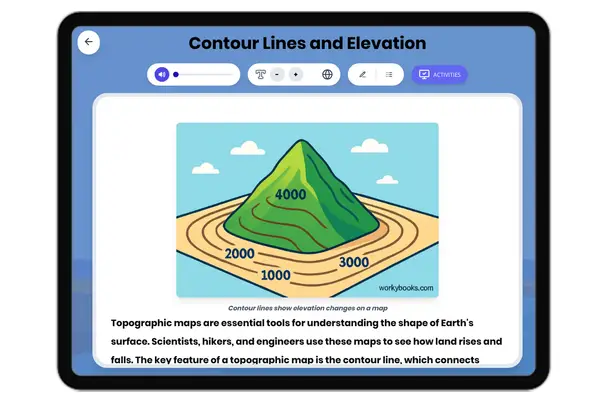
Contour Lines and Elevation
This passage, designed for grades 6-8 and aligned with NGSS standards MS-ESS2-2 and MS-ESS2-1, introduces students to th...
MS-ESS2-2MS-ESS2-1SEP.4SEP.8
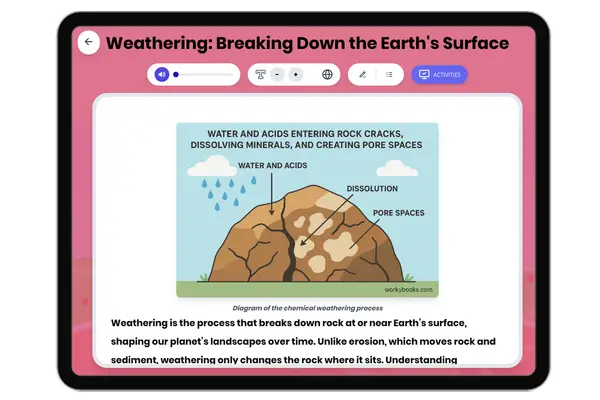
Weathering
This comprehensive science reading passage for grades 6-8 focuses on the concept of weathering, aligning with NGSS stand...
MS-ESS2-1
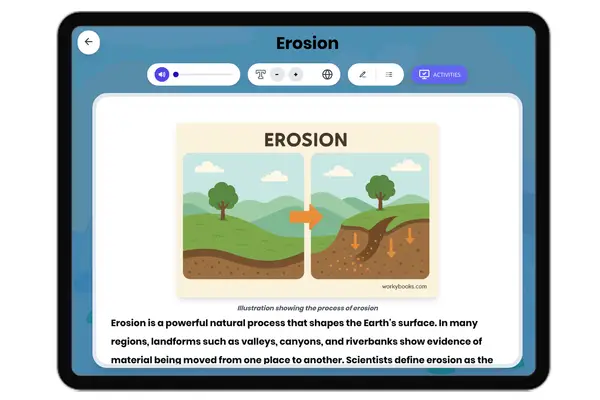
Erosion
This comprehensive middle school science passage explains erosion—the process that transports weathered rock and soil fr...
MS-ESS2-1
Stream Erosion and Deposition
This middle school science passage, aligned to NGSS MS-ESS2-1, introduces students to the dynamic processes of stream er...
MS-ESS2-1
Wind Erosion and Deposition
This comprehensive science reading passage for grades 6-8 explores the processes of wind erosion and deposition, alignin...
MS-ESS2-1
Glacial Erosion and Deposition
This middle school science passage explores glacial erosion and deposition, focusing on the mechanisms by which glaciers...
MS-ESS2-1
Mass Movements
This NGSS-aligned passage introduces middle school students to the science of mass movements—gravity-driven motions of r...
MS-ESS2-1MS-ESS3-2
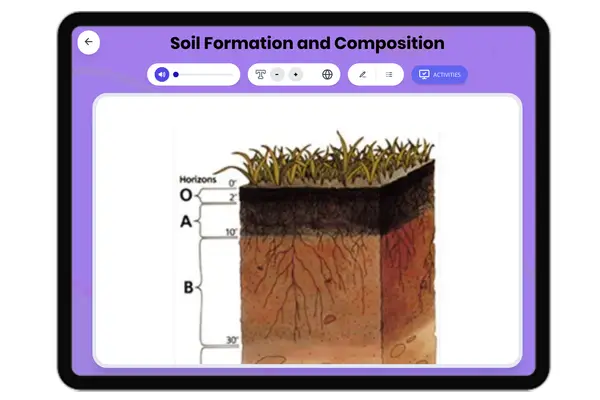
Soil Formation and Composition
This comprehensive middle school science passage explores soil formation and composition, perfectly aligned to NGSS stan...
MS-ESS2-1
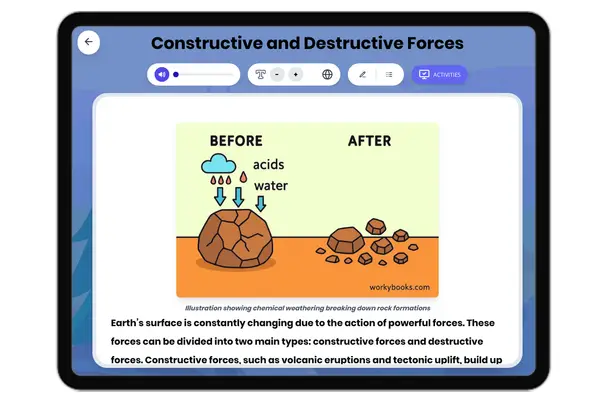
Constructive and Destructive Forces
This middle school science passage explores how Earth's surface is constantly shaped by the interplay of constructive an...
MS-ESS2-1
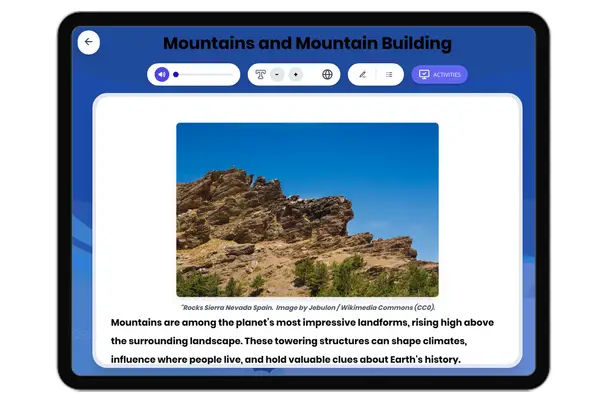
Mountains and Mountain Building
This NGSS-aligned passage for grades 6-8 covers the fascinating processes that create Earth's highest landforms—mountain...