This learning resource is available in interactive and printable formats. The interactive worksheet can be played online and assigned to students. The Printable PDF version can be downloaded and printed for completion by hand.
This comprehensive 650-word reading passage explains how magma and volcanoes create minerals, specifically addressing NGSS standard MS-ESS2-1. Students discover how different minerals crystallize from magma at different temperatures through Bowen's Reaction Series, a fundamental process in Earth science. The passage describes how volcanic activity brings mineral-rich magma to the surface, creating deposits of olivine, feldspar, pyroxene, and other silicate minerals in igneous rocks. Written at a 6th-8th grade reading level with a Flesch-Kincaid score of 6.0-7.0, this audio-integrated resource includes a simplified differentiated version for struggling readers and English Language Learners, Spanish translations of both versions, a comprehensive glossary of key terms, multiple-choice questions spanning DOK levels 1-3, writing activities with model answers, and relevant graphic organizers. The content uses clear, direct language to break down complex geological processes into sequential, understandable concepts with real-world examples that middle school students can relate to.
CONTENT PREVIEW
Expand content preview
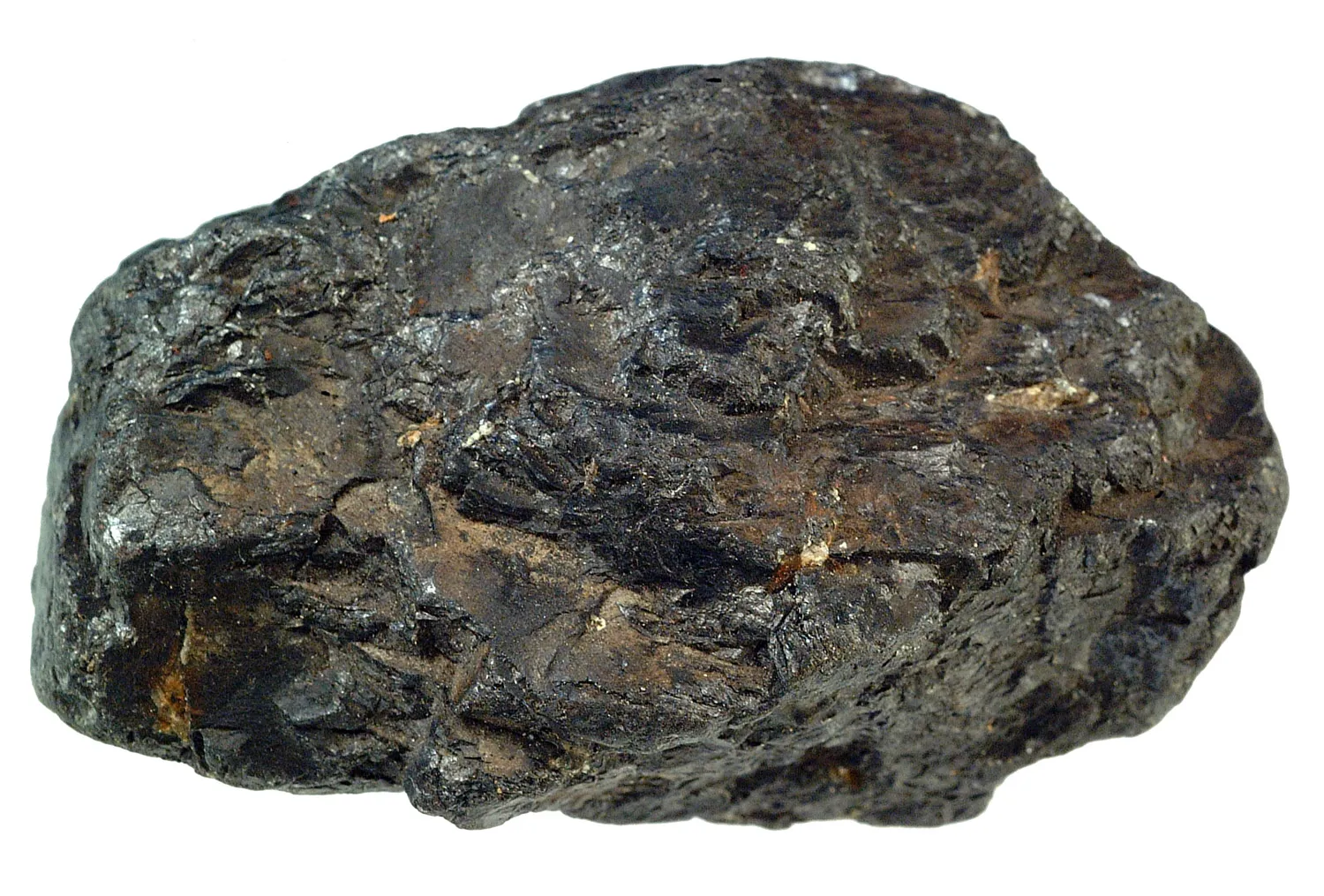
Ilmenite, FeTiO3 (iron titanium oxide), is an economically important and interesting mineral. Ilmenite forms as a primary mineral in mafic igneous rocks. "Ilmenite (GeoDIL number - 1402)" by Darla Sondrol / Wikimedia Commons
Deep beneath Earth's surface, molten rock called magma contains the ingredients for creating minerals. When magma cools, minerals form through a process called crystallization. Not all minerals form at the same time or temperature. Scientists have discovered a pattern called Bowen's Reaction Series that explains the order in which different minerals crystallize as magma cools from extremely hot temperatures to cooler ones.
Bowen's Reaction Series works like a sequence of events controlled by temperature. When magma first begins to cool from temperatures above 1200°C, minerals with high melting points crystallize first. Olivine, a greenish mineral rich in iron and magnesium, forms at the highest temperatures. As the magma continues to cool, pyroxene minerals crystallize next, followed by other minerals in a predictable order. This process is similar to how water freezes at a specific temperature, but different minerals have different freezing points. The minerals that form early, like olivine and pyroxene, are called mafic minerals because they contain magnesium and iron.
As the magma keeps cooling, different minerals continue to form. At intermediate temperatures, minerals like amphibole crystallize. When temperatures drop further, feldspar minerals begin to form. Feldspar is the most abundant mineral group in Earth's crust and appears in many types of rocks. At the coolest temperatures, minerals like quartz and muscovite mica crystallize last. These later-forming minerals are often lighter in color and contain more silicon and aluminum than the early-forming minerals.
Volcanic activity plays a crucial role in bringing mineral-rich magma to Earth's surface. When volcanoes erupt, they transport magma from deep underground chambers upward through the crust. This movement creates opportunities for minerals to form in different environments. If magma cools slowly deep underground, large mineral crystals have time to grow, creating rocks like granite. If magma erupts onto the surface as lava and cools quickly, only small crystals form, producing rocks like basalt. The speed of cooling directly affects crystal size.
The minerals created through volcanic processes form different types of igneous rocks. Igneous rocks are classified based on their mineral composition and texture. Rocks rich in olivine and pyroxene, such as basalt and gabbro, are dark-colored and dense. Rocks containing more feldspar and quartz, like granite and rhyolite, are lighter in color and less dense. These differences result from where and how quickly the magma cooled. Geologists study igneous rocks to understand the conditions under which they formed, including the temperature and location of the original magma.
Understanding Bowen's Reaction Series helps scientists predict which minerals will be found in different types of volcanic rocks. For example, rocks from volcanoes in Hawaii contain abundant olivine because the magma there is very hot and rich in iron and magnesium. In contrast, volcanoes in the Andes Mountains produce rocks with more feldspar and quartz because their magma is cooler and has a different chemical composition. By examining the minerals in igneous rocks, geologists can determine the history of volcanic activity in a region and the conditions deep within Earth where the magma originated.
Interesting Fact: Some olivine crystals from volcanic rocks are gem-quality and are called peridot. Ancient Egyptians mined peridot over 3,500 years ago and called it the "gem of the sun."
What is magma?
Molten rock found beneath Earth's surfaceSolid rock on Earth's surfaceWater mixed with mineralsFrozen lava from old volcanoes
According to Bowen's Reaction Series, which mineral crystallizes at the highest temperature?
QuartzFeldsparOlivineMica
What does the term 'mafic minerals' mean?
Minerals that are light in color and contain siliconMinerals that form at low temperaturesMinerals rich in magnesium and iron that form at high temperaturesMinerals found only in sedimentary rocks
How does the speed of magma cooling affect crystal size?
Fast cooling creates large crystals; slow cooling creates small crystalsSlow cooling creates large crystals; fast cooling creates small crystalsThe speed of cooling does not affect crystal sizeAll crystals are the same size regardless of cooling speed
Why do Hawaiian volcanic rocks contain abundant olivine?
Because the magma is very hot and rich in iron and magnesiumBecause the magma cools very slowly undergroundBecause Hawaiian volcanoes are older than other volcanoesBecause the magma is cooler and contains more silicon
What can geologists learn by studying the minerals in igneous rocks?
Only the color of the original magmaThe age of the volcano and nothing elseThe temperature, location, and history of the magma that formed the rockThe weather conditions when the rock formed
Which type of rock forms when magma cools slowly deep underground?
BasaltGraniteSandstoneLimestone
What is the relationship between mineral composition and rock color in igneous rocks?
Rocks rich in olivine and pyroxene are light-coloredRocks with more feldspar and quartz are dark-coloredRocks rich in olivine and pyroxene are dark-colored; rocks with more feldspar and quartz are light-coloredAll igneous rocks are the same color regardless of mineral composition
Feldspar is the most abundant mineral group in Earth's crust.
TrueFalse
All minerals in magma crystallize at the same temperature.
TrueFalse
Perfect For:
👩🏫 Teachers
• Reading comprehension practice
• Auto-graded assessments
• Literacy skill development
👨👩👧👦 Parents
• Reading practice at home
• Comprehension improvement
• Educational reading time
🏠 Homeschoolers
• Reading curriculum support
• Independent reading practice
• Progress monitoring
Reading Features:
📖
Reading Passage
Engaging fiction or nonfiction text
❓
Comprehension Quiz
Auto-graded questions
📊
Instant Feedback
Immediate results and scoring
📄
Printable Version
Download for offline reading
🔊
Read Aloud
Voice-over with word highlighting
Reviews & Ratings
No reviews yet. Be the first to share your experience!
Related Content
Frost Wedging: How Ice Splits Rock
This passage explains frost wedging as a mechanical weathering process. Aligned with NGSS MS-ESS2-1 (Earth’s systems) a...
MS-ESS2-1MS-ESS2-2RST.6-8.3
Limestone Caves: Nature’s Underground Wonders
This passage explains limestone cave formation through carbonation, aligned with NGSS MS-ESS2-1 (Earth’s systems) and L...
MS-ESS2-1LS2.CRST.6-8.7
Chemical Weathering: The Breakdown of Rocks Through Chemical Reactions
This passage explains chemical weathering processes, aligned with NGSS MS-ESS2-1 (Earth’s systems) and ESS2-2 (surface ...
MS-ESS2-1MS-ESS2-2RST.6-8.4
Talus Slopes: Formation and Features
This earth science passage explains talus slope formation through mechanical weathering processes, aligning with NGSS MS...
MS-ESS2-1MS-ESS2-2RST.6-8.4
Biological Weathering: Types and Examples
This passage details biological weathering processes, connecting to NGSS MS-ESS2-1 (Earth's systems) and LS2.B (ecosyste...
MS-ESS2-1MS-PS1-2RST.6-8.3
The Coldest City in the World: Yakutsk
This NGSS-aligned science passage introduces middle school readers to Yakutsk, the coldest city on Earth. Students will ...
MS-ESS2-1
Igneous Rocks
This comprehensive passage introduces middle school students to igneous rocks, focusing on how these rocks form from mol...
MS-ESS2-1MS-ESS3-1
Sedimentary Rocks
This comprehensive middle school science passage introduces students to sedimentary rocks, detailing their step-by-step ...
MS-ESS2-1MS-ESS2-3MS-ESS3-1
Metamorphic Rocks
This engaging middle school science passage introduces students to the fascinating world of metamorphic rocks. Aligned w...
MS-ESS2-1MS-ESS3-1
Scientific Inquiry in Earth Science
This passage explores scientific inquiry in Earth science for grades 6-8, aligned with NGSS standards MS-ESS1-4, MS-ESS2...
MS-ESS1-4MS-ESS2-1MS-ESS3-5SEP
Contour Lines and Elevation
This passage, designed for grades 6-8 and aligned with NGSS standards MS-ESS2-2 and MS-ESS2-1, introduces students to th...
MS-ESS2-2MS-ESS2-1SEP.4SEP.8
Weathering
This comprehensive science reading passage for grades 6-8 focuses on the concept of weathering, aligning with NGSS stand...
MS-ESS2-1
Erosion
This comprehensive middle school science passage explains erosion—the process that transports weathered rock and soil fr...
MS-ESS2-1
Stream Erosion and Deposition
This middle school science passage, aligned to NGSS MS-ESS2-1, introduces students to the dynamic processes of stream er...
MS-ESS2-1
Wind Erosion and Deposition
This comprehensive science reading passage for grades 6-8 explores the processes of wind erosion and deposition, alignin...
MS-ESS2-1
Glacial Erosion and Deposition
This middle school science passage explores glacial erosion and deposition, focusing on the mechanisms by which glaciers...
MS-ESS2-1
Mass Movements
This NGSS-aligned passage introduces middle school students to the science of mass movements—gravity-driven motions of r...
MS-ESS2-1MS-ESS3-2
Soil Formation and Composition
This comprehensive middle school science passage explores soil formation and composition, perfectly aligned to NGSS stan...
MS-ESS2-1
Constructive and Destructive Forces
This middle school science passage explores how Earth's surface is constantly shaped by the interplay of constructive an...
MS-ESS2-1
Mountains and Mountain Building
This NGSS-aligned passage for grades 6-8 covers the fascinating processes that create Earth's highest landforms—mountain...