How Minerals Form by Crystallization
Interactive passage with audio narration, comprehension questions, and printable PDF.
By completing this purchase you agree to our Terms of Use and Privacy Policy. Your subscription renews automatically until you cancel. You can cancel anytime from your account settings. All sales are final and non-refundable. Digital content is available for download in your account immediately upon purchase.
What's included
How Minerals Form by Crystallization preview and details
About this printable How Minerals Form by Crystallization science reading passage, NGSS-aligned (Grades 6-8)
Sample passage and quiz from How Minerals Form by Crystallization
Reading passage and comprehension quiz preview
How Minerals Form Through Crystallization
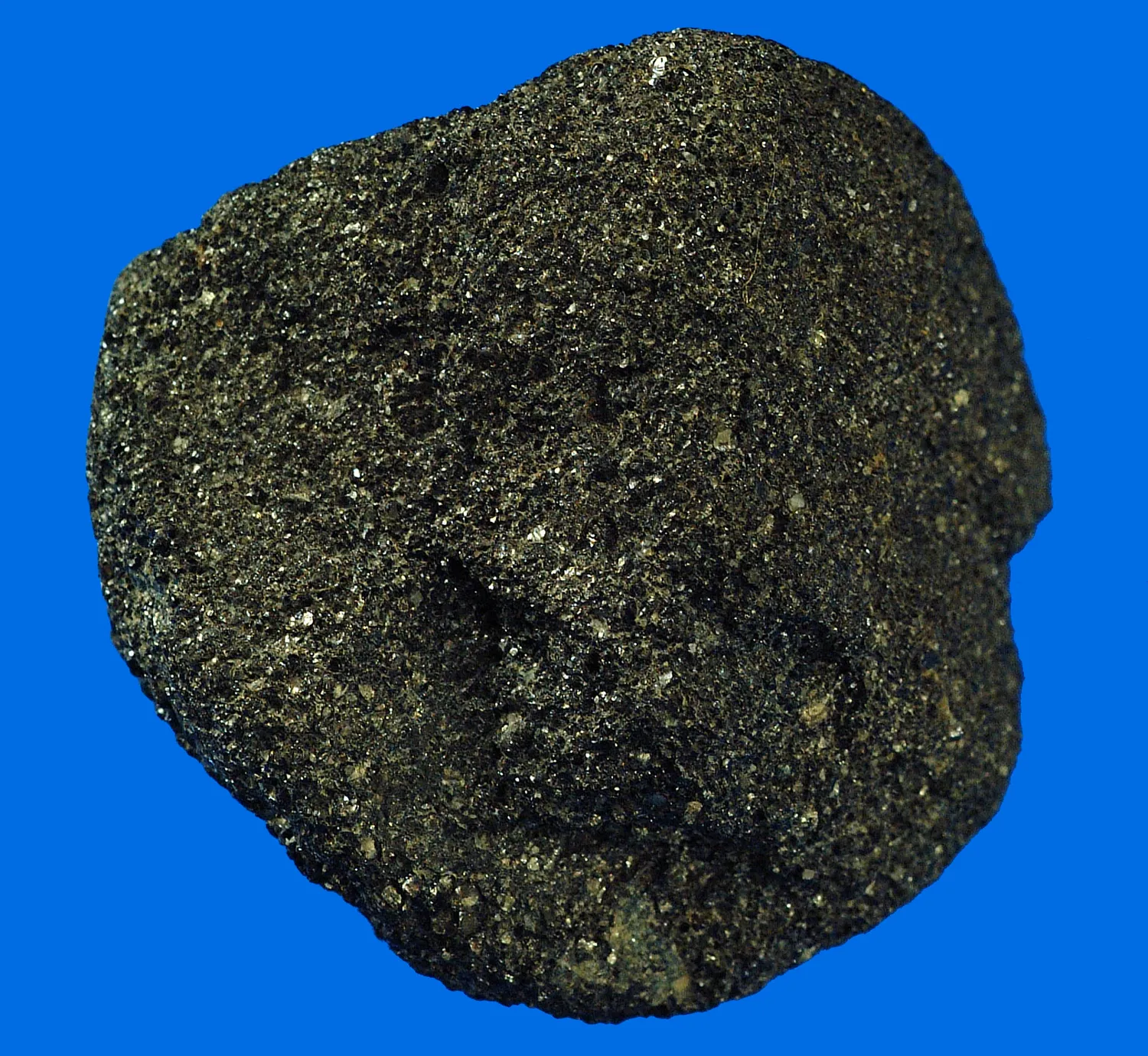
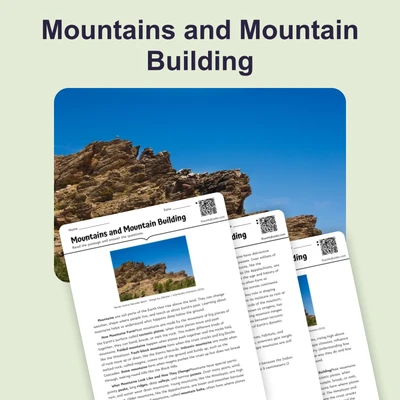
While the magma is slowly cooling inside the Earth's crust, chromite crsytals are forming and because of their density, fall to the bottom and are concentrated there.Chromite forms in deep ultra-mafic magmas and is one of the first minerals to crystallize. "Chromite (GeoDIL number - 1404)" by Darla Sondrol / Wikimedia Commons
Crystallization is the process by which atoms arrange themselves into an orderly, repeating pattern to form a solid mineral. This natural process happens in two main ways on Earth. First, crystallization occurs when molten rock, called magma, cools and solidifies beneath Earth's surface or as lava on the surface. Second, it takes place when dissolved minerals in water become solid again through a process called precipitation. In both cases, atoms that were once moving freely begin to lock together in specific geometric arrangements, creating the crystals we observe in rocks and minerals.
The cooling rate of molten rock has a direct and observable effect on crystal size. When magma cools slowly deep underground, atoms have plenty of time to move into their proper positions within the growing crystal structure. This slow process allows large, well-formed crystals to develop. In contrast, when lava cools rapidly at Earth's surface or when magma is suddenly cooled by contact with water, atoms have very little time to arrange themselves. The result is many small crystals or sometimes even glass-like material with no crystal structure at all. This relationship between cooling rate and crystal size is one of the most important concepts in understanding how igneous rocks form.
Granite provides an excellent example of slow crystallization. This common igneous rock forms when magma cools slowly deep beneath Earth's surface, sometimes taking thousands or even millions of years to solidify completely. Because of this extended cooling period, granite contains large, visible crystals of different minerals such as quartz, feldspar, and mica. You can easily see and identify these individual crystals with your naked eye. The interlocking crystals give granite its characteristic speckled appearance and make it a strong, durable rock used in construction and monuments.
Basalt demonstrates the opposite end of the crystallization spectrum. This dark-colored igneous rock forms when lava erupts from volcanoes and cools rapidly at Earth's surface. The quick cooling gives atoms minimal time to organize into crystal structures. As a result, basalt contains crystals so small that you typically cannot see individual crystals without a microscope. Some basalt even contains volcanic glass called obsidian, where cooling happened so rapidly that no crystals formed at all. Despite their different appearances, both granite and basalt formed through crystallization, but their contrasting crystal sizes reveal their very different cooling histories.
Crystallization also occurs when minerals precipitate from water solutions. When water containing dissolved minerals evaporates or changes temperature, the dissolved substances can no longer remain in solution. The atoms then bond together and form solid crystals. This process creates minerals in caves, such as stalactites and stalagmites, and forms salt crystals when ocean water evaporates. Precipitation from solution typically produces well-formed crystals because the process usually happens slowly, giving atoms time to arrange into their proper geometric patterns.
Scientists use their understanding of crystallization to interpret Earth's history. By examining crystal size in igneous rocks, geologists can determine whether the rock formed deep underground or at the surface. They can estimate how quickly the rock cooled and even reconstruct ancient volcanic eruptions. The size, shape, and arrangement of crystals serve as a record of the conditions present when the rock formed. This makes crystallization not just a process that creates minerals, but also a tool for reading Earth's geological story preserved in stone.
Interesting Fact: Some crystals can grow to enormous sizes when conditions are just right. The largest known crystals are selenite beams found in the Cave of Crystals in Mexico, measuring up to 36 feet long and weighing 55 tons, formed by extremely slow crystallization from mineral-rich water over hundreds of thousands of years.
Comprehension quiz (10 questions)
1. What is crystallization?
2. What happens when magma cools slowly deep underground?
3. The term 'precipitation' in this passage refers to:
4. What does the term 'cooling rate' mean?
5. Why does granite have large, visible crystals?
6. How does basalt differ from granite in terms of crystal size?
7. Scientists can determine where an igneous rock formed by examining:
8. Which of the following is an example of crystallization from precipitation?
9. True or False: Rapid cooling of lava produces large crystals.
10. True or False: Both granite and basalt are examples of igneous rocks formed through crystallization.
Perfect for the way you teach
- Build comprehension skills
- Auto-graded quiz
- Differentiated reading
- Read together at home
- Improve fluency
- Quiet reading time
- Reading curriculum support
- Independent practice
- Track Lexile growth