How Stars Form in Nebulae
Interactive passage with audio narration, comprehension questions, and printable PDF.
By completing this purchase you agree to our Terms of Use and Privacy Policy. Your subscription renews automatically until you cancel. You can cancel anytime from your account settings. All sales are final and non-refundable. Digital content is available for download in your account immediately upon purchase.
What's included
How Stars Form in Nebulae preview and details
About this printable How Stars Form in Nebulae science reading passage, NGSS-aligned (Grades 5-8)
Sample passage and quiz from How Stars Form in Nebulae
Reading passage and comprehension quiz preview
How Stars Form in Nebulae
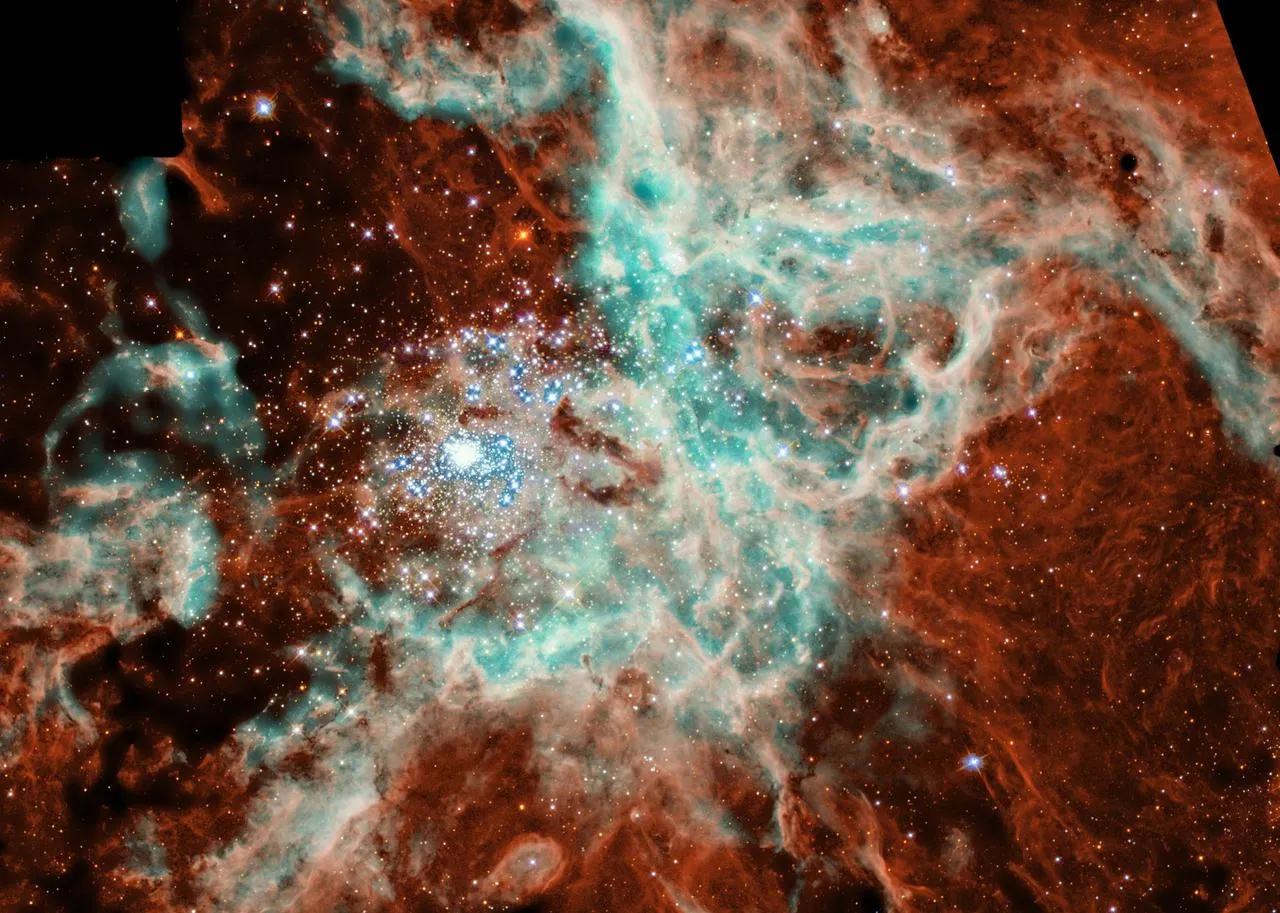
Stars form inside nebulae, which are vast clouds of gas and dust drifting through space. These clouds contain mostly hydrogen and helium, the simplest elements in the universe. Scientists explain that gravity plays a key role in star formation. Gravity pulls the gas and dust particles together, creating regions where matter becomes more concentrated.
As gravity continues to pull material inward, the cloud begins to collapse. This process can take millions of years. The particles pack tighter and tighter at the center of the collapsing cloud. When matter compresses, it generates heat. The center of the cloud becomes hotter and denser as more material falls inward. Scientists call this dense, hot center a protostar. At this stage, the object is not yet a true star.
The temperature and pressure at the protostar's core continue to increase. Eventually, conditions become extreme enough for nuclear fusion to begin. Nuclear fusion occurs when hydrogen atoms combine to form helium atoms. This process releases enormous amounts of energy in the form of light and heat. When nuclear fusion ignites, a new star is born. The energy produced by fusion creates an outward push that balances gravity's inward pull.
Evidence shows that star formation happens throughout the universe right now. The Orion Nebula, located about 1,344 light-years from Earth, is one of the closest regions where stars are actively forming. Astronomers observe young stars and protostars within this nebula using powerful telescopes. The same process that created our Sun billions of years ago continues across billions of galaxies today.
Understanding star formation helps scientists explain how the universe evolves over time. Stars produce the heavier elements found throughout space. When massive stars eventually die, they scatter these elements into space. This stellar material becomes part of new nebulae, which can form new stars and planetary systems. The cycle of star birth and death shapes the cosmos we observe today.
Interesting Fact: The largest known nebula where stars form is the Tarantula Nebula, located in a neighboring galaxy called the Large Magellanic Cloud. It contains some of the most massive and hottest stars ever discovered.
Comprehension quiz (10 questions)
1. What are nebulae primarily made of?
2. What force pulls gas and dust together in a nebula?
3. What is a protostar?
4. In the context of star formation, what does 'compress' mean?
5. What happens during nuclear fusion in a star?
6. Why does the Orion Nebula help scientists understand star formation?
7. What balances the inward pull of gravity in a star?
8. How do dying stars contribute to the formation of new stars?
9. Star formation takes only a few years to complete.
10. The same process that formed our Sun billions of years ago still creates stars today.
Perfect for the way you teach
- Build comprehension skills
- Auto-graded quiz
- Differentiated reading
- Read together at home
- Improve fluency
- Quiet reading time
- Reading curriculum support
- Independent practice
- Track Lexile growth