How Telescope Discoveries Change the World
Interactive passage with audio narration, comprehension questions, and printable PDF.
By completing this purchase you agree to our Terms of Use and Privacy Policy. Your subscription renews automatically until you cancel. You can cancel anytime from your account settings. All sales are final and non-refundable. Digital content is available for download in your account immediately upon purchase.
What's included
How Telescope Discoveries Change the World preview and details
About this printable How Telescope Discoveries Change the World science reading passage, NGSS-aligned (Grades 5-8)
Sample passage and quiz from How Telescope Discoveries Change the World
Reading passage and comprehension quiz preview
How Telescope Discoveries Change the World
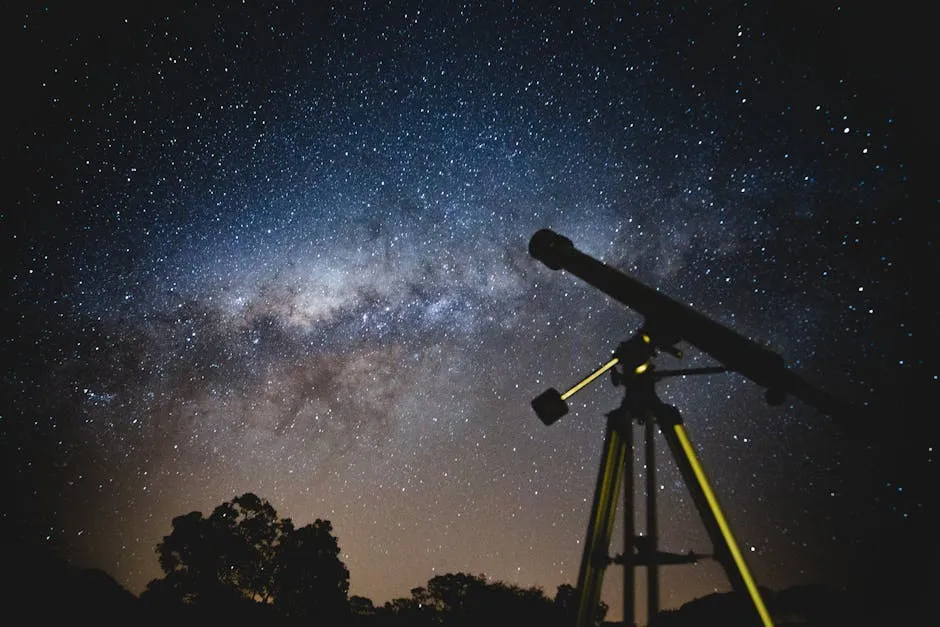
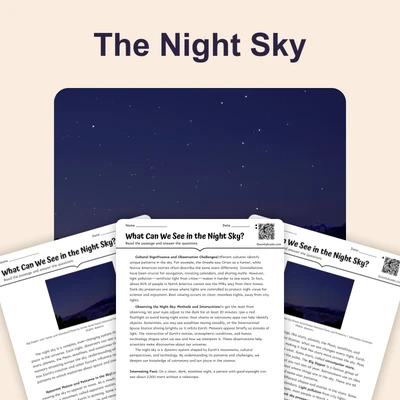
"Stunning starry sky with silhouette of telescope capturing the Milky Way in Brazil." by Lucas Pezeta / Pexels.
Telescope discoveries have transformed how humans understand the universe and their place within it. Each major breakthrough changes not only science but also philosophy, religion, and society. Scientists observe distant objects and gather evidence that can challenge long-held beliefs. These observations often lead to new questions that reshape entire fields of study.
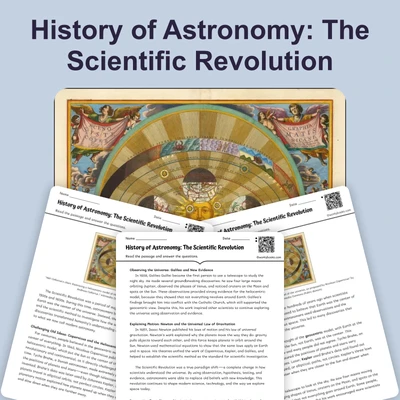
In 1610, Galileo Galilei used his improved telescope to observe Jupiter's moons orbiting the planet. This evidence showed that not everything circles Earth. The discovery challenged the geocentric model, which placed Earth at the center of the universe. Scientists began to accept the heliocentric model instead, with the Sun at the center. This shift changed how people viewed Earth's importance in the cosmos. Religious and political leaders resisted these ideas because they contradicted traditional teachings.
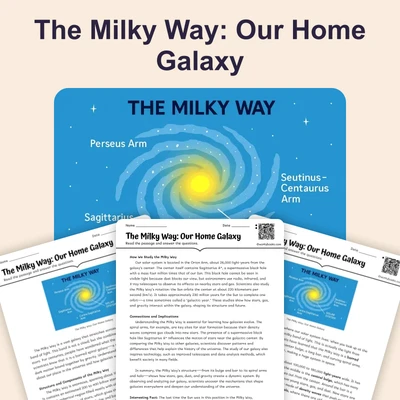
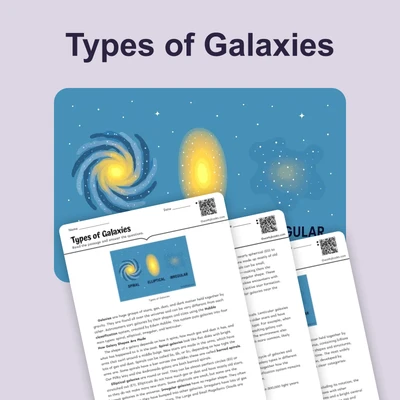
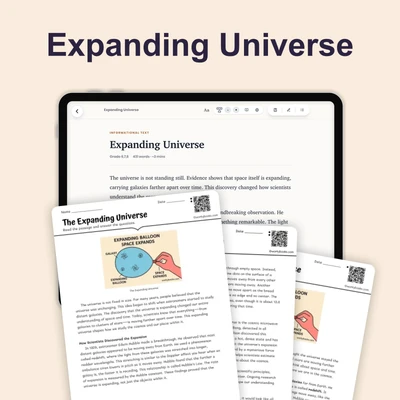
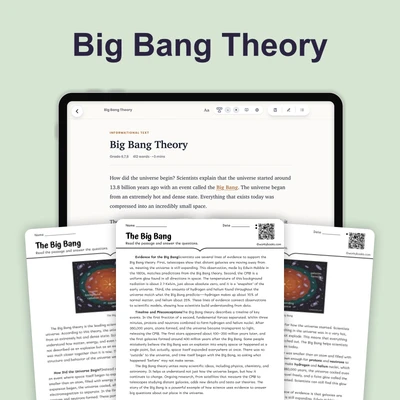
In the 1920s, astronomer Edwin Hubble used a powerful telescope to observe fuzzy patches of light in the night sky. Evidence showed these patches were actually distant galaxies beyond our Milky Way. Scientists realized the universe contained billions of galaxies, not just one. Hubble also discovered that galaxies move away from each other, suggesting the universe expands. This observation led to the Big Bang theory, explaining how the universe may have begun.
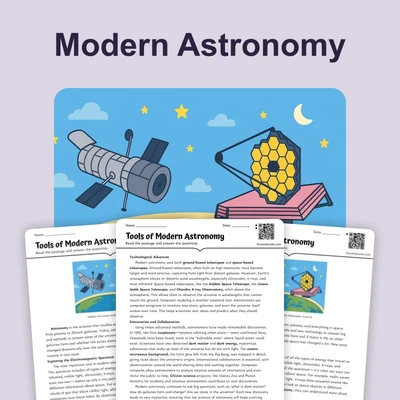
The Hubble Space Telescope, launched in 1990, orbits above Earth's atmosphere. It captures clearer images than ground-based telescopes can achieve. Scientists have used Hubble to measure the age of the universe and observe how galaxies change over time. The telescope revealed that the universe's expansion is speeding up, not slowing down.
Today, the James Webb Space Telescope observes the universe in infrared light. This allows scientists to see through cosmic dust and study the earliest galaxies. Webb's observations suggest that galaxies formed earlier and faster than previous models predicted. Scientists must now revise their understanding of galaxy formation. Each new discovery raises fresh questions about dark matter, dark energy, and the universe's ultimate fate.
Telescope discoveries matter because they reveal humanity's place in an ever-expanding universe. These observations demonstrate that scientific knowledge grows through evidence and testing. Tonight's telescope observation could lead to tomorrow's revolutionary discovery, rewriting textbooks and reshaping how we understand reality.
Interesting Fact: The Hubble Space Telescope travels at about 17,000 miles per hour and completes an orbit around Earth every 95 minutes. It has made over 1.5 million observations since its launch.
Comprehension quiz (10 questions)
1. What did Galileo observe with his telescope that challenged the geocentric model?
2. What did Edwin Hubble discover about the fuzzy patches of light in the night sky?
3. In the passage, what does the word 'geocentric' mean?
4. What does the term 'infrared light' refer to in the context of the James Webb Space Telescope?
5. Based on the passage, why do telescope discoveries often challenge existing beliefs?
6. What can you infer about why the Hubble Space Telescope orbits above Earth's atmosphere?
7. How might the discovery that galaxies are moving away from each other apply to understanding the universe's history?
8. If scientists discovered a new type of telescope that could see even farther than Webb, what would likely happen?
9. True or False: The Hubble Space Telescope revealed that the universe's expansion is slowing down.
10. True or False: The James Webb Space Telescope's observations suggest that galaxies formed earlier than scientists previously predicted.
Perfect for the way you teach
- Build comprehension skills
- Auto-graded quiz
- Differentiated reading
- Read together at home
- Improve fluency
- Quiet reading time
- Reading curriculum support
- Independent practice
- Track Lexile growth