How the Nile Shaped Egypt
Interactive passage with audio narration, comprehension questions, and printable PDF.
By completing this purchase you agree to our Terms of Use and Privacy Policy. Your subscription renews automatically until you cancel. You can cancel anytime from your account settings. All sales are final and non-refundable. Digital content is available for download in your account immediately upon purchase.
What's included
How the Nile Shaped Egypt preview and details
About this printable How the Nile Shaped Egypt reading passage (Grades 5-8)
Sample passage and quiz from How the Nile Shaped Egypt
Reading passage and comprehension quiz preview
How the Nile Shaped Egypt
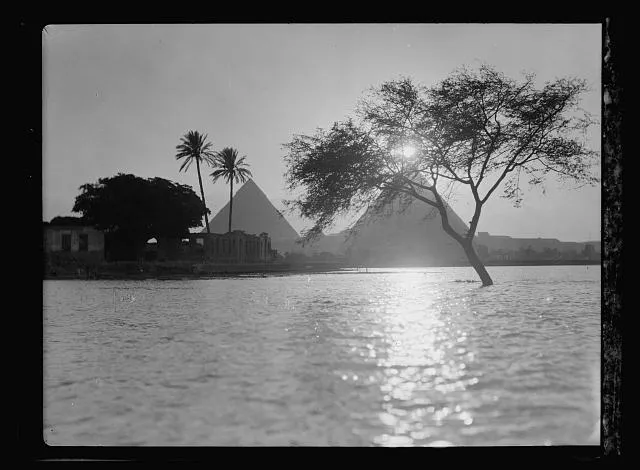
Source: Library of Congress - American Colony (Jerusalem). Photo Department
The Nile River is the lifeblood of Ancient Egypt, shaping its geography, society, and achievements. Stretching over 4,000 miles, the Nile flows northward through desert lands before emptying into the Mediterranean Sea. The predictable annual flooding of the Nile, known as the inundation, created fertile soil along its banks. This natural cycle set the foundation for Egypt’s powerful civilization.
The Nile’s yearly floods were both a blessing and a challenge. Between June and September, melting snow and heavy rains in East Africa caused the river to rise and overflow its banks. When the waters receded, they left behind a rich, black mud called silt. This silt was essential for farming because it replenished the land with nutrients. Archaeological evidence from sites like Hierakonpolis shows that early Egyptians built simple irrigation canals as early as 3500 BCE. These canals channeled floodwater to crops, allowing farmers to grow wheat, barley, and flax. By using basins and dikes, Egyptian farmers controlled the floods, turning a risky event into a source of abundance.
Egyptian society organized itself around the Nile’s rhythms. The river’s flooding determined the agricultural calendar, which had three main seasons: Akhet (flooding), Peret (planting), and Shemu (harvesting). The need to predict and coordinate these seasons led to one of history’s earliest calendars. Ancient inscriptions, such as those found in the tomb of the official Amenemhat, describe how priests observed the star Sirius to forecast when the inundation would begin. This calendar guided farmers and helped the government collect taxes based on harvests. The pharaoh, seen as both king and god, took credit for the Nile’s bounty and organized massive projects like dams and granaries. Egyptian art and texts often show the Nile as a source of life, connecting it to religious beliefs and the afterlife.
The Nile’s importance went beyond agriculture. It served as a highway for trade, linking Upper and Lower Egypt and making it easier for people, goods, and ideas to travel. The river’s central role supported a strong social hierarchy, with the pharaoh and priests at the top, followed by scribes, artisans, and farmers. Primary sources, like the Rhind Mathematical Papyrus, reveal how Egyptians measured their fields and organized labor. Over centuries, the basic pattern of Nile flooding and farming remained consistent, but technology and social organization grew more complex. Eventually, droughts and changes in the river’s behavior challenged Egyptian society, but the Nile’s legacy continued to shape the region for millennia.
The Nile River demonstrates how geography can influence human history. By adapting to its cycles, Egyptians developed a remarkable civilization, leaving behind monuments, writings, and knowledge that still inspire study today. The story of the Nile connects to larger themes of environment, technology, and the rise of complex societies in history.
Interesting Fact: The Egyptian calendar, based on the Nile’s flood, had 365 days—just like the modern calendar!
Comprehension quiz (8 questions)
1. What is the annual flooding of the Nile called?
2. What did the Nile leave after flooding?
3. Who was seen as both king and god?
4. Why did Egyptians create a calendar?
5. How did irrigation help farmers?
6. What was the main effect of Nile's floods?
7. The Nile River had no impact on society. True or false?
8. What does 'hierarchy' mean?
Perfect for the way you teach
- Build comprehension skills
- Auto-graded quiz
- Differentiated reading
- Read together at home
- Improve fluency
- Quiet reading time
- Reading curriculum support
- Independent practice
- Track Lexile growth