How Tree Rings Record Climate Change
Interactive passage with audio narration, comprehension questions, and printable PDF.
By completing this purchase you agree to our Terms of Use and Privacy Policy. Your subscription renews automatically until you cancel. You can cancel anytime from your account settings. All sales are final and non-refundable. Digital content is available for download in your account immediately upon purchase.
What's included
How Tree Rings Record Climate Change preview and details
About this printable How Tree Rings Record Climate Change science reading passage, NGSS-aligned (Grades 5-8)
Sample passage and quiz from How Tree Rings Record Climate Change
Reading passage and comprehension quiz preview
How Tree Rings Record Climate Change
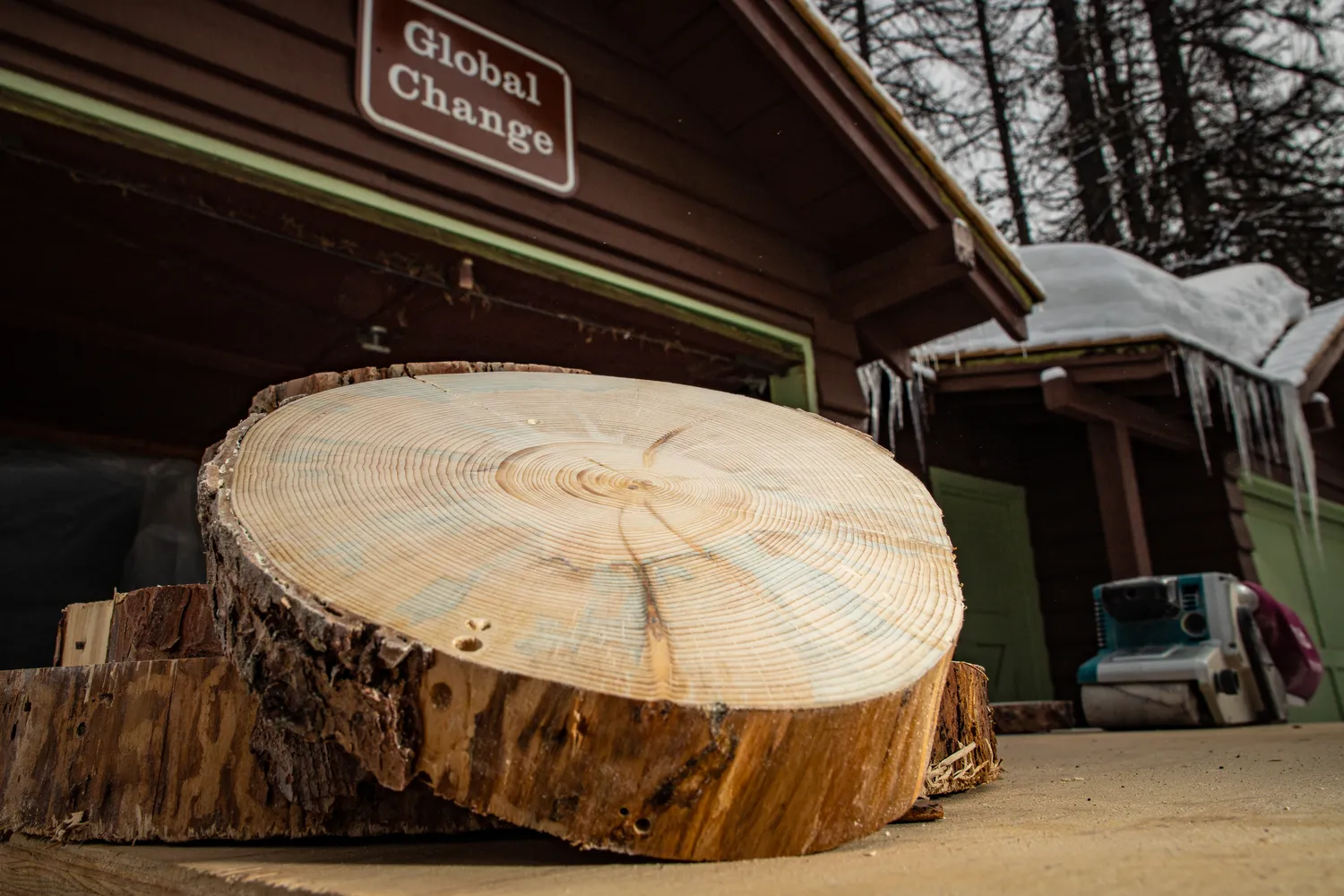
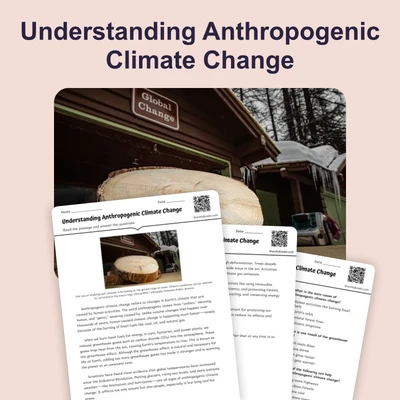
One way of studying past climates is by looking at the growth rings on trees. Climatic conditions can be inferred by variations in the tree's rings.Widely spaced rings, from when the tree was growing fast, can mean the climate was favorable. Tightly spaced rings can show how a tree grew more slowly. The rings can also indicate avalanche patterns and so much more.United States Geological Survey (USGS) staff collect these tree "cookies" in Glacier National Park, and around the country. GlacierNPS / Wikimedia Commons
Trees keep a detailed record of climate history hidden inside their trunks. Each year, a tree adds a new layer of wood called a growth ring. The width of each ring depends on the growing conditions that year. In a warm, wet year with plenty of water and sunshine, the tree grows quickly and produces a wide ring. In a cold or dry year, the tree grows slowly and forms a narrow ring. Scientists can read these patterns like pages in a diary.
The study of tree rings is called dendrochronology. Scientists collect samples by drilling a thin core sample from the tree trunk without killing the tree. This cylindrical piece of wood contains all the rings from the tree's lifetime. By counting the rings, scientists determine the tree's age. By measuring ring widths, they learn about past climate conditions. Evidence shows that wide rings typically form during years with good precipitation, while narrow rings indicate drought or stress.
Scientists can extend their climate records even further by matching patterns between living trees and older wood. When rings from different trees show the same pattern of wide and narrow bands, scientists know those trees experienced the same climate events. By connecting patterns from living trees to ancient logs or wooden beams in old buildings, researchers can reconstruct climate data going back thousands of years. This process is called cross-dating.
Bristlecone pine trees in California provide an excellent example of this method. Some of these trees are over 4,000 years old, making them among Earth's oldest living organisms. Scientists have used bristlecone pines to create a continuous climate record spanning more than 2,000 years. This record reveals patterns of wet and dry periods, including severe droughts that may have affected ancient civilizations.
Tree ring analysis matters because it helps scientists understand natural climate variability before humans began keeping weather records. By comparing modern climate changes to patterns from centuries ago, researchers can better identify unusual trends. Tree rings also complement other climate records like ice cores and ocean sediments. Together, these natural archives help scientists piece together Earth's climate history and predict future changes.
Interesting Fact: The oldest tree ring record comes from German oak trees and extends back 12,460 years, providing climate data from the end of the last Ice Age.
Comprehension quiz (10 questions)
1. What determines the width of a tree's growth ring in any given year?
2. What is dendrochronology?
3. How do scientists collect tree ring samples without killing the tree?
4. What does a narrow tree ring typically indicate?
5. Based on the passage, what is cross-dating?
6. Why are bristlecone pine trees particularly valuable for climate research?
7. How can scientists extend climate records beyond the lifetime of living trees?
8. According to the passage, what other natural climate records complement tree ring data?
9. Tree rings can provide climate information from thousands of years before humans kept weather records.
10. Scientists must cut down a tree completely to study its growth rings.
Perfect for the way you teach
- Build comprehension skills
- Auto-graded quiz
- Differentiated reading
- Read together at home
- Improve fluency
- Quiet reading time
- Reading curriculum support
- Independent practice
- Track Lexile growth