This learning resource is available in interactive and printable formats. The interactive worksheet can be played online and assigned to students. The Printable PDF version can be downloaded and printed for completion by hand.
This middle school science passage explains the systematic process scientists use to identify minerals, focusing on observable properties such as color, streak, luster, hardness (with reference to the Mohs scale), cleavage, fracture, and density. The passage illustrates why using multiple properties together is essential for accurate identification, discusses special properties like magnetism and fluorescence, and connects mineral identification to real-world applications in geology, technology, and industry. Aligned to NGSS standard MS-ESS2-1, the passage supports analytical thinking and hands-on investigation, and it is audio-integrated for accessibility. Activities include a multiple-choice quiz, writing prompts, and graphic organizers to reinforce conceptual understanding and scientific reasoning. This resource is ideal for grades 6-8, promoting inquiry and scientific literacy in Earth science.
Identifying Minerals
Minerals are naturally occurring solids that form the building blocks of rocks and Earth’s crust. Scientists must accurately identify minerals to understand Earth’s structure and its resources. The process of identification relies on observing and measuring physical properties, because many minerals look similar at first glance. To avoid mistakes, scientists use a combination of tests and careful analysis, rather than relying on just one feature.
Key Properties Used to Identify Minerals
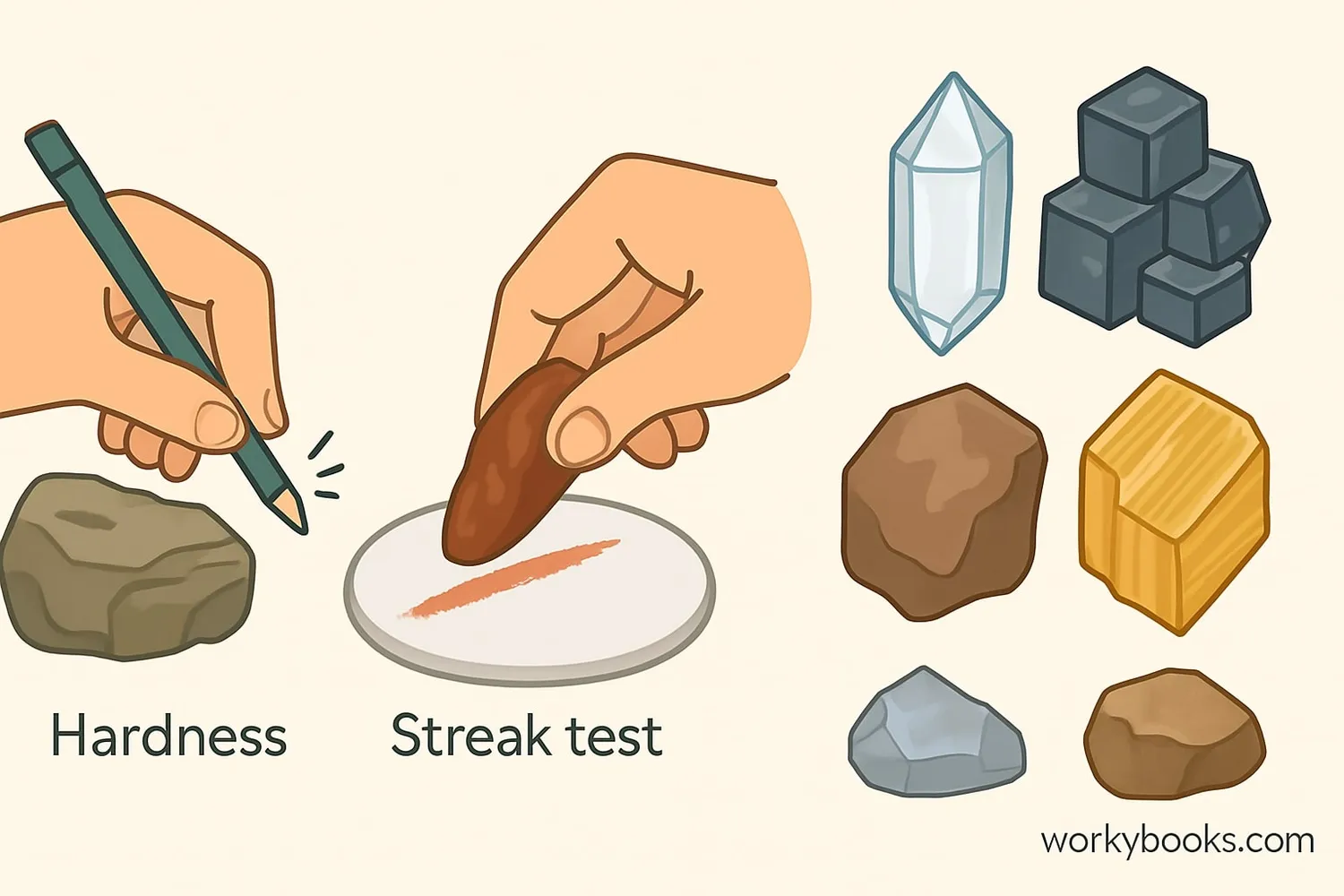
One commonly observed property is color, but color alone can be misleading. Impurities in a mineral’s structure can cause dramatic changes in color, even if its chemical makeup stays the same. For example, both sapphire and ruby are forms of the mineral corundum; their colors differ only because of trace elements. A more reliable test is the streak—the color of a mineral’s powder when rubbed on an unglazed porcelain tile. While the color of a mineral can vary, its streak is usually consistent. Luster describes how a mineral reflects light, with terms like metallic, glassy, waxy, pearly, or earthy. These differences can help distinguish minerals that look similar in color.
Hardness is another key property measured by the Mohs scale, which ranks minerals from 1 (softest, like talc) to 10 (hardest, like diamond). The ability of a mineral to resist scratching directly relates to its internal atomic structure. Cleavage describes a mineral’s tendency to break along flat planes, while fracture refers to breaking along irregular surfaces. These breakage patterns result from the arrangement and strength of chemical bonds within the mineral. Density, or specific gravity, measures how much mass is packed into a given volume; heavy minerals like galena are much denser than lighter ones like quartz.
Special Properties and the Need for Multiple Tests
Some minerals display special properties that make identification easier. For instance, magnetite is naturally magnetic, and calcite reacts with acids by fizzing due to the release of carbon dioxide gas. Fluorescence, where a mineral glows under ultraviolet light, and double refraction, which splits light into two images, are also helpful clues. Scientists always use several properties together—never just one—because relying on a single test can lead to misidentification. For example, both halite and quartz are colorless and glassy, but halite tastes salty and has perfect cubic cleavage, while quartz does not.
Mineral identification is important for many real-world applications. Geologists use these methods to locate valuable ores, while chemists and engineers analyze minerals for use in electronics, construction, and health products. The ability to classify and identify minerals also helps us understand the history of Earth’s formation and ongoing geological processes. By studying mineral properties, scientists can reconstruct past environments and predict where certain resources may be found.
Conclusion: The Scientific Process of Mineral Identification
The science of mineral identification integrates observation, experimentation, and systematic reasoning. No single property is ever enough—only through the combination of tests can minerals be accurately classified. This approach reflects broader scientific principles: careful measurement, repeated testing, and analysis of evidence all lead to better understanding. Mineral identification connects to Earth’s systems, resource management, and the advancement of technology, illustrating how science supports our daily lives.
Interesting Fact: The mineral diamond is the hardest known natural substance, ranking 10 on the Mohs scale. Yet, pure graphite, which is used in pencils, is made of the same element—carbon—but has a Mohs hardness of just 1!
Which property describes how a mineral reflects light?
LusterStreakCleavageDensity
What is the Mohs scale used to measure?
DensityHardnessColorLuster
Why is color alone not a reliable way to identify a mineral?
Color always stays the same.Color can change due to impurities.Color is the only property that matters.Color and streak are the same thing.
What does the property 'streak' refer to when identifying minerals?
The way a mineral breaksThe shine of a mineralThe color of a mineral’s powderThe weight of a mineral
Which of the following minerals is naturally magnetic?
QuartzGalenaMagnetiteHalite
What does 'cleavage' mean in minerals?
How a mineral reflects lightHow a mineral breaks along flat planesHow heavy a mineral isHow hard a mineral is to scratch
What happens when calcite reacts with acid?
It glows under UV light.It fizzes and releases gas.It becomes magnetic.It breaks into cubes.
True or False: Scientists use only one property to identify minerals.
TrueFalse
True or False: Minerals with the same chemical makeup can have different colors.
TrueFalse
Which property helps explain why galena feels heavier than quartz of the same size?
ColorLusterDensityFracture
Perfect For:
👩🏫 Teachers
• Reading comprehension practice
• Auto-graded assessments
• Literacy skill development
👨👩👧👦 Parents
• Reading practice at home
• Comprehension improvement
• Educational reading time
🏠 Homeschoolers
• Reading curriculum support
• Independent reading practice
• Progress monitoring
Reading Features:
📖
Reading Passage
Engaging fiction or nonfiction text
❓
Comprehension Quiz
Auto-graded questions
📊
Instant Feedback
Immediate results and scoring
📄
Printable Version
Download for offline reading
🔊
Read Aloud
Voice-over with word highlighting
Reviews & Ratings
No reviews yet. Be the first to share your experience!
Related Content
Frost Wedging: How Ice Splits Rock
This passage explains frost wedging as a mechanical weathering process. Aligned with NGSS MS-ESS2-1 (Earth’s systems) a...
MS-ESS2-1MS-ESS2-2RST.6-8.3
Limestone Caves: Nature’s Underground Wonders
This passage explains limestone cave formation through carbonation, aligned with NGSS MS-ESS2-1 (Earth’s systems) and L...
MS-ESS2-1LS2.CRST.6-8.7
Chemical Weathering: The Breakdown of Rocks Through Chemical Reactions
This passage explains chemical weathering processes, aligned with NGSS MS-ESS2-1 (Earth’s systems) and ESS2-2 (surface ...
MS-ESS2-1MS-ESS2-2RST.6-8.4
Talus Slopes: Formation and Features
This earth science passage explains talus slope formation through mechanical weathering processes, aligning with NGSS MS...
MS-ESS2-1MS-ESS2-2RST.6-8.4
Biological Weathering: Types and Examples
This passage details biological weathering processes, connecting to NGSS MS-ESS2-1 (Earth's systems) and LS2.B (ecosyste...
MS-ESS2-1MS-PS1-2RST.6-8.3
The Coldest City in the World: Yakutsk
This NGSS-aligned science passage introduces middle school readers to Yakutsk, the coldest city on Earth. Students will ...
MS-ESS2-1
Igneous Rocks
This comprehensive passage introduces middle school students to igneous rocks, focusing on how these rocks form from mol...
MS-ESS2-1MS-ESS3-1
Sedimentary Rocks
This comprehensive middle school science passage introduces students to sedimentary rocks, detailing their step-by-step ...
MS-ESS2-1MS-ESS2-3MS-ESS3-1
Metamorphic Rocks
This engaging middle school science passage introduces students to the fascinating world of metamorphic rocks. Aligned w...
MS-ESS2-1MS-ESS3-1
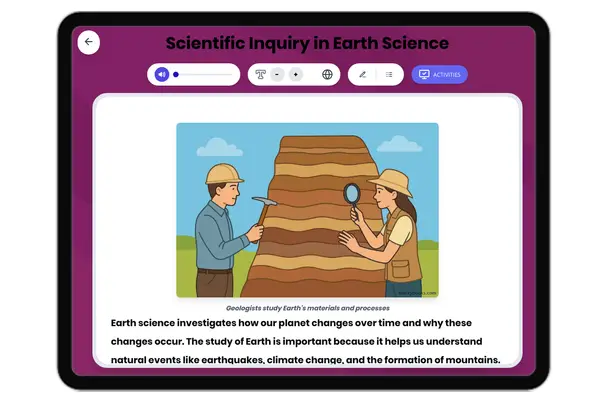
Scientific Inquiry in Earth Science
This passage explores scientific inquiry in Earth science for grades 6-8, aligned with NGSS standards MS-ESS1-4, MS-ESS2...
MS-ESS1-4MS-ESS2-1MS-ESS3-5SEP
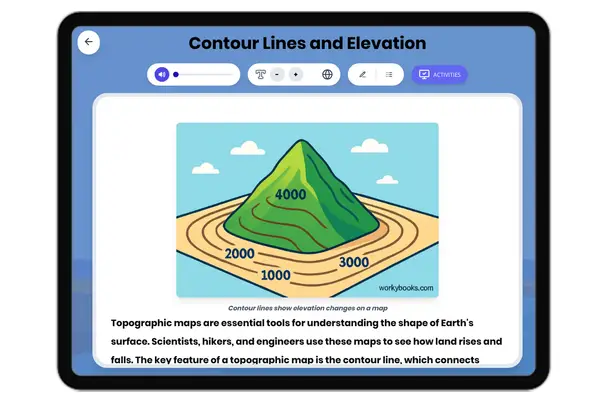
Contour Lines and Elevation
This passage, designed for grades 6-8 and aligned with NGSS standards MS-ESS2-2 and MS-ESS2-1, introduces students to th...
MS-ESS2-2MS-ESS2-1SEP.4SEP.8
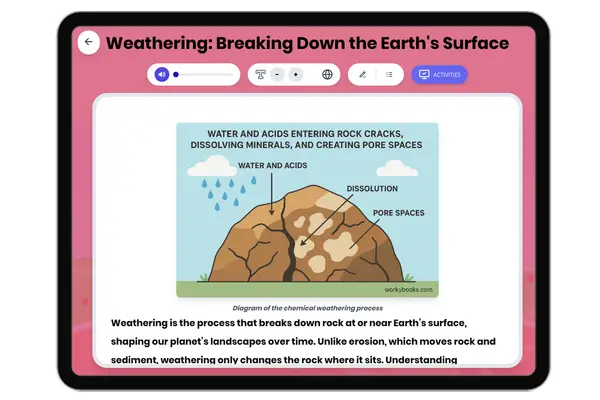
Weathering
This comprehensive science reading passage for grades 6-8 focuses on the concept of weathering, aligning with NGSS stand...
MS-ESS2-1
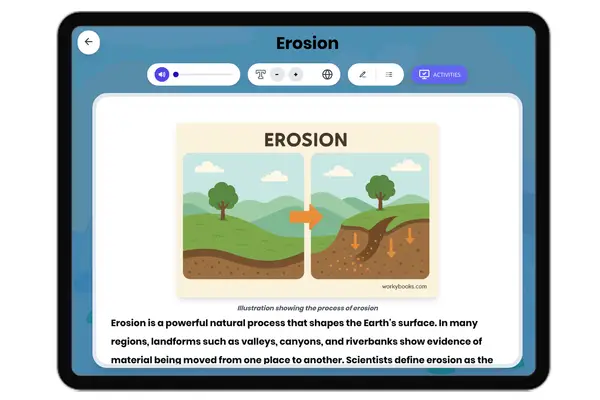
Erosion
This comprehensive middle school science passage explains erosion—the process that transports weathered rock and soil fr...
MS-ESS2-1
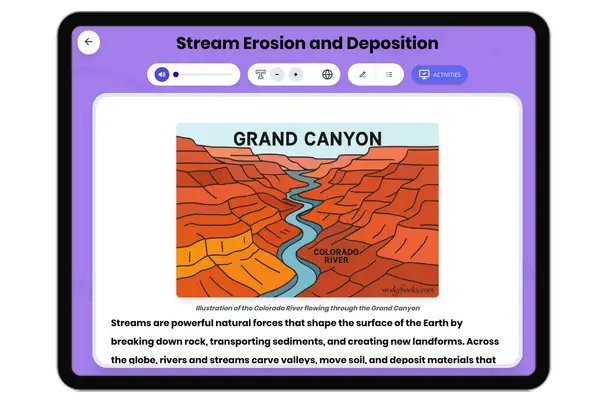
Stream Erosion and Deposition
This middle school science passage, aligned to NGSS MS-ESS2-1, introduces students to the dynamic processes of stream er...
MS-ESS2-1
Wind Erosion and Deposition
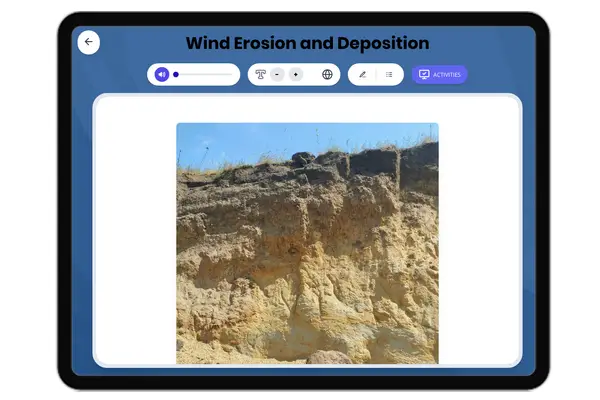
This comprehensive science reading passage for grades 6-8 explores the processes of wind erosion and deposition, alignin...
MS-ESS2-1
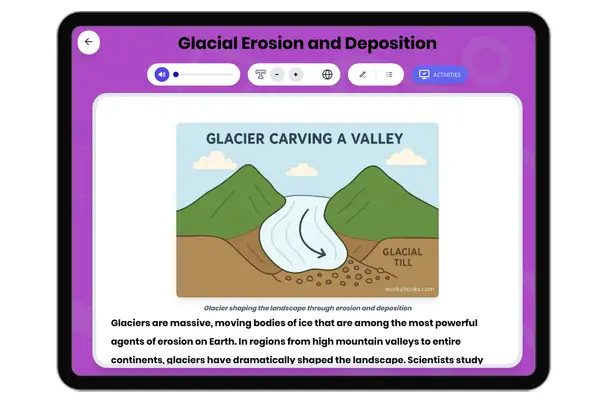
Glacial Erosion and Deposition
This middle school science passage explores glacial erosion and deposition, focusing on the mechanisms by which glaciers...
MS-ESS2-1
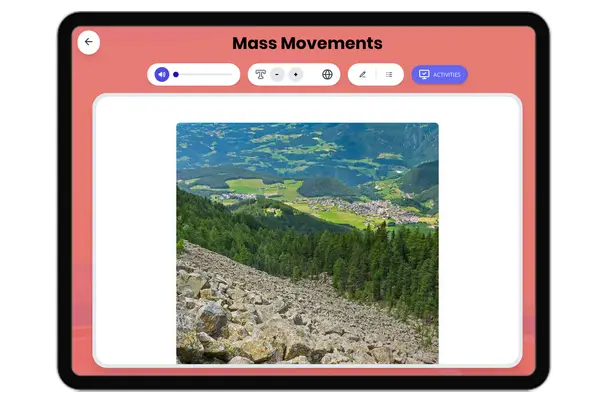
Mass Movements
This NGSS-aligned passage introduces middle school students to the science of mass movements—gravity-driven motions of r...
MS-ESS2-1MS-ESS3-2
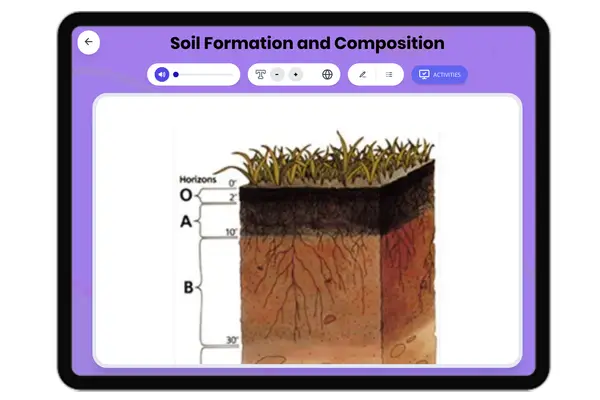
Soil Formation and Composition
This comprehensive middle school science passage explores soil formation and composition, perfectly aligned to NGSS stan...
MS-ESS2-1
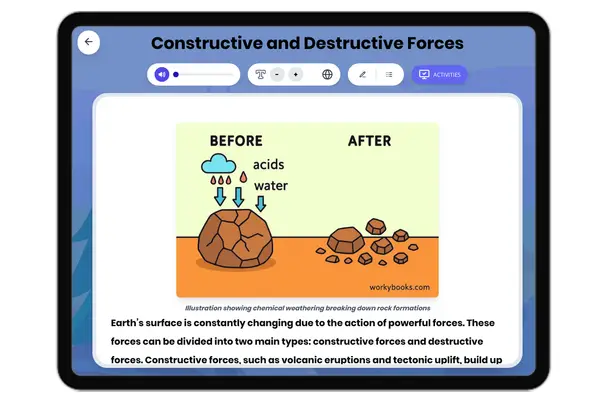
Constructive and Destructive Forces
This middle school science passage explores how Earth's surface is constantly shaped by the interplay of constructive an...
MS-ESS2-1
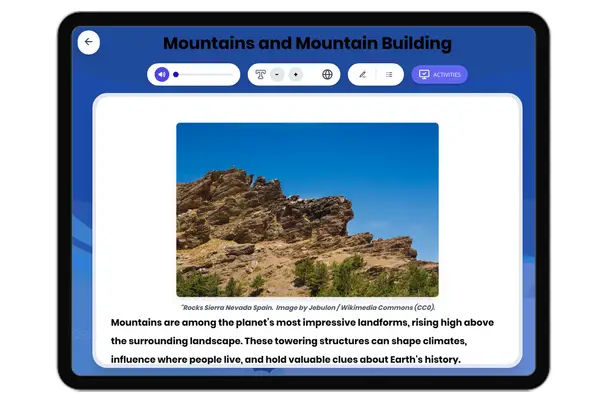
Mountains and Mountain Building
This NGSS-aligned passage for grades 6-8 covers the fascinating processes that create Earth's highest landforms—mountain...