Immigration to America 1880-1920: New Wave — Reading Comprehension
Rate this|
1
Premium Resource
Present
Present in classroom. No work saved
Assign
Classroom with student accounts, Track progress
Quick Play
No student accounts, assign with a link
Grades
6
7
8
Standards
D2.HIS.2.3-5
D2.HIS.3.3-5
RI.4.3
RI.4.4
W.4.2
PRINT+DIGITAL RESOURCE
This learning resource is available in interactive and printable formats. The interactive worksheet can be played online and assigned to students. The Printable PDF version can be downloaded and printed for completion by hand.
This comprehensive U.S. history passage examines the New Wave of Immigration to America from 1880 to 1920, a pivotal era that transformed the nation. Students will explore the causes of mass migration, including economic hardship and political unrest in Europe and Asia, as well as the opportunities and challenges faced by immigrants upon arrival. The passage uses a compare/contrast structure to present multiple perspectives—from newcomers’ hopes and struggles to the concerns of established Americans. Academic vocabulary is highlighted and a primary source quote brings authenticity to the topic. Activities include a multiple-choice quiz, timeline, and writing prompts requiring evidence-based reasoning. A Spanish translation and glossary support diverse learners. This resource aligns with D2.His.2.3-5, D2.His.3.3-5, RI.4.3, RI.4.4, and W.4.2 standards, making it ideal for history and literacy integration. Perfect for classrooms seeking engaging, rigorous content with read aloud audio and cross-linguistic support.
CONTENT PREVIEW
Expand content preview
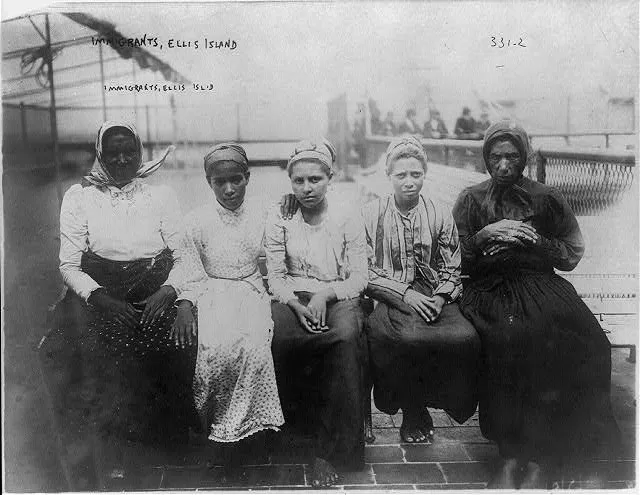
Immigrants, Ellis Island Source: Library of Congress - Bain, George Grantham, 1865-1944
Between 1880 and 1920, the United States experienced one of the largest periods of immigration in its history. More than 20 million people, mostly from Southern and Eastern Europe, traveled across the Atlantic Ocean to seek new lives in America. These newcomers were motivated by a desire for opportunity, freedom, and the hope of escaping poverty or political unrest at home. However, the journey and their arrival brought both hope and significant challenges.
Many immigrants left countries such as Italy, Russia, Poland, and Greece because they faced economic hardship, religious persecution, or lacked political rights. For instance, Jewish families fled violence in Eastern Europe, while others wanted the chance to own land or find jobs. The belief in the "American Dream"—the idea that anyone could succeed through hard work—drew people from all over the world. However, the process of migration was not easy. Long sea voyages were crowded and uncomfortable, and families often risked everything for the possibility of a better future.
Upon arrival in America, most immigrants entered through processing centers like Ellis Island in New York Harbor. There, inspectors checked their health and legal status to decide if they could enter the country. Families sometimes faced separation if someone was found ill or did not meet the requirements. The inspection process was stressful, but most eventually made it into the country and began their new lives.
Settling in American cities like New York, Chicago, and Boston, immigrants formed tight-knit communities based on their language, religion, and traditions. These neighborhoods, often called "ethnic enclaves," helped newcomers adjust but also made it difficult to fully assimilate into American society. Many immigrants worked long hours in factories, mines, or construction, often for low pay and in unsafe conditions. Despite these hardships, they contributed to the rapid industrial growth of the nation.
Not everyone welcomed this new wave of immigration. Some Americans worried that the country’s culture and jobs would change. Laws like the Chinese Exclusion Act and later quota systems limited immigration from certain regions. These restrictions reflected fears and prejudice against foreigners, making the process even more difficult for many families.
Despite obstacles, immigrants brought new foods, music, and traditions, enriching American culture. The growth of diversity in cities led to both cooperation and conflict, but over time, the blending of different cultures helped shape modern America. By the 1920s, new laws reduced the flow of immigrants, but the impact of those who arrived during this period can still be seen today.
Interesting Fact: At its busiest, Ellis Island processed over 5,000 immigrants a day. Nearly 40 percent of Americans today have at least one ancestor who passed through Ellis Island.
Where did most immigrants enter the U.S.?
Ellis IslandSan FranciscoBoston HarborAngel Island
What years did this immigration wave happen?
1880-19201776-18201929-19451800-1850
Most immigrants came from which regions?
Southern and Eastern EuropeSouth AmericaAsiaAfrica
Why did immigrants form ethnic enclaves?
To feel at homeTo make moneyTo avoid taxesTo learn English faster
What was one main challenge at Ellis Island?
Health inspectionsFinding goldLearning to farmTraveling by train
Why were quota laws created?
To limit immigrationTo open factoriesTo build schoolsTo grow crops
Ellis Island processed over 5,000 immigrants daily.
TrueFalse
What does 'diversity' mean in the passage?
Many cultures togetherOnly one cultureNo changeOld traditions only
Perfect For:
👩🏫 Teachers
• Reading comprehension practice
• Auto-graded assessments
• Literacy skill development
👨👩👧👦 Parents
• Reading practice at home
• Comprehension improvement
• Educational reading time
🏠 Homeschoolers
• Reading curriculum support
• Independent reading practice
• Progress monitoring
Reading Features:
📖
Reading Passage
Engaging fiction or nonfiction text
❓
Comprehension Quiz
Auto-graded questions
📊
Instant Feedback
Immediate results and scoring
📄
Printable Version
Download for offline reading
🔊
Read Aloud
Voice-over with word highlighting
Reviews & Ratings
No reviews yet. Be the first to share your experience!
Related Content
Native American Tribes Across America
This engaging history reading passage introduces students to Native American tribes across America, focusing on their da...
D2.HIS.1.3-5D2.HIS.2.3-5RI.4.1RI.4.2
Teepees: Homes on the Great Plains
This engaging history reading passage introduces students to teepees, the unique homes of Native American tribes on the ...
D2.HIS.2.3-5D2.HIS.14.3-5RI.4.1RI.4.2RI.4.4
Traditional Native American Clothing
This engaging history passage explores traditional Native American clothing and how it reflected the environment, values...
D2.HIS.2.3-5D2.HIS.3.3-5RI.4.3RI.4.4
The Iroquois Confederacy: A System of Peace
This engaging U.S. History reading passage introduces students to the Iroquois Confederacy, a powerful alliance of Nativ...
D2.HIS.2.3-5D2.HIS.3.3-5RI.4.3RI.4.4
The Cherokee Nation: History and Culture
This reading passage explores the rich history and culture of the Cherokee Nation, one of the largest Native American tr...
D2.HIS.2.3-5D2.HIS.14.3-5RI.4.3RI.4.4RI.4.10
The Sioux: Warriors and Tribal Leaders
This history reading passage explores the Sioux Nation, focusing on their roles as warriors and tribal leaders. Students...
D2.HIS.1.3-5D2.HIS.2.3-5RI.4.1RI.4.3
Native American Respect for Nature
This engaging history reading passage explores Native American respect for nature, emphasizing the close relationship be...
D2.HIS.2.3-5D2.HIS.3.3-5RI.4.3RI.4.4
Jamestown: The First Permanent English Colony
This engaging history passage explores the founding of Jamestown, the first permanent English colony in America. Aligned...
D2.HIS.1.3-5D2.HIS.2.3-5RI.4.3RI.4.4
Pocahontas and the Powhatan People
This engaging reading passage explores the life of Pocahontas and the Powhatan people and their important role in early ...
D2.HIS.1.3-5D2.HIS.2.3-5RI.4.1RI.4.3
Colonial Children: School and Chores
This reading passage explores the daily lives of colonial children, focusing on their experiences at school and their ma...
D2.HIS.2.3-5D2.HIS.3.3-5RI.4.1RI.4.2RI.4.4
Colonial Clothing and Homemade Goods
This engaging U.S. history passage explores the daily life of early American colonists with a focus on colonial clothing...
D2.HIS.2.3-5RI.4.3RI.4.4
Colonial Jobs: Blacksmiths, Bakers, and Craftsmen
This engaging history reading passage explores the vital roles of blacksmiths, bakers, and craftsmen in colonial America...
D2.HIS.2.3-5D2.HIS.3.3-5RI.4.3RI.4.4
Colonial Towns and Village Life
This engaging history reading passage explores the daily life, work, and unity found in colonial towns and villages. Ali...
D2.HIS.1.3-5D2.HIS.2.3-5RI.4.3RI.4.4
Colonial Trade with England and Africa
This history reading passage explores colonial trade between the American colonies, England, and Africa, focusing on the...
D2.HIS.2.3-5D2.HIS.14.3-5RI.4.3RI.4.4
Benjamin Franklin: Printer, Inventor, and Leader
This history reading passage explores the life and achievements of Benjamin Franklin, one of America's most important ea...
D2.HIS.2.3-5D2.HIS.3.3-5RI.4.1RI.4.3
George Washington Leads the Army
This engaging history reading passage explores how George Washington bravely led the Continental Army during the America...
D2.HIS.1.3-5D2.HIS.2.3-5RI.4.3RI.4.4
Women and Children During the Revolutionary War
This reading passage explores the important roles women and children played during the Revolutionary War. Students will ...
D2.HIS.2.3-5RI.4.3RI.5.3
African Americans Fight for Freedom
This educational passage explores the brave and inspiring story of how African Americans fought for freedom in the Unite...
D2.HIS.2.3-5D2.HIS.3.3-5RI.4.3RI.4.4
The Battle of Yorktown Ends War
This engaging U.S. history reading passage explores the Battle of Yorktown, a key event that ended the American Revoluti...
D2.HIS.1.3-5D2.HIS.2.3-5RI.4.1RI.4.3
Loyalists vs. Patriots: Divided Families
This engaging U.S. history reading passage explores the division between Loyalists and Patriots during the American Revo...