This learning resource is available in interactive and printable formats. The interactive worksheet can be played online and assigned to students. The Printable PDF version can be downloaded and printed for completion by hand.
This passage explores the innovative record-keeping system of the Inca Empire, focusing on the quipu—a tool made of colored, knotted strings used to track numerical data, census information, and possibly stories. Students will learn how the quipu operated in place of written language, its archaeological evidence, and what it reveals about Inca society, governance, and adaptation to the Andean environment. The passage, aligned with HSS 6.7 and CCSS RH.6-8.2, provides engaging content for world history studies, including a glossary, activities, graphic organizers, and timelines. Available with English audio and a full Spanish translation, this reading supports ELA and history standards, encourages critical thinking, and develops understanding of human innovation and information management in pre-Columbian civilizations.
CONTENT PREVIEW
Expand content preview
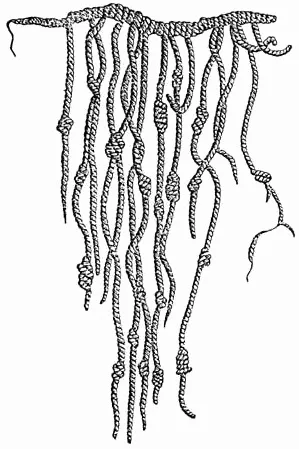
"Quipu" / Wikimedia Commons (Public domain).
The Inca Empire developed a unique system for recording and managing information called the quipu. Unlike many ancient civilizations, the Inca did not use a written language. Instead, they created a tool made of colored, knotted strings to keep track of important data. This system allowed them to govern a vast territory in the Andes Mountains of South America from the 1400s until the Spanish conquest in the 1530s.
The quipu consisted of a main cord with many pendant strings hanging from it. Each string could be a different color and had knots tied in specific patterns. The position and type of each knot represented numbers, such as how many people lived in a village or how much corn was harvested. Archaeological discoveries, such as the quipus found at the site of Puruchuco near Lima, Peru, have provided valuable primary sources. Researchers found more than 20 well-preserved quipus there, giving insight into how the Inca managed census data and resources. Some quipus from the region of Cuzco, the Inca capital, date back to the early 1500s. These examples show that the quipu was used across the empire for administration, tax collection, and military organization.
Decoding the quipu is a complex process. Modern scholars believe that the color of the string might indicate the type of data, such as red for warriors or yellow for gold. The knots are arranged in a base-10 system, similar to the way we count today, which shows mathematical sophistication. Some Spanish chroniclers, like Garcilaso de la Vega, wrote that quipus could also be used to record stories or laws, though this is debated among historians. There is evidence that quipucamayocs, or quipu experts, were trained members of the social hierarchy responsible for creating and interpreting quipus. This role was important for maintaining order in such a large empire.
The use of quipu reveals the adaptability of the Inca in their geographic context. Managing information over long distances in the Andes, with its challenging terrain, required innovation. The continuity of quipu use for centuries demonstrates the effectiveness of this system. However, when the Spanish arrived, they did not understand the quipu and often destroyed them, which limits our knowledge today. Even so, the surviving quipus and archaeological evidence show that the Inca created a highly organized society without a traditional written script.
The development of quipu was significant because it enabled the Inca to control resources, organize labor, and govern millions of people efficiently. It is a striking example of how societies can develop complex data management systems suited to their needs and environment. Studying quipu connects world history themes of human innovation, adaptation, and the diverse ways civilizations solve similar problems.
Interesting Fact: Some modern descendants of the Inca in Peru have preserved knowledge of quipu, using it for rituals or memory games even today.
What is a quipu?
A system of knotted stringsA type of Inca potteryAn ancient Inca weaponA Spanish ship
Where did the Inca Empire rule?
Andes Mountains, South AmericaNile River, AfricaGreat Plains, North AmericaHimalayas, Asia
When did the Spanish conquest begin?
1530s1200s1800s1000s
Why were quipus important?
For record-keeping and managementFor making jewelryFor building housesFor cooking food
Who were quipucamayocs?
Quipu experts and record keepersInca soldiersSpanish priestsPottery makers
What does the base-10 system mean?
Counting using ten digitsMaking ten knots in a rowHaving ten colorsTen Inca rulers
Quipu was used only for stories. True or false?
TrueFalse
What is a primary source?
Original evidence from the pastA modern textbookA fictional storyA television show
Perfect For:
👩🏫 Teachers
• Reading comprehension practice
• Auto-graded assessments
• Literacy skill development
👨👩👧👦 Parents
• Reading practice at home
• Comprehension improvement
• Educational reading time
🏠 Homeschoolers
• Reading curriculum support
• Independent reading practice
• Progress monitoring
Reading Features:
📖
Reading Passage
Engaging fiction or nonfiction text
❓
Comprehension Quiz
Auto-graded questions
📊
Instant Feedback
Immediate results and scoring
📄
Printable Version
Download for offline reading
🔊
Read Aloud
Voice-over with word highlighting
Reviews & Ratings
No reviews yet. Be the first to share your experience!
Related Content
Native American Respect for Nature
This engaging history reading passage explores Native American respect for nature, emphasizing the close relationship be...
D2.HIS.2.3-5D2.HIS.3.3-5RI.4.3RI.4.4
Native Americans and Slavery in Early America
This comprehensive U.S. history reading passage explores the complex relationship between Native Americans and slavery d...
D2.HIS.2.3-5D2.HIS.3.3-5RI.4.3RI.4.4
Native American Tribes Across America
This engaging history reading passage introduces students to Native American tribes across America, focusing on their da...
D2.HIS.1.3-5D2.HIS.2.3-5RI.4.1RI.4.2
Traditional Native American Clothing
This engaging history passage explores traditional Native American clothing and how it reflected the environment, values...
D2.HIS.2.3-5D2.HIS.3.3-5RI.4.3RI.4.4
Native American Basket Weaving
This passage examines the historical importance of basket weaving among Indigenous Americans, highlighting how different...
Native American Treaties
This passage examines early Native American treaties, agreements that were meant to establish peace and boundaries betwe...
D2.HIS.2.3-5D2.HIS.3.3-5RI.4.3RI.4.4
Native American Land Sales
This comprehensive history reading passage examines Native American land sales in U.S. history and asks students to cons...
D2.HIS.2.3-5D2.HIS.3.3-5RI.4.3RI.4.4
Disease and Native Americans
This engaging U.S. history reading passage explores the dramatic impact of European diseases on Native American populati...
D2.HIS.2.3-5D2.HIS.3.3-5RI.4.3RI.4.4
The Cherokee Nation: History and Culture
This reading passage explores the rich history and culture of the Cherokee Nation, one of the largest Native American tr...
D2.HIS.2.3-5D2.HIS.14.3-5RI.4.3RI.4.4RI.4.10
Columbian Exchange Impact on Native Americans
This passage examines the complex effects of the Columbian Exchange on Native Americans, analyzing the causes, consequen...
D2.HIS.2.3-5D2.HIS.3.3-5RI.4.3RI.4.4
Native American Allies in Colonial Wars
This passage examines the complex role of Native American nations as allies and adversaries during the colonial wars of ...
D2.HIS.2.3-5D2.HIS.3.3-5RI.4.3RI.4.4
Spanish Missions Impact on Native American
This reading passage explores the complex impact of Spanish missions on Native American culture in what is now the south...
D2.HIS.2.3-5D2.HIS.3.3-5RI.4.3RI.4.4
Native American Civilizations Before European Contact
This engaging U.S. History reading passage explores Native American civilizations before European contact, focusing on t...
D2.HIS.2.3-5D2.HIS.3.3-5RI.4.3RI.4.4
Moccasins: Soft Leather Footwear
This passage explores the history and significance of moccasins—a soft leather footwear invented by Native American nati...
Native vs European Land Views
This passage examines the contrasting beliefs about land between Native American societies and European settlers, highli...
D2.HIS.2.3-5D2.HIS.3.3-5RI.4.3RI.4.4
Native Americans in Revolutionary War
This engaging U.S. history reading passage explores how Native American nations made difficult decisions during the Amer...
D2.HIS.2.3-5D2.HIS.3.3-5RI.4.3RI.4.4
Pemmican: High-Energy Preserved Food
This engaging history reading passage explores the invention and significance of pemmican, a high-energy preserved food ...
Black History Month Word Search
RF.4.3RF.5.3L.4.4L.5.4
The Inuit Kayak
This passage examines the history and significance of the Inuit kayak, an advanced invention developed by Arctic peoples...
American History Word Search
Word search on American History Word Search! Vocabulary practice aligned to Common Core standards!