Indian Removal Act 1830: Andrew Jackson Policy
Interactive passage with audio narration, comprehension questions, and printable PDF.
By completing this purchase you agree to our Terms of Use and Privacy Policy. Your subscription renews automatically until you cancel. You can cancel anytime from your account settings. All sales are final and non-refundable. Digital content is available for download in your account immediately upon purchase.
What's included
Indian Removal Act 1830: Andrew Jackson Policy preview and details
About this printable Indian Removal Act 1830: Andrew Jackson Policy reading passage (Grades 6-8)
Sample passage and quiz from Indian Removal Act 1830: Andrew Jackson Policy
Reading passage and comprehension quiz preview
Indian Removal Act 1830
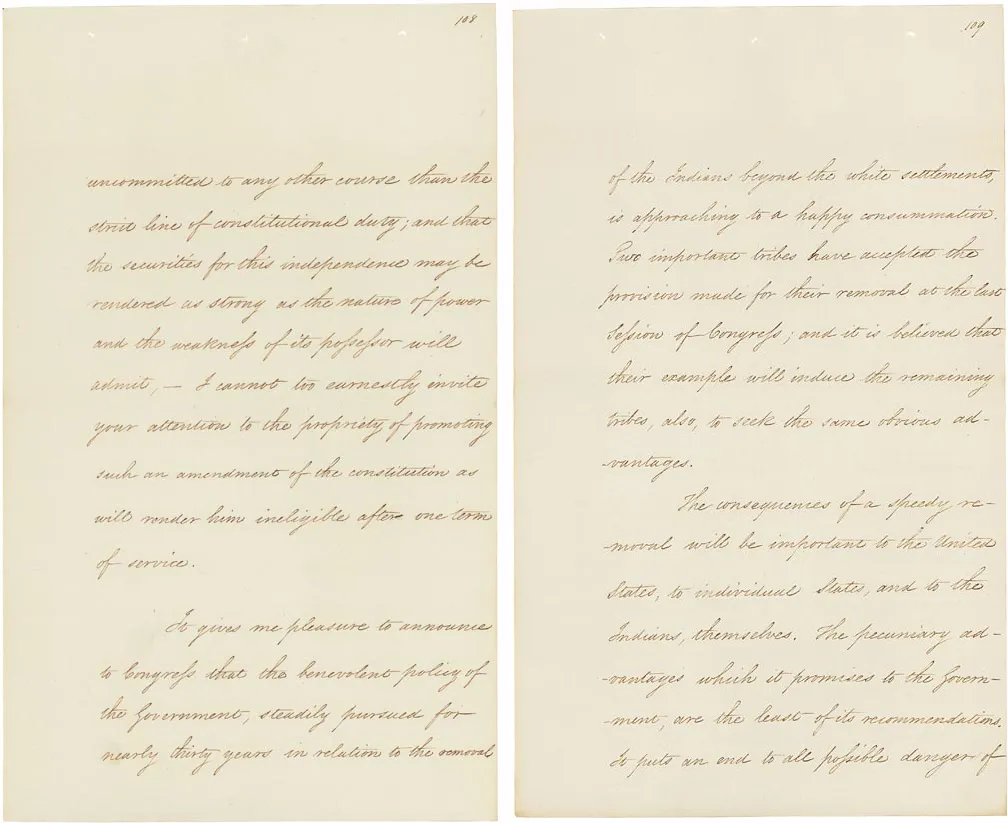
Source: Wikimedia Commons - Andrew Jackson
The Indian Removal Act of 1830 was a law passed by the United States Congress that authorized the relocation of Native American tribes living east of the Mississippi River. President Andrew Jackson signed the act into law, giving him the power to negotiate treaties with tribes. These agreements would exchange their ancestral homelands for new lands in the west. The act was part of a larger government policy known as westward expansion, which aimed to open more land for white settlers.
One of the key reasons behind the act was the desire among American settlers and politicians to gain access to fertile land for farming, especially in the South. States like Georgia wanted to remove Native peoples in order to develop cotton plantations. However, the act created a major conflict between the federal government, the states, and Native nations. Some Native groups, such as the Cherokee, fought removal through the U.S. legal system, arguing that their rights were being violated. In the Supreme Court case Worcester v. Georgia, the ruling supported the Cherokee, but President Jackson refused to enforce it.
The process of removal was often harsh and inhumane. While the law claimed that relocation would be voluntary through negotiations, in reality, many Native Americans were forced to leave their homes under threat or by military force. The journeys west, most famously remembered as the Trail of Tears, were long and deadly. Thousands suffered from disease, hunger, and exposure to harsh weather. It is estimated that around 4,000 Cherokee people died during their removal journey alone.
Different tribes experienced removal in diverse ways. The Choctaw were among the first to be forced west, while the Seminole in Florida resisted through armed conflict. Some tribal leaders signed treaties under pressure, while others refused to leave, facing violent consequences. Despite promises of "permanent" land in the west, even those areas were later threatened as American expansion continued.
The Indian Removal Act had lasting effects on Native American communities. It resulted in the loss of traditional lands, disruption of cultures, and the deaths of thousands. For the United States, it cleared millions of acres for white settlement, contributing to economic growth but also to deep injustices. The act remains a controversial and painful chapter in American history, showing how government policy can shape the lives of entire peoples, sometimes with tragic results.
Interesting Fact: The phrase "Trail of Tears" was first used to describe the journey of the Cherokee, but today it refers to the forced migration of many Native American tribes during this period.
Comprehension quiz (8 questions)
1. What year was the Indian Removal Act passed?
2. Which president signed the Indian Removal Act?
3. What was the Trail of Tears?
4. Why did many Americans want Native lands?
5. How did some tribes resist removal?
6. What was the main effect of the Act?
7. The Cherokee won in court. True or false?
8. What does 'relocation' mean?
Common Core standards for Indian Removal Act 1830: Andrew Jackson Policy
Explain events, procedures, ideas, or concepts in a historical, scientific, or technical text, including what happened and why, based on specific information in the text.
Determine the meaning of general academic and domain-specific words or phrases in a text relevant to a grade 4 topic or subject area.
Write informative/explanatory texts to examine a topic and convey ideas and information clearly.
Perfect for the way you teach
- Build comprehension skills
- Auto-graded quiz
- Differentiated reading
- Read together at home
- Improve fluency
- Quiet reading time
- Reading curriculum support
- Independent practice
- Track Lexile growth