This learning resource is available in interactive and printable formats. The interactive worksheet can be played online and assigned to students. The Printable PDF version can be downloaded and printed for completion by hand.
This informational science passage introduces middle school students to the field of ecology, aligned with NGSS MS-LS2-1. Students will learn how organisms interact with each other and with nonliving environmental factors. The passage defines and explains terms such as organism, population, community, ecosystem, biome, and biosphere, while also distinguishing biotic and abiotic factors. Real-world examples, such as forest and pond ecosystems, help illustrate these concepts. The text also discusses the importance of ecological research and introduces career paths like ecologists, conservation biologists, and wildlife managers. Designed for grades 6-8, the passage is accessible, engaging, and features built-in audio and Spanish support. Activities include comprehension questions, writing prompts, and graphic organizers to reinforce understanding and develop scientific thinking skills.
CONTENT PREVIEW
Expand content preview
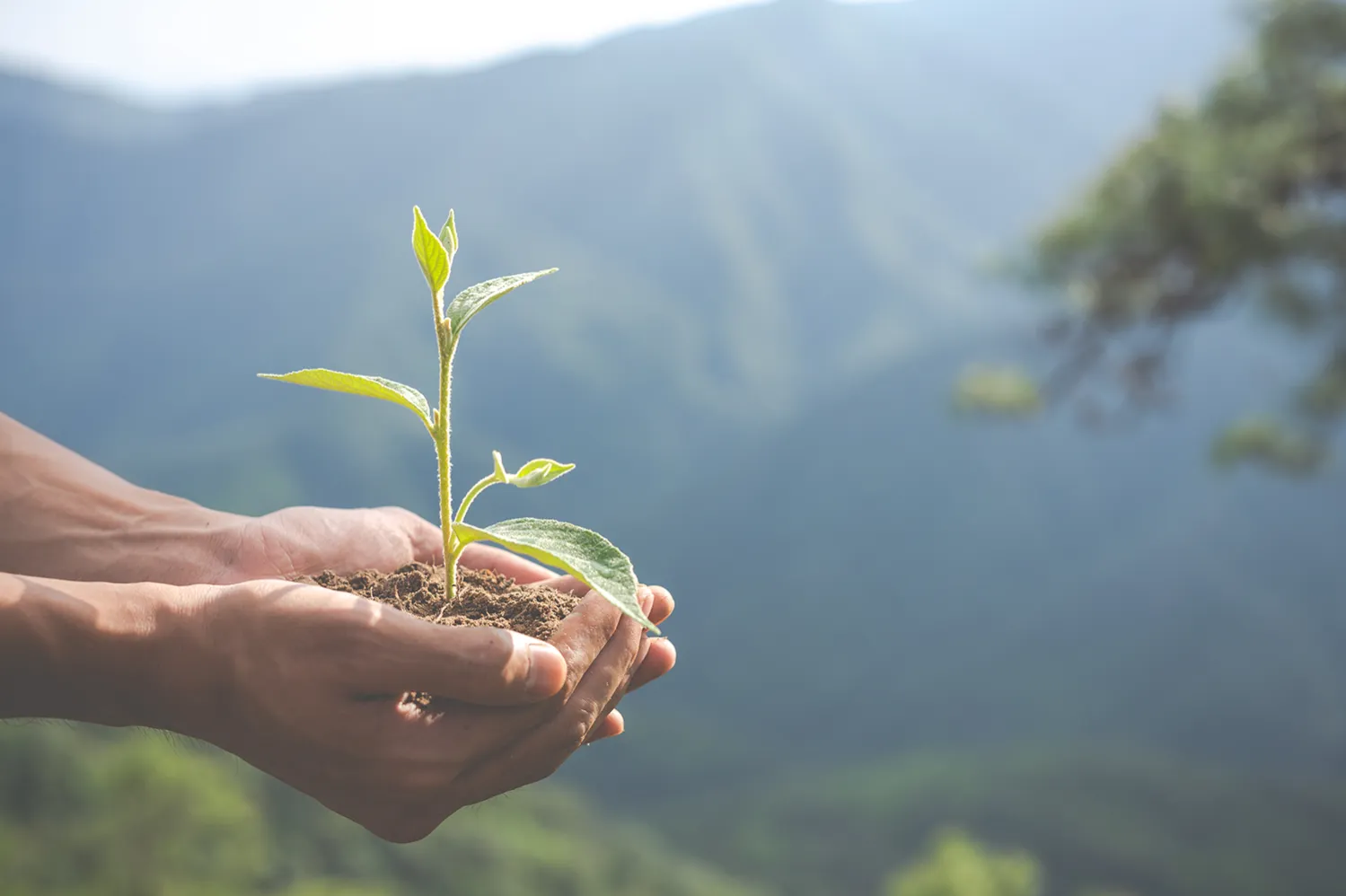
Environmental conservation in the garden for children
Ecology is the branch of science that explores how living things interact with each other and with their surroundings. Understanding these interactions helps us explain patterns we see in nature, such as why certain plants only grow near water or why some animals live in groups. At its core, ecology studies not just individual organisms, but also how groups of living things and the environment shape each other. This knowledge is vital for solving environmental problems like habitat loss and climate change.
Levels of Organization in Ecology Ecologists study nature at different scales, from single organisms to the entire planet. An organism is a single living thing, like a wolf or a pine tree. A population is a group of the same kind of organism living together in one place, such as a pack of wolves. Multiple populations form a community, which includes all the living things in an area, like wolves, deer, and oak trees in a forest. An ecosystem combines the community with nonliving parts of the environment, such as sunlight, water, and soil. Biomes are large regions with similar climate and ecosystems, like rainforests or deserts. The biosphere includes all places on Earth where life exists.
Biotic and Abiotic Factors Every ecosystem contains both biotic (living) and abiotic (nonliving) factors. Biotic factors include plants, animals, fungi, and bacteria. Abiotic factors are things like temperature, sunlight, water, rocks, and soil. These factors constantly interact. For example, the amount of sunlight (an abiotic factor) influences which plants (biotic factors) can grow in an area. In turn, the plants provide food for animals. If rainfall drops by 30% in a grassland, plant growth may decrease, causing fewer herbivores and predators to survive. This chain of cause and effect is central to ecological research.
Ecological Questions and Careers Scientists called ecologists investigate questions such as: What happens if a new predator enters an ecosystem? How do pollutants affect river communities? Conservation biologists and wildlife managers use ecological knowledge to protect habitats and species. For instance, when wolves were reintroduced to Yellowstone National Park, ecologists measured how populations and plant communities changed over several years. Their data showed a 50% increase in willow growth due to reduced herbivore pressure, illustrating how organisms and their environment are connected.
Ecology is not just about observing nature; it is about uncovering why certain patterns exist and predicting how changes—like climate shifts or pollution—will affect life on Earth. By understanding these systems, we can make informed decisions to solve environmental challenges and protect the biosphere for future generations.
Interesting Fact: Some of the world’s smallest ecosystems are found in pitcher plants, where tiny insects, bacteria, and water interact in a space smaller than a cup!
What is ecology?
The study of how organisms interact with each other and their environment.The study of stars and planets.A type of plant found in rainforests.A way to classify living things only.
Which of the following is an example of an abiotic factor?
A wolfA bacteriaSunlightA fungus
What does the term 'population' mean in ecology?
All the living and nonliving things in a region.A group of the same type of organism living together.A scientist who studies ecosystems.A single living thing.
Which statement best describes a community in an ecosystem?
All the rocks in a river.A group of the same animals in one place.All the living things in an area.A region with similar climate and plants.
What is the biosphere?
All the deserts on Earth.All areas on Earth where life exists.A group of similar ecosystems.A type of scientist who studies organisms.
What often happens if rainfall decreases by 30% in a grassland?
More plants will grow.Plant growth may decrease, affecting herbivores and predators.There will be more water for animals.The temperature will rise.
How do biotic and abiotic factors interact in an ecosystem?
They do not interact.Only abiotic factors affect ecosystems.Biotic and abiotic factors constantly influence each other.Only biotic factors matter.
What is one job that uses ecological knowledge?
Conservation biologistMathematicianLibrarianChef
True or False: An ecosystem includes both living and nonliving things.
TrueFalse
True or False: An organism is a large group of many different living things.
TrueFalse
Perfect For:
👩🏫 Teachers
• Reading comprehension practice
• Auto-graded assessments
• Literacy skill development
👨👩👧👦 Parents
• Reading practice at home
• Comprehension improvement
• Educational reading time
🏠 Homeschoolers
• Reading curriculum support
• Independent reading practice
• Progress monitoring
Reading Features:
📖
Reading Passage
Engaging fiction or nonfiction text
❓
Comprehension Quiz
Auto-graded questions
📊
Instant Feedback
Immediate results and scoring
📄
Printable Version
Download for offline reading
🔊
Read Aloud
Voice-over with word highlighting
Reviews & Ratings
No reviews yet. Be the first to share your experience!
Related Content
The Leafy Sea Dragon: Nature's Living Seaweed
This NGSS-aligned passage explores how leafy sea dragons (Phycodurus eques) demonstrate key life science concepts for mi...
MS-LS2-1RI.6.3RI.7.3RI.8.8
The Narwhal: Arctic’s Unicorn of the Sea
This NGSS-aligned passage (MS-LS2-1) explores how narwhals survive in Arctic ecosystems. Students learn about specialize...
MS-LS2-1RI.6.3RI.7.3RI.8.8
The Blue-Ringed Octopus
This NGSS aligned passage explores how the tiny blue-ringed octopus impacts its ecosystem through predator-prey relation...
MS-LS2-1RI.6.3RI.7.3RI.8.8
Tardigrades: Microscopic Superheroes
Aligned to MS-LS1-1, this passage examines how tardigrade cell structures (TDP proteins, DNA-repair enzymes) allow survi...
MS-LS2-1RI.6.3RI.7.3RI.8.8
What Do Axolotls Eat?
This science reading passage, titled "What Do Axolotls Eat?", offers an engaging exploration into the feeding habits of ...
MS-LS2-1
Where Do Axolotls Live?
This science reading passage, titled "The Axolotl's Home," delves into the specific natural environment of the fascinati...
MS-LS4-DMS-LS2-1
The Blobfish
This science reading passage, titled "The Blobfish: A Deep-Sea Mystery," introduces students to one of Earth's most pecu...
MS-LS4-DMS-LS2-1
What Do Blobfish Eat?
This science reading passage, titled "What Do Blobfish Eat?", offers an engaging exploration into the feeding habits of ...
MS-LS2-1
Where Do Penguins Live?
This engaging science reading passage, titled "Where Do Penguins Live? A Cold and Coastal World," clarifies the diverse ...
MS-LS2-1
The Emperor Penguin
This science reading passage, titled "The Emperor Penguin: Antarctica's Royal Survivor," introduces students to one of t...
MS-LS2-1
The Adélie Penguin
This engaging science reading passage, titled "The Adélie Penguin: Antarctica's Little Explorer," introduces students to...
MS-LS2-1
How Does Global Warming Affect Adélie Penguins?
This comprehensive science passage, titled "How Does Global Warming Affect Adélie Penguins?", details the significant im...
MS-LS2-1
Desert Birds
This informational passage for grades 6-8 examines how desert birds survive and thrive in some of the harshest environme...
MS-LS2-1MS-LS2-2MS-LS1-4
Abiotic Factors in Ecosystems
This comprehensive informational reading passage is designed for middle school science students and aligns with NGSS sta...
MS-LS2-1
Biomes: Terrestrial Ecosystems
This NGSS-aligned science reading passage for grades 6-8 provides a comprehensive survey of Earth’s major terrestrial bi...
MS-LS2-1
Biomes: Aquatic Ecosystems
This middle school science passage, aligned with NGSS standard MS-LS2-1, introduces students to the key features and mec...
MS-LS2-1
Galápagos Islands
This engaging science passage explores the Galápagos Islands, a volcanic archipelago located off the coast of Ecuador in...
MS-LS2-1MS-LS4-4MS-ESS3-4
Florida Everglades
This comprehensive passage introduces middle school students to the Florida Everglades, a distinctive wetland ecosystem ...
MS-LS2-1MS-LS2-4MS-ESS3-3MS-ESS3-4
Great Barrier Reef
This passage introduces middle school students to the Great Barrier Reef, the world's largest coral reef system, located...
MS-LS2-1MS-LS2-4MS-ESS3-5
Wetland Biomes
This comprehensive science passage introduces middle school students to the concept of wetland biomes. Aligned with NGSS...