This 400-500 word informational science passage addresses a common misconception about Polaris, the North Star. Aligned with NGSS MS-ESS1-1 and the Disciplinary Core Idea MS-ESS1.A (The Universe and Its Stars), students explore why Polaris is not the brightest star despite popular belief. The passage explains that Polaris ranks approximately 50th in brightness while Sirius shines as the brightest star visible from Earth. Students learn about apparent magnitude, Earth's rotation, and why Polaris's position above the North Pole makes it invaluable for navigation throughout history. The audio-integrated passage includes vocabulary development with 8-10 key science terms, a simplified differentiated version for struggling readers and English Language Learners, Spanish translations, comprehension questions spanning DOK levels 1-3, writing activities requiring explanation and analysis, and relevant graphic organizers. This resource helps students understand the difference between a star's brightness and its navigational significance while developing scientific reasoning skills.
Written by Workybooks TeamPublished by Workybooks
Preview
Sample passage and quiz content
CONTENT PREVIEW
Expand content preview
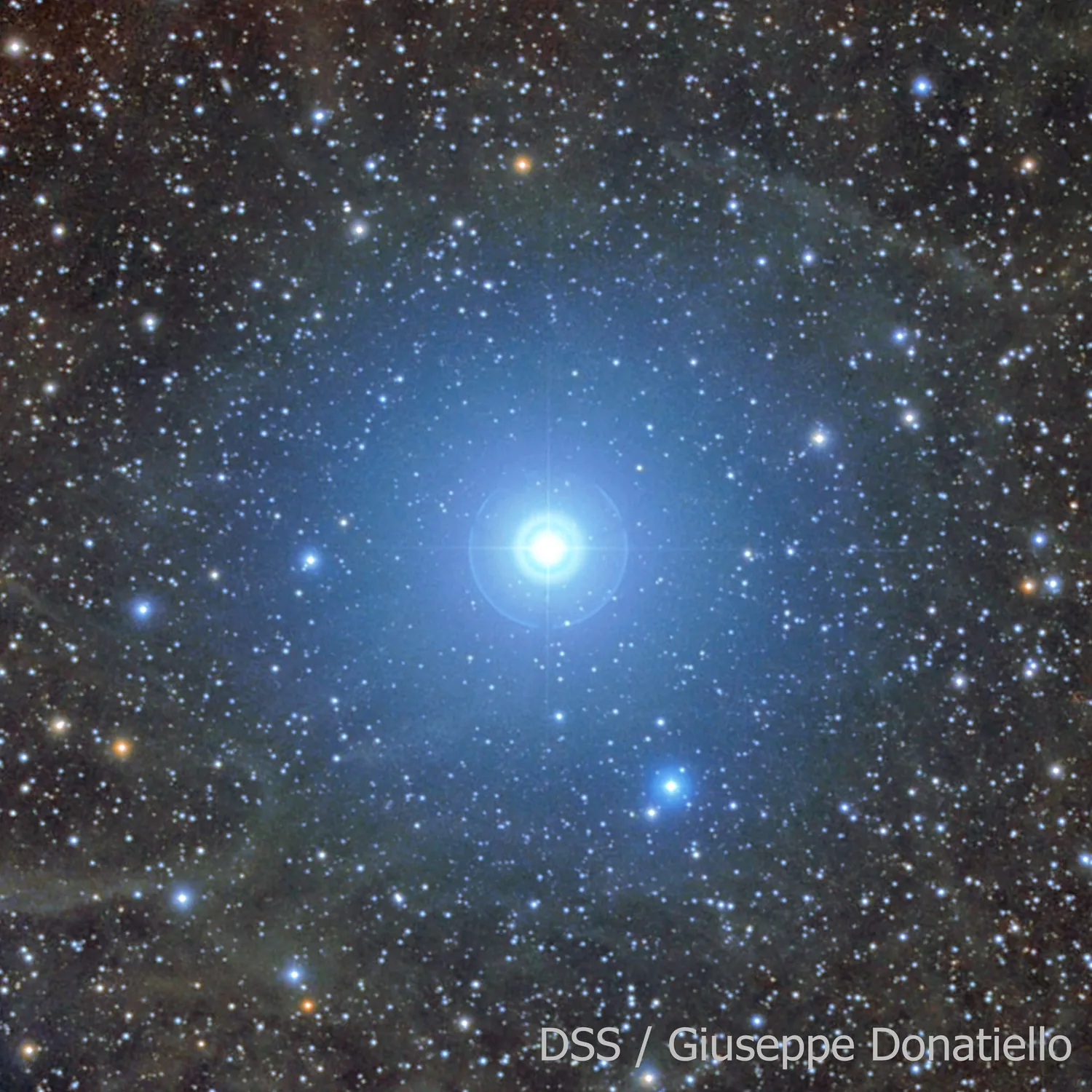
Polaris (α Ursae Minoris), the Pole Star, is the brightest star in Ursa Minor, so called because it is very close to the North Celestial Pole. by Giuseppe Donatiello / Wikimedia Commons
Many people believe Polaris is the brightest star in the night sky. However, this common belief is incorrect. Polaris ranks only about 50th in brightness among all visible stars. Scientists measure star brightness using a scale called apparent magnitude. The lower the number, the brighter the star appears from Earth.
Sirius holds the title of brightest star in our night sky. Sirius shines about 25 times brighter than Polaris when viewed from Earth. Other stars like Canopus, Arcturus, and Vega also outshine Polaris significantly. Evidence shows that Polaris has an apparent magnitude of about 2.0, while Sirius has a magnitude of -1.46. This difference means Sirius appears much more luminous to observers on Earth.
So why does Polaris matter if it is not the brightest star? Polaris sits almost directly above Earth's North Pole. As Earth completes its daily rotation, Polaris appears to stay in nearly the same position. All other stars seem to move in circular paths around Polaris throughout the night. This happens because Earth's axis of rotation points almost exactly toward Polaris.
For centuries, sailors and explorers used Polaris for navigation. They could determine their latitude by measuring the angle between Polaris and the horizon. In the Northern Hemisphere, Polaris always indicates north. This reliability made the star invaluable for travelers before modern technology existed. Even today, hikers and campers use Polaris to find direction when compasses are unavailable.
The position of Polaris demonstrates an important concept about Earth's place in space. Earth's axis tilts at about 23.5 degrees and points toward a specific region of space. Polaris happens to lie very close to this direction. Other planets have different axial tilts, so they would have different "pole stars" or none at all. Mars, for example, has Deneb as its approximate north star.
Understanding the difference between brightness and navigational importance helps scientists and students think critically about observations. A star can be extremely useful without being the brightest object in the sky. Polaris proves that location and stability sometimes matter more than luminosity for practical purposes.
Interesting Fact: Polaris is not actually a single star but a triple star system containing three stars orbiting each other. The brightest component is a supergiant star about 2,500 times more luminous than our Sun, but it appears dim because it sits about 433 light-years away from Earth.
What is the approximate brightness ranking of Polaris among visible stars?
The actual size of a starHow bright a star appears from EarthThe distance to a starThe temperature of a star
Why does Polaris appear to stay in the same position while other stars move?
Polaris is the closest star to EarthPolaris does not move through spaceEarth's axis of rotation points almost directly at PolarisPolaris orbits Earth
How did sailors historically use Polaris for navigation?
They measured its brightness to determine timeThey measured the angle between Polaris and the horizon to find latitudeThey followed Polaris as it moved across the skyThey used Polaris to predict weather patterns
What does the position of Polaris demonstrate about Earth?
Earth is the center of the solar systemEarth's axis tilts and points toward a specific region of spaceEarth does not rotateEarth is closer to Polaris than to other stars
If you were standing in the Southern Hemisphere, would Polaris be useful for finding north?
Yes, because Polaris is visible from everywhere on EarthYes, because Polaris always points northNo, because Polaris is only visible in the Northern HemisphereNo, because Polaris moves too much in the Southern Hemisphere
What type of star system is Polaris?
A single starA binary star system with two starsA triple star system with three starsA planetary system like our solar system
True or False: A star must be the brightest in the sky to be useful for navigation.
TrueFalse
True or False: Sirius appears about 25 times brighter than Polaris when viewed from Earth.
TrueFalse
Who it's for
Perfect for the way you teach
Teachers
Build comprehension skills
Auto-graded quiz
Differentiated reading
Parents
Read together at home
Improve fluency
Quiet reading time
Homeschoolers
Reading curriculum support
Independent practice
Track Lexile growth
Topics
PolarisNorth StarSiriusstar brightnesscelestial navigationEarth's rotationapparent magnitudenight skyNGSS MS-ESS1-1middle school astronomy
Reviews & Ratings
No reviews yet. Be the first to share your experience!
More reading you might love
20 more
What is Solar Radiation
This NGSS-aligned science reading passage for middle school students explores the concept of solar radiation. Solar radi...
MS-ESS1-1
How Incoming Solar Radiation Changes with Latitude
This NGSS-aligned science reading passage helps middle school students understand how solar radiation, or insolation, ch...
MS-ESS1-1
Tides and Tidal Forces
This middle school science passage explores the mechanisms of tides and tidal forces, aligning with NGSS standards MS-ES...
MS-ESS1-1MS-ESS1-2
The Night Sky
This comprehensive science reading passage for grades 6-8 aligns with NGSS standard MS-ESS1-1 and explores the systems a...
MS-ESS1-1
Ancient Astronomy
This engaging passage for grades 6-8 explores the history of astronomy through the lens of ancient observations. Student...
MS-ESS1-1
Tools of Modern Astronomy
This passage introduces middle school students to modern astronomy, aligning with NGSS standard MS-ESS1-1. It explains h...
MS-ESS1-1
How Astronomy Became a Science
This passage explores the transformative period known as the Scientific Revolution, with a special focus on the history ...
MS-ESS1-1
Earth's Rotation
This middle school science passage, aligned with NGSS standard MS-ESS1-1, focuses on Earth's rotation—how Earth spins on...
MS-ESS1-1
Earth's Revolution
This middle school science passage explores the science behind Earth's revolution around the Sun, closely aligned with N...
MS-ESS1-1
Why We Have Seasons
This comprehensive middle school science reading passage explains the mechanisms behind Earth's seasons, directly addres...
MS-ESS1-1
Earth's Seasons
This comprehensive reading passage for grades 6-8 explains why Earth has seasons, revealing the scientific mechanisms be...
MS-ESS1-1
Phases of the Moon
This comprehensive middle school science passage explains the phases of the Moon, focusing on the mechanisms behind the ...
MS-ESS1-1
Tides
This comprehensive middle school science reading passage explores the phenomenon of ocean tides, aligned to NGSS standar...
MS-ESS1-1MS-ESS1-2
Eclipses
This comprehensive passage for grades 6-8 explores the science behind eclipses, including solar and lunar eclipses, thei...
MS-ESS1-1
The Moon's Characteristics
This comprehensive science reading passage for grades 6-8 examines the Moon's physical characteristics, including its si...
MS-ESS1-1MS-ESS1-2
Lunar Eclipses
This passage introduces middle school students to the phenomenon of lunar eclipses, connecting observable events to the ...
MS-ESS1-1
The Sun's Characteristics
This engaging science passage introduces middle school students to the Sun’s key characteristics, such as its classifica...
MS-ESS1-1MS-ESS1-2
What Is a Galaxy?
This comprehensive middle school science passage answers the question: What is a galaxy? Aligned to NGSS standard MS-ESS...
MS-ESS1-1
The Milky Way: Our Home Galaxy
This comprehensive science passage introduces middle school students to the Milky Way, the barred spiral galaxy that is ...
MS-ESS1-1
Types of Galaxies
This comprehensive middle school science passage introduces students to the classification and characteristics of galaxi...