Jim Crow Laws: Segregation in the South — Reading Comprehension
Rate this
Premium Resource
Present
Present in classroom. No work saved
Assign
Classroom with student accounts, Track progress
Quick Play
No student accounts, assign with a link
Grades
6
7
8
Standards
D2.HIS.2.3-5
D2.HIS.3.3-5
RI.4.3
RI.4.4
W.4.2
PRINT+DIGITAL RESOURCE
This learning resource is available in interactive and printable formats. The interactive worksheet can be played online and assigned to students. The Printable PDF version can be downloaded and printed for completion by hand.
This passage provides a detailed and analytical exploration of Jim Crow Laws and the era of segregation in the American South. Students will learn about the causes, motivations, and consequences of these laws, with a focus on multiple perspectives, including those of African Americans and white Southerners. The passage integrates primary source evidence and disciplinary vocabulary, while modeling historical reasoning. Students will also engage with a timeline of key events, a glossary of important terms, and a variety of comprehension and writing activities designed to build critical thinking skills. The passage and activities align with C3 Framework (D2.His.2.3-5, D2.His.3.3-5) and Common Core (RI.4.3, RI.4.4, W.4.2) standards. Read aloud audio and a Spanish translation are included to support diverse learners. This resource is ideal for building a nuanced understanding of civil rights history and the complex legacy of segregation in the United States.
CONTENT PREVIEW
Expand content preview
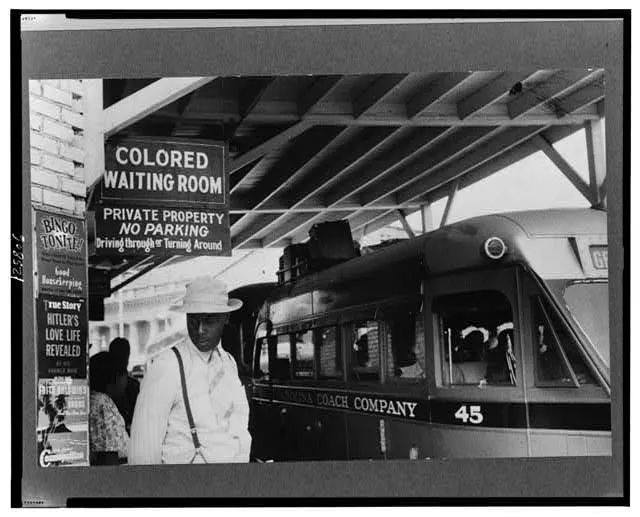
"Jim Crow Laws" by Jack Delano. Source: Wikimedia Commons (Public domain).
Jim Crow laws were state and local rules enacted in the Southern United States after the Civil War. Their main purpose was to create segregation, which means separating people based on race. These laws forced Black and white Americans to use different schools, transportation, parks, and even drinking fountains. The legislation made it nearly impossible for Black Americans to have the same rights and opportunities as white citizens.
The roots of Jim Crow laws can be traced back to the end of Reconstruction, a period when the federal government tried to rebuild the South and expand rights for formerly enslaved people. However, as federal troops left the South in 1877, white leaders regained power. They passed laws that reversed progress made during Reconstruction. These laws used discrimination—unfair treatment based on race—to keep Black people in positions of lower status.
Under Jim Crow, Black Americans faced daily challenges. For example, they were required to sit in separate train cars or at the back of buses. Schools for Black children received less money and worse materials than schools for whites. Hospitals, restaurants, movie theaters, and even cemeteries were divided by race. This system was enforced by both law and custom, making it extremely difficult for Black people to challenge the unfair treatment.
Some people tried to fight against inequality. Black Americans formed organizations such as the NAACP (National Association for the Advancement of Colored People) and challenged unfair laws in court. In the famous Plessy v. Ferguson case in 1896, the Supreme Court decided that segregation was legal as long as facilities were 'separate but equal.' In reality, the facilities for Black Americans were almost always inferior.
The effects of Jim Crow laws were widespread and damaging. They not only limited access to quality education, jobs, and public life, but also encouraged harmful stereotypes about African Americans. These laws made it difficult for Black communities to gain political power or economic success. Despite these obstacles, many Black Americans resisted through protest, education, and building strong communities.
Jim Crow laws remained in place for many decades. Over time, as more people recognized the injustice, a movement for civil rights grew. Leaders like Rosa Parks, Martin Luther King Jr., and others organized protests and demanded equal treatment. Eventually, major laws such as the Civil Rights Act of 1964 and the Voting Rights Act of 1965 helped end legal segregation.
Interesting Fact: The phrase "Jim Crow" comes from a racist song and character from the 1800s, which later became a term for laws enforcing segregation.
What was the main goal of Jim Crow laws?
To enforce racial segregationTo rebuild the SouthTo end the Civil WarTo help Black Americans vote
Which court case allowed segregation to continue?
Brown v. BoardPlessy v. FergusonRoe v. WadeMarbury v. Madison
When did major civil rights laws end Jim Crow?
1865-187718961950s-1960s1964-1965
Why were Black schools often worse than white schools?
Less money and resourcesMore teachersLocated in citiesShorter school year
How did Black Americans respond to Jim Crow?
Formed organizationsMoved to CanadaStopped votingBuilt new cities
What was a result of the civil rights movement?
End of legal segregationMore Jim Crow lawsNew states formedU.S. split in two
Jim Crow laws were only in the North.
TrueFalse
What does 'segregation' mean?
Joining people togetherKeeping people apart by raceVoting in electionsMaking new laws
Perfect For:
👩🏫 Teachers
• Reading comprehension practice
• Auto-graded assessments
• Literacy skill development
👨👩👧👦 Parents
• Reading practice at home
• Comprehension improvement
• Educational reading time
🏠 Homeschoolers
• Reading curriculum support
• Independent reading practice
• Progress monitoring
Reading Features:
📖
Reading Passage
Engaging fiction or nonfiction text
❓
Comprehension Quiz
Auto-graded questions
📊
Instant Feedback
Immediate results and scoring
📄
Printable Version
Download for offline reading
🔊
Read Aloud
Voice-over with word highlighting
Reviews & Ratings
No reviews yet. Be the first to share your experience!
Related Content
Native American Tribes Across America
This engaging history reading passage introduces students to Native American tribes across America, focusing on their da...
D2.HIS.1.3-5D2.HIS.2.3-5RI.4.1RI.4.2
Teepees: Homes on the Great Plains
This engaging history reading passage introduces students to teepees, the unique homes of Native American tribes on the ...
D2.HIS.2.3-5D2.HIS.14.3-5RI.4.1RI.4.2RI.4.4
Traditional Native American Clothing
This engaging history passage explores traditional Native American clothing and how it reflected the environment, values...
D2.HIS.2.3-5D2.HIS.3.3-5RI.4.3RI.4.4
The Iroquois Confederacy: A System of Peace
This engaging U.S. History reading passage introduces students to the Iroquois Confederacy, a powerful alliance of Nativ...
D2.HIS.2.3-5D2.HIS.3.3-5RI.4.3RI.4.4
The Cherokee Nation: History and Culture
This reading passage explores the rich history and culture of the Cherokee Nation, one of the largest Native American tr...
D2.HIS.2.3-5D2.HIS.14.3-5RI.4.3RI.4.4RI.4.10
The Sioux: Warriors and Tribal Leaders
This history reading passage explores the Sioux Nation, focusing on their roles as warriors and tribal leaders. Students...
D2.HIS.1.3-5D2.HIS.2.3-5RI.4.1RI.4.3
Native American Respect for Nature
This engaging history reading passage explores Native American respect for nature, emphasizing the close relationship be...
D2.HIS.2.3-5D2.HIS.3.3-5RI.4.3RI.4.4
Jamestown: The First Permanent English Colony
This engaging history passage explores the founding of Jamestown, the first permanent English colony in America. Aligned...
D2.HIS.1.3-5D2.HIS.2.3-5RI.4.3RI.4.4
Pocahontas and the Powhatan People
This engaging reading passage explores the life of Pocahontas and the Powhatan people and their important role in early ...
D2.HIS.1.3-5D2.HIS.2.3-5RI.4.1RI.4.3
Colonial Children: School and Chores
This reading passage explores the daily lives of colonial children, focusing on their experiences at school and their ma...
D2.HIS.2.3-5D2.HIS.3.3-5RI.4.1RI.4.2RI.4.4
Colonial Clothing and Homemade Goods
This engaging U.S. history passage explores the daily life of early American colonists with a focus on colonial clothing...
D2.HIS.2.3-5RI.4.3RI.4.4
Colonial Jobs: Blacksmiths, Bakers, and Craftsmen
This engaging history reading passage explores the vital roles of blacksmiths, bakers, and craftsmen in colonial America...
D2.HIS.2.3-5D2.HIS.3.3-5RI.4.3RI.4.4
Colonial Towns and Village Life
This engaging history reading passage explores the daily life, work, and unity found in colonial towns and villages. Ali...
D2.HIS.1.3-5D2.HIS.2.3-5RI.4.3RI.4.4
Colonial Trade with England and Africa
This history reading passage explores colonial trade between the American colonies, England, and Africa, focusing on the...
D2.HIS.2.3-5D2.HIS.14.3-5RI.4.3RI.4.4
Benjamin Franklin: Printer, Inventor, and Leader
This history reading passage explores the life and achievements of Benjamin Franklin, one of America's most important ea...
D2.HIS.2.3-5D2.HIS.3.3-5RI.4.1RI.4.3
George Washington Leads the Army
This engaging history reading passage explores how George Washington bravely led the Continental Army during the America...
D2.HIS.1.3-5D2.HIS.2.3-5RI.4.3RI.4.4
Women and Children During the Revolutionary War
This reading passage explores the important roles women and children played during the Revolutionary War. Students will ...
D2.HIS.2.3-5RI.4.3RI.5.3
African Americans Fight for Freedom
This educational passage explores the brave and inspiring story of how African Americans fought for freedom in the Unite...
D2.HIS.2.3-5D2.HIS.3.3-5RI.4.3RI.4.4
The Battle of Yorktown Ends War
This engaging U.S. history reading passage explores the Battle of Yorktown, a key event that ended the American Revoluti...
D2.HIS.1.3-5D2.HIS.2.3-5RI.4.1RI.4.3
Loyalists vs. Patriots: Divided Families
This engaging U.S. history reading passage explores the division between Loyalists and Patriots during the American Revo...