This learning resource is available in interactive and printable formats. The interactive worksheet can be played online and assigned to students. The Printable PDF version can be downloaded and printed for completion by hand.
This passage explores the complex presidency of John Adams, the second president of the United States, focusing on the political, diplomatic, and constitutional challenges he faced. Students will analyze Adams's decisions, such as his handling of the XYZ Affair and the controversial Alien and Sedition Acts, while considering perspectives from Federalists, Democratic-Republicans, and ordinary Americans. The passage integrates a primary source quote, emphasizes historical causation and consequences, and features academic vocabulary with a detailed glossary. A timeline highlights key events, and activities include multiple-choice questions, explanatory writing prompts, and a T-Chart graphic organizer. This resource supports C3 Framework (D2.His.2.3-5, D2.His.3.3-5) and Common Core (RI.4.3, RI.4.4, W.4.2) standards. It includes a Spanish translation and a read aloud audio, making it accessible and engaging for students studying major issues and debates of early U.S. history.
CONTENT PREVIEW
Expand content preview
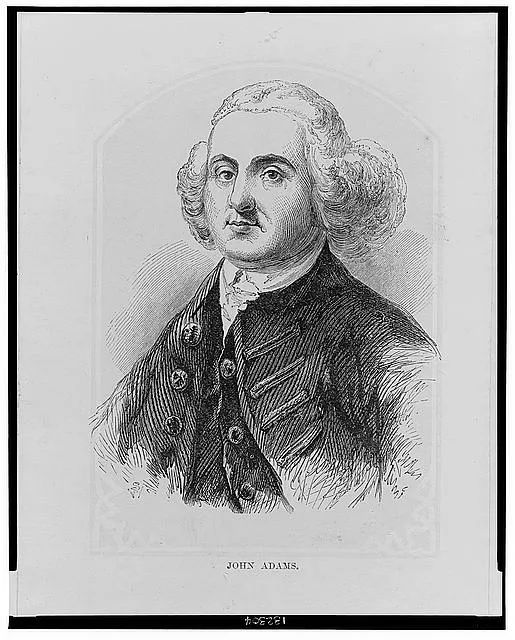
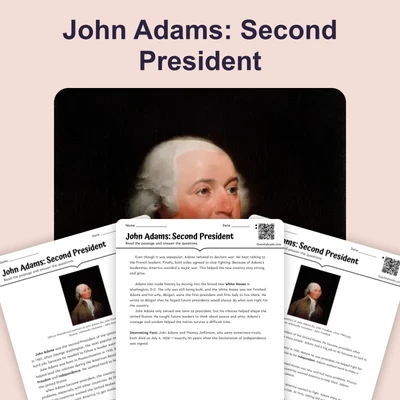
John Adams. Source: Library of Congress
The presidency of John Adams, the second president of the United States from 1797 to 1801, marked a period of significant challenges for the young nation. Adams took office after serving as vice president under George Washington, inheriting both international and domestic issues. One of the most difficult problems Adams faced was the growing conflict with France. The French government, angered by U.S. neutrality during the war between France and Britain, began seizing American ships. This situation created a serious crisis for Adams’s administration.
To address the threat, Adams relied on diplomacy. He sent a group of American envoys to France in what became known as the XYZ Affair. However, French officials demanded bribes before negotiations could begin, shocking Americans and increasing calls for war. Adams resisted pressure from his own political party, the Federalists, who wanted to declare war. Instead, he prioritized peace and continued to negotiate. Eventually, Adams’s efforts led to a peaceful resolution, but not without political cost.
At home, Adams’s presidency was marked by intense political division. The United States was splitting into two main political parties: the Federalists, led by Adams, and the Democratic-Republicans, led by Thomas Jefferson. Disagreements over foreign policy and the power of the federal government led to fierce debates. To combat what he saw as threats to national security, Adams signed the Alien and Sedition Acts in 1798. These laws made it harder for immigrants to become citizens and allowed the government to silence critics. Many Americans believed these acts violated the Constitution, especially the First Amendment, and the laws became extremely controversial.
Adams’s decisions had major consequences for his legacy. While his commitment to peace with France prevented war and protected the nation, the Alien and Sedition Acts damaged his popularity. In the election of 1800, Adams lost to Thomas Jefferson, partly because of the anger over these acts. Despite this, many historians now recognize Adams for his independent leadership and willingness to make unpopular decisions for the good of the country.
The presidency of John Adams demonstrates the complexities of leading a new nation. He faced enormous pressure from political rivals and international threats, but he made choices based on his principles. His actions shaped the early development of the United States and set examples for future presidents facing difficult decisions.
Interesting Fact: John Adams was the first president to live in the White House, moving in before it was fully completed in 1800.
Who was president after George Washington?
John AdamsThomas JeffersonJames MadisonAlexander Hamilton
What foreign country created problems for Adams’s presidency?
FranceSpainBritainGermany
What were the Alien and Sedition Acts?
Laws restricting immigrants and criticsTax lawsTrade agreementsMilitary treaties
Why did Adams choose diplomacy with France?
To avoid warTo gain landTo please JeffersonFor trade reasons
How did the Alien and Sedition Acts affect Adams’s popularity?
Damaged itImproved itHad no effectMade him a hero
What was the main political division during Adams’s presidency?
Federalists vs. Democratic-RepublicansNorth vs. SouthColonists vs. BritishFarmers vs. Merchants
Adams was the first president to live in the White House.
TrueFalse
What does 'diplomacy' mean in the passage?
Negotiating between countriesDeclaring warWriting lawsRunning for office
Perfect For:
👩🏫 Teachers
• Reading comprehension practice
• Auto-graded assessments
• Literacy skill development
👨👩👧👦 Parents
• Reading practice at home
• Comprehension improvement
• Educational reading time
🏠 Homeschoolers
• Reading curriculum support
• Independent reading practice
• Progress monitoring
Reading Features:
📖
Reading Passage
Engaging fiction or nonfiction text
❓
Comprehension Quiz
Auto-graded questions
📊
Instant Feedback
Immediate results and scoring
📄
Printable Version
Download for offline reading
🔊
Read Aloud
Voice-over with word highlighting
Reviews & Ratings
No reviews yet. Be the first to share your experience!
Related Content
Native American Tribes Across America
This engaging history reading passage introduces students to Native American tribes across America, focusing on their da...
D2.HIS.1.3-5D2.HIS.2.3-5RI.4.1RI.4.2
Teepees: Homes on the Great Plains
This engaging history reading passage introduces students to teepees, the unique homes of Native American tribes on the ...
D2.HIS.2.3-5D2.HIS.14.3-5RI.4.1RI.4.2RI.4.4
Traditional Native American Clothing
This engaging history passage explores traditional Native American clothing and how it reflected the environment, values...
D2.HIS.2.3-5D2.HIS.3.3-5RI.4.3RI.4.4
The Iroquois Confederacy: A System of Peace
This engaging U.S. History reading passage introduces students to the Iroquois Confederacy, a powerful alliance of Nativ...
D2.HIS.2.3-5D2.HIS.3.3-5RI.4.3RI.4.4
The Cherokee Nation: History and Culture
This reading passage explores the rich history and culture of the Cherokee Nation, one of the largest Native American tr...
D2.HIS.2.3-5D2.HIS.14.3-5RI.4.3RI.4.4RI.4.10
The Sioux: Warriors and Tribal Leaders
This history reading passage explores the Sioux Nation, focusing on their roles as warriors and tribal leaders. Students...
D2.HIS.1.3-5D2.HIS.2.3-5RI.4.1RI.4.3
Native American Respect for Nature
This engaging history reading passage explores Native American respect for nature, emphasizing the close relationship be...
D2.HIS.2.3-5D2.HIS.3.3-5RI.4.3RI.4.4
Jamestown: The First Permanent English Colony
This engaging history passage explores the founding of Jamestown, the first permanent English colony in America. Aligned...
D2.HIS.1.3-5D2.HIS.2.3-5RI.4.3RI.4.4
Pocahontas and the Powhatan People
This engaging reading passage explores the life of Pocahontas and the Powhatan people and their important role in early ...
D2.HIS.1.3-5D2.HIS.2.3-5RI.4.1RI.4.3
Colonial Children: School and Chores
This reading passage explores the daily lives of colonial children, focusing on their experiences at school and their ma...
D2.HIS.2.3-5D2.HIS.3.3-5RI.4.1RI.4.2RI.4.4
Colonial Clothing and Homemade Goods
This engaging U.S. history passage explores the daily life of early American colonists with a focus on colonial clothing...
D2.HIS.2.3-5RI.4.3RI.4.4
Colonial Jobs: Blacksmiths, Bakers, and Craftsmen
This engaging history reading passage explores the vital roles of blacksmiths, bakers, and craftsmen in colonial America...
D2.HIS.2.3-5D2.HIS.3.3-5RI.4.3RI.4.4
Colonial Towns and Village Life
This engaging history reading passage explores the daily life, work, and unity found in colonial towns and villages. Ali...
D2.HIS.1.3-5D2.HIS.2.3-5RI.4.3RI.4.4
Colonial Trade with England and Africa
This history reading passage explores colonial trade between the American colonies, England, and Africa, focusing on the...
D2.HIS.2.3-5D2.HIS.14.3-5RI.4.3RI.4.4
Benjamin Franklin: Printer, Inventor, and Leader
This history reading passage explores the life and achievements of Benjamin Franklin, one of America's most important ea...
D2.HIS.2.3-5D2.HIS.3.3-5RI.4.1RI.4.3
George Washington Leads the Army
This engaging history reading passage explores how George Washington bravely led the Continental Army during the America...
D2.HIS.1.3-5D2.HIS.2.3-5RI.4.3RI.4.4
Women and Children During the Revolutionary War
This reading passage explores the important roles women and children played during the Revolutionary War. Students will ...
D2.HIS.2.3-5RI.4.3RI.5.3
African Americans Fight for Freedom
This educational passage explores the brave and inspiring story of how African Americans fought for freedom in the Unite...
D2.HIS.2.3-5D2.HIS.3.3-5RI.4.3RI.4.4
The Battle of Yorktown Ends War
This engaging U.S. history reading passage explores the Battle of Yorktown, a key event that ended the American Revoluti...
D2.HIS.1.3-5D2.HIS.2.3-5RI.4.1RI.4.3
Loyalists vs. Patriots: Divided Families
This engaging U.S. history reading passage explores the division between Loyalists and Patriots during the American Revo...