This learning resource is available in interactive and printable formats. The interactive worksheet can be played online and assigned to students. The Printable PDF version can be downloaded and printed for completion by hand.
This engaging history reading passage examines the Kansas-Nebraska Act of 1854, a pivotal moment in American history that attempted to use popular sovereignty to resolve the conflict over slavery in new territories. Students will explore the causes of the Act, the motivations of various groups, and the consequences that led to increased sectional tensions and violence in "Bleeding Kansas." The passage incorporates multiple perspectives, including abolitionists, pro-slavery settlers, and lawmakers, encouraging students to think critically about historical complexity and conflicting interests. Features include a glossary of key academic terms, a timeline of major events, multiple-choice and writing activities, and a graphic organizer. The passage is aligned to C3 Framework and Common Core standards, and includes a Spanish translation and read aloud audio, making it accessible and rigorous for diverse learners.
CONTENT PREVIEW
Expand content preview
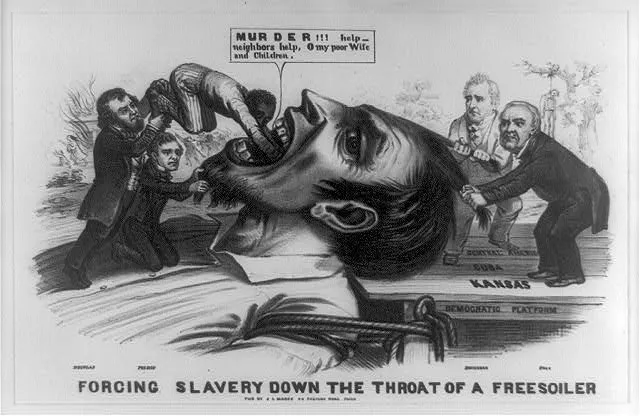
"Forcing slavery down the throat of a freesoiler" by Magee, John L. / Library of Congress.
The Kansas-Nebraska Act of 1854 was a significant law passed by the United States Congress that changed the way new territories would decide whether to allow slavery. Before this Act, the Missouri Compromise of 1820 had set a boundary line at 36°30′ latitude, north of which slavery was not permitted. However, as the nation expanded westward, debates about slavery in new territories grew more intense and complex.
The main feature of the Kansas-Nebraska Act was popular sovereignty. Under this principle, the settlers living in the Kansas and Nebraska territories could vote to decide if slavery would be allowed. This idea was meant to give power to the people instead of having Congress make the decision. Supporters believed it was a fair way to handle the issue, but critics warned it could spark conflict.
One major consequence of the Act was the repeal of the Missouri Compromise. By allowing the possibility of slavery north of the 36°30′ line, the Kansas-Nebraska Act upset the fragile balance between free and slave states. This caused outrage among many in the North, who saw it as a betrayal of previous agreements. Meanwhile, many Southerners welcomed the chance to expand slavery into new lands.
The Kansas-Nebraska Act led to immediate and violent conflict. Pro-slavery and anti-slavery settlers rushed into Kansas to influence the vote. This resulted in a period known as "Bleeding Kansas," marked by violent clashes, destruction of property, and even deaths. The violence showed how deep the divisions were between different sections of the country. These sectional tensions made compromise increasingly difficult.
Politically, the Act had far-reaching effects. It led to the collapse of the Whig Party and the rise of the Republican Party, which opposed the spread of slavery. Debates over the Kansas-Nebraska Act intensified the national conversation about slavery and pushed the country closer to civil war. The law demonstrated how legislative decisions could have unintended and serious consequences for the entire nation.
The Kansas-Nebraska Act is an important example of how the United States struggled with issues of democracy, power, and human rights during westward expansion. It shows how policies that aim to resolve conflict can sometimes make divisions worse, especially when fundamental beliefs about freedom and equality are involved.
Interesting Fact: The violence in Kansas was so severe that newspapers called it "Bleeding Kansas," making it one of the first times the press influenced national opinion about westward expansion and slavery.
What year was the Kansas-Nebraska Act passed?
1854182018651848
Which compromise did the Act repeal?
Missouri CompromiseCompromise of 1850Three-Fifths CompromiseNorthwest Ordinance
What was 'Bleeding Kansas'?
Period of violenceA new lawA court caseA peace treaty
Why did people rush to Kansas?
To influence the slavery voteFor goldTo escape taxesTo build railroads
Which party grew after the Act?
Republican PartyWhig PartyDemocratic PartyFederalist Party
How did the Act affect sectional tensions?
It increased themIt ended themIt had no effectIt united the country
The Kansas-Nebraska Act used popular sovereignty. True or false?
TrueFalse
What does 'repeal' mean?
To cancel a lawTo vote for a lawTo ignore a lawTo move a law
Perfect For:
👩🏫 Teachers
• Reading comprehension practice
• Auto-graded assessments
• Literacy skill development
👨👩👧👦 Parents
• Reading practice at home
• Comprehension improvement
• Educational reading time
🏠 Homeschoolers
• Reading curriculum support
• Independent reading practice
• Progress monitoring
Reading Features:
📖
Reading Passage
Engaging fiction or nonfiction text
❓
Comprehension Quiz
Auto-graded questions
📊
Instant Feedback
Immediate results and scoring
📄
Printable Version
Download for offline reading
🔊
Read Aloud
Voice-over with word highlighting
Reviews & Ratings
No reviews yet. Be the first to share your experience!
Related Content
Native American Tribes Across America
This engaging history reading passage introduces students to Native American tribes across America, focusing on their da...
D2.HIS.1.3-5D2.HIS.2.3-5RI.4.1RI.4.2
Teepees: Homes on the Great Plains
This engaging history reading passage introduces students to teepees, the unique homes of Native American tribes on the ...
D2.HIS.2.3-5D2.HIS.14.3-5RI.4.1RI.4.2RI.4.4
Traditional Native American Clothing
This engaging history passage explores traditional Native American clothing and how it reflected the environment, values...
D2.HIS.2.3-5D2.HIS.3.3-5RI.4.3RI.4.4
The Iroquois Confederacy: A System of Peace
This engaging U.S. History reading passage introduces students to the Iroquois Confederacy, a powerful alliance of Nativ...
D2.HIS.2.3-5D2.HIS.3.3-5RI.4.3RI.4.4
The Cherokee Nation: History and Culture
This reading passage explores the rich history and culture of the Cherokee Nation, one of the largest Native American tr...
D2.HIS.2.3-5D2.HIS.14.3-5RI.4.3RI.4.4RI.4.10
The Sioux: Warriors and Tribal Leaders
This history reading passage explores the Sioux Nation, focusing on their roles as warriors and tribal leaders. Students...
D2.HIS.1.3-5D2.HIS.2.3-5RI.4.1RI.4.3
Native American Respect for Nature
This engaging history reading passage explores Native American respect for nature, emphasizing the close relationship be...
D2.HIS.2.3-5D2.HIS.3.3-5RI.4.3RI.4.4
Jamestown: The First Permanent English Colony
This engaging history passage explores the founding of Jamestown, the first permanent English colony in America. Aligned...
D2.HIS.1.3-5D2.HIS.2.3-5RI.4.3RI.4.4
Pocahontas and the Powhatan People
This engaging reading passage explores the life of Pocahontas and the Powhatan people and their important role in early ...
D2.HIS.1.3-5D2.HIS.2.3-5RI.4.1RI.4.3
Colonial Children: School and Chores
This reading passage explores the daily lives of colonial children, focusing on their experiences at school and their ma...
D2.HIS.2.3-5D2.HIS.3.3-5RI.4.1RI.4.2RI.4.4
Colonial Clothing and Homemade Goods
This engaging U.S. history passage explores the daily life of early American colonists with a focus on colonial clothing...
D2.HIS.2.3-5RI.4.3RI.4.4
Colonial Jobs: Blacksmiths, Bakers, and Craftsmen
This engaging history reading passage explores the vital roles of blacksmiths, bakers, and craftsmen in colonial America...
D2.HIS.2.3-5D2.HIS.3.3-5RI.4.3RI.4.4
Colonial Towns and Village Life
This engaging history reading passage explores the daily life, work, and unity found in colonial towns and villages. Ali...
D2.HIS.1.3-5D2.HIS.2.3-5RI.4.3RI.4.4
Colonial Trade with England and Africa
This history reading passage explores colonial trade between the American colonies, England, and Africa, focusing on the...
D2.HIS.2.3-5D2.HIS.14.3-5RI.4.3RI.4.4
Benjamin Franklin: Printer, Inventor, and Leader
This history reading passage explores the life and achievements of Benjamin Franklin, one of America's most important ea...
D2.HIS.2.3-5D2.HIS.3.3-5RI.4.1RI.4.3
George Washington Leads the Army
This engaging history reading passage explores how George Washington bravely led the Continental Army during the America...
D2.HIS.1.3-5D2.HIS.2.3-5RI.4.3RI.4.4
Women and Children During the Revolutionary War
This reading passage explores the important roles women and children played during the Revolutionary War. Students will ...
D2.HIS.2.3-5RI.4.3RI.5.3
African Americans Fight for Freedom
This educational passage explores the brave and inspiring story of how African Americans fought for freedom in the Unite...
D2.HIS.2.3-5D2.HIS.3.3-5RI.4.3RI.4.4
The Battle of Yorktown Ends War
This engaging U.S. history reading passage explores the Battle of Yorktown, a key event that ended the American Revoluti...
D2.HIS.1.3-5D2.HIS.2.3-5RI.4.1RI.4.3
Loyalists vs. Patriots: Divided Families
This engaging U.S. history reading passage explores the division between Loyalists and Patriots during the American Revo...