This learning resource is available in interactive and printable formats. The interactive worksheet can be played online and assigned to students. The Printable PDF version can be downloaded and printed for completion by hand.
This engaging history reading passage explores King Philip's War, a pivotal conflict between Native American tribes and English colonists in 17th-century New England. The text examines the causes, key events, and lasting consequences of the war, including the loss of Native sovereignty and the shifting balance of power in the region. Academic vocabulary such as alliance, confederation, and casualties is woven throughout, helping students develop both historical understanding and literacy skills. The passage is accompanied by a Spanish translation, a simplified version for accessibility, and a full suite of standards-aligned activities, including comprehension questions, writing prompts, graphic organizers, and a timeline. This resource is aligned to HSS 5.3.4, 8.1, and CCSS RI.6-8.1, RI.6-8.3, making it ideal for classroom use. Read aloud audio and differentiated supports help all learners succeed.
CONTENT PREVIEW
Expand content preview
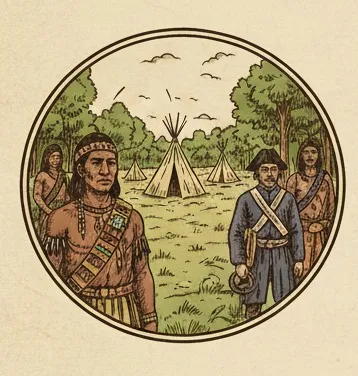
King Philip's War was a brutal conflict between English colonists and Native American groups.
In 1675, a devastating conflict erupted in New England between Native American tribes and English colonists. This war, known as King Philip's War, became the deadliest colonial conflict in American history. The roots of the war lay in the tensions over land, resources, and the clash of cultures as Puritan settlers continued to expand into Native territories.
The Wampanoag leader Metacom, called King Philip by the English, led a powerful alliance of tribes including the Narragansett, Nipmuc, and Pocumtuc. These tribes formed a confederation to resist the loss of their lands and defend their way of life. As Puritan settlements spread, Native people saw their sovereignty—their right to govern themselves—threatened. Increasing numbers of colonists, along with unfair land deals and broken promises, fueled distrust between the groups.
Tensions reached a breaking point when three Wampanoags were executed by the colonists for the murder of a Christian Native informant. Metacom and his allies decided to fight back. The war began with attacks on colonial villages throughout Massachusetts and Connecticut. Both sides suffered terrible casualties, including the deaths of civilians. The conflict spread rapidly, destroying dozens of towns and devastating entire communities.
Colonists responded by forming their own alliances with rival Native groups such as the Mohegan and Pequot. These shifting alliances were crucial. Colonists also relied on superior weapons and better supplies. However, the war dragged on for more than a year, with neither side able to gain a clear advantage. The colonists' use of scorched earth tactics—burning villages and destroying crops—helped to weaken Native resistance. Disease and starvation further reduced the Native population.
By August 1676, Metacom was killed, and the Native confederation collapsed. Thousands of Native Americans were killed or sold into slavery. Nearly half of all colonial towns in New England were attacked. The war's outcome ended Native independence in southern New England and shifted the balance of power permanently to the colonists. Native survivors lost much of their remaining land and their ability to maintain self-governance.
King Philip's War remains a powerful example of the tragic consequences of cultural conflict and competition for resources. The war marked a turning point in American history, shaping the future relationship between Native peoples and European settlers. Historians study this period to better understand how conflict and negotiation shaped early America.
Interesting Fact: During King Philip's War, the population of New England dropped by about 10%—one of the highest casualty rates of any American war.
When did King Philip's War start?
1675162017761701
Who led the Native American alliance?
MetacomPocahontasSquantoTecumseh
What region did the war devastate?
New EnglandThe SouthThe Great PlainsThe West
Why did Native Americans form a confederation?
To resist loss of landTo trade with colonistsTo find goldTo move west
What was a major result of the war?
Native independence endedColonists left New EnglandColonists lost all their townsPuritans allied with Metacom
How did colonists weaken Native resistance?
Burned villages and cropsBuilt more churchesGave land backStopped fighting
King Philip's War ended Native sovereignty in New England. True or False?
TrueFalse
What does 'alliance' mean in the passage?
Groups joining for a goalA type of weaponA colonial townA peace treaty
Perfect For:
👩🏫 Teachers
• Reading comprehension practice
• Auto-graded assessments
• Literacy skill development
👨👩👧👦 Parents
• Reading practice at home
• Comprehension improvement
• Educational reading time
🏠 Homeschoolers
• Reading curriculum support
• Independent reading practice
• Progress monitoring
Reading Features:
📖
Reading Passage
Engaging fiction or nonfiction text
❓
Comprehension Quiz
Auto-graded questions
📊
Instant Feedback
Immediate results and scoring
📄
Printable Version
Download for offline reading
🔊
Read Aloud
Voice-over with word highlighting
Reviews & Ratings
No reviews yet. Be the first to share your experience!
Related Content
Native American Tribes Across America
This engaging history reading passage introduces students to Native American tribes across America, focusing on their da...
D2.HIS.1.3-5D2.HIS.2.3-5RI.4.1RI.4.2
Teepees: Homes on the Great Plains
This engaging history reading passage introduces students to teepees, the unique homes of Native American tribes on the ...
D2.HIS.2.3-5D2.HIS.14.3-5RI.4.1RI.4.2RI.4.4
Traditional Native American Clothing
This engaging history passage explores traditional Native American clothing and how it reflected the environment, values...
D2.HIS.2.3-5D2.HIS.3.3-5RI.4.3RI.4.4
The Iroquois Confederacy: A System of Peace
This engaging U.S. History reading passage introduces students to the Iroquois Confederacy, a powerful alliance of Nativ...
D2.HIS.2.3-5D2.HIS.3.3-5RI.4.3RI.4.4
The Cherokee Nation: History and Culture
This reading passage explores the rich history and culture of the Cherokee Nation, one of the largest Native American tr...
D2.HIS.2.3-5D2.HIS.14.3-5RI.4.3RI.4.4RI.4.10
The Sioux: Warriors and Tribal Leaders
This history reading passage explores the Sioux Nation, focusing on their roles as warriors and tribal leaders. Students...
D2.HIS.1.3-5D2.HIS.2.3-5RI.4.1RI.4.3
Native American Respect for Nature
This engaging history reading passage explores Native American respect for nature, emphasizing the close relationship be...
D2.HIS.2.3-5D2.HIS.3.3-5RI.4.3RI.4.4
Jamestown: The First Permanent English Colony
This engaging history passage explores the founding of Jamestown, the first permanent English colony in America. Aligned...
D2.HIS.1.3-5D2.HIS.2.3-5RI.4.3RI.4.4
Pocahontas and the Powhatan People
This engaging reading passage explores the life of Pocahontas and the Powhatan people and their important role in early ...
D2.HIS.1.3-5D2.HIS.2.3-5RI.4.1RI.4.3
Colonial Children: School and Chores
This reading passage explores the daily lives of colonial children, focusing on their experiences at school and their ma...
D2.HIS.2.3-5D2.HIS.3.3-5RI.4.1RI.4.2RI.4.4
Colonial Clothing and Homemade Goods
This engaging U.S. history passage explores the daily life of early American colonists with a focus on colonial clothing...
D2.HIS.2.3-5RI.4.3RI.4.4
Colonial Jobs: Blacksmiths, Bakers, and Craftsmen
This engaging history reading passage explores the vital roles of blacksmiths, bakers, and craftsmen in colonial America...
D2.HIS.2.3-5D2.HIS.3.3-5RI.4.3RI.4.4
Colonial Towns and Village Life
This engaging history reading passage explores the daily life, work, and unity found in colonial towns and villages. Ali...
D2.HIS.1.3-5D2.HIS.2.3-5RI.4.3RI.4.4
Colonial Trade with England and Africa
This history reading passage explores colonial trade between the American colonies, England, and Africa, focusing on the...
D2.HIS.2.3-5D2.HIS.14.3-5RI.4.3RI.4.4
Benjamin Franklin: Printer, Inventor, and Leader
This history reading passage explores the life and achievements of Benjamin Franklin, one of America's most important ea...
D2.HIS.2.3-5D2.HIS.3.3-5RI.4.1RI.4.3
George Washington Leads the Army
This engaging history reading passage explores how George Washington bravely led the Continental Army during the America...
D2.HIS.1.3-5D2.HIS.2.3-5RI.4.3RI.4.4
Women and Children During the Revolutionary War
This reading passage explores the important roles women and children played during the Revolutionary War. Students will ...
D2.HIS.2.3-5RI.4.3RI.5.3
African Americans Fight for Freedom
This educational passage explores the brave and inspiring story of how African Americans fought for freedom in the Unite...
D2.HIS.2.3-5D2.HIS.3.3-5RI.4.3RI.4.4
The Battle of Yorktown Ends War
This engaging U.S. history reading passage explores the Battle of Yorktown, a key event that ended the American Revoluti...
D2.HIS.1.3-5D2.HIS.2.3-5RI.4.1RI.4.3
Loyalists vs. Patriots: Divided Families
This engaging U.S. history reading passage explores the division between Loyalists and Patriots during the American Revo...