This learning resource is available in interactive and printable formats. The interactive worksheet can be played online and assigned to students. The Printable PDF version can be downloaded and printed for completion by hand.
This engaging U.S. history reading passage focuses on how labor unions helped American workers. Students will learn about the formation of unions, the struggles workers faced in factories, and the brave actions taken to gain better pay and safer workplaces. The passage follows a clear sequence and highlights important vocabulary, making it ideal for building literacy skills. Activities include a multiple-choice quiz, writing prompts, and a historical timeline to deepen understanding. The content aligns with the C3 Framework and Common Core standards for history and literacy. Read aloud audio and a Spanish translation support accessibility for all learners. This resource is designed to inspire students and help them connect the past to the present while developing critical reading and thinking skills.
CONTENT PREVIEW
Expand content preview
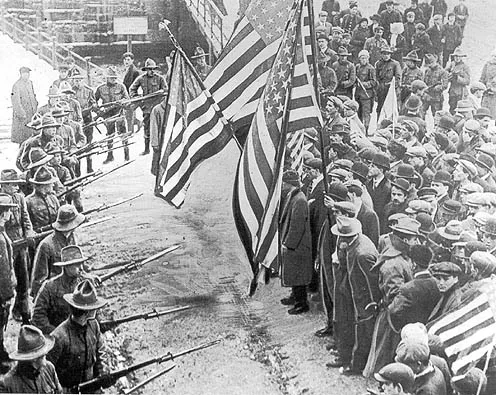
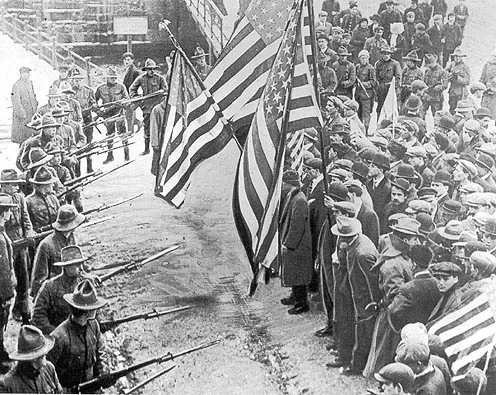
1912 Lawrence Textile Strike 1.jpg Source: Wikimedia Commons1912 Lawrence Textile Strike 1.jpg Source: Wikimedia Commons - Wikimedia Commons
The history of labor unions in the United States began during the Progressive Era. Factories, mines, and railroads were important to the nation’s growth. Many workers had jobs that were hard and sometimes dangerous. They worked long hours for low pay.
Factory owners wanted to make as much money as possible. To do this, they often paid workers less and made them work more. Many workers felt this was unfair. They wanted better pay, shorter hours, and safer workplaces. Alone, one worker’s voice was small. Together, their voices grew stronger.
Workers started to form labor unions. A labor union is a group of workers who join together to fight for better conditions. Unions used collective bargaining. This means union leaders talked with factory owners to agree on fair rules for everyone. If owners refused to listen, workers sometimes went on strike. A strike is when workers stop working to demand changes.
One famous union was the American Federation of Labor (AFL), started by Samuel Gompers in 1886. The AFL helped many skilled workers win higher wages and safer workplaces. Other unions, like the Knights of Labor, included all types of workers. These groups organized marches and strikes to show their unity and bravery.
Unions faced big challenges. Sometimes, factory owners hired new workers to replace those on strike. Sometimes, police or guards tried to stop strikes. But unions did not give up. They believed in workers' rights. Over time, many laws changed. New rules protected children from working too young and made workplaces safer for everyone.
Today, labor unions still help workers. They show how people can make a difference when they work together for fairness and respect.
Interesting Fact: In 1911, the Triangle Shirtwaist Factory fire in New York City led to new safety laws for workers.
Who started the AFL?
Samuel GompersHenry FordJane AddamsAndrew Carnegie
What is a strike?
Stopping work to demand changeGetting a raiseHiring new workersBuilding a factory
When did the Triangle Shirtwaist fire happen?
1911188619001920
Why did workers form unions?
To get better jobsTo travel moreTo buy factoriesTo become owners
How did unions make their voices stronger?
By joining togetherBy working aloneBy paying lessBy hiring owners
What did collective bargaining mean?
Leaders talked to ownersWorkers quitFactories closedChildren worked
Labor unions started in the Progressive Era. True or false?
TrueFalse
What is the meaning of 'workers' rights'?
Fair treatment for workersMaking more factoriesPaying owners moreBuying new machines
Perfect For:
👩🏫 Teachers
• Reading comprehension practice
• Auto-graded assessments
• Literacy skill development
👨👩👧👦 Parents
• Reading practice at home
• Comprehension improvement
• Educational reading time
🏠 Homeschoolers
• Reading curriculum support
• Independent reading practice
• Progress monitoring
Reading Features:
📖
Reading Passage
Engaging fiction or nonfiction text
❓
Comprehension Quiz
Auto-graded questions
📊
Instant Feedback
Immediate results and scoring
📄
Printable Version
Download for offline reading
🔊
Read Aloud
Voice-over with word highlighting
Reviews & Ratings
No reviews yet. Be the first to share your experience!
Related Content
Native American Tribes Across America
This engaging history reading passage introduces students to Native American tribes across America, focusing on their da...
D2.HIS.1.3-5D2.HIS.2.3-5RI.4.1RI.4.2
Teepees: Homes on the Great Plains
This engaging history reading passage introduces students to teepees, the unique homes of Native American tribes on the ...
D2.HIS.2.3-5D2.HIS.14.3-5RI.4.1RI.4.2RI.4.4
Traditional Native American Clothing
This engaging history passage explores traditional Native American clothing and how it reflected the environment, values...
D2.HIS.2.3-5D2.HIS.3.3-5RI.4.3RI.4.4
The Iroquois Confederacy: A System of Peace
This engaging U.S. History reading passage introduces students to the Iroquois Confederacy, a powerful alliance of Nativ...
D2.HIS.2.3-5D2.HIS.3.3-5RI.4.3RI.4.4
The Cherokee Nation: History and Culture
This reading passage explores the rich history and culture of the Cherokee Nation, one of the largest Native American tr...
D2.HIS.2.3-5D2.HIS.14.3-5RI.4.3RI.4.4RI.4.10
The Sioux: Warriors and Tribal Leaders
This history reading passage explores the Sioux Nation, focusing on their roles as warriors and tribal leaders. Students...
D2.HIS.1.3-5D2.HIS.2.3-5RI.4.1RI.4.3
Native American Respect for Nature
This engaging history reading passage explores Native American respect for nature, emphasizing the close relationship be...
D2.HIS.2.3-5D2.HIS.3.3-5RI.4.3RI.4.4
Jamestown: The First Permanent English Colony
This engaging history passage explores the founding of Jamestown, the first permanent English colony in America. Aligned...
D2.HIS.1.3-5D2.HIS.2.3-5RI.4.3RI.4.4
Pocahontas and the Powhatan People
This engaging reading passage explores the life of Pocahontas and the Powhatan people and their important role in early ...
D2.HIS.1.3-5D2.HIS.2.3-5RI.4.1RI.4.3
Colonial Children: School and Chores
This reading passage explores the daily lives of colonial children, focusing on their experiences at school and their ma...
D2.HIS.2.3-5D2.HIS.3.3-5RI.4.1RI.4.2RI.4.4
Colonial Clothing and Homemade Goods
This engaging U.S. history passage explores the daily life of early American colonists with a focus on colonial clothing...
D2.HIS.2.3-5RI.4.3RI.4.4
Colonial Jobs: Blacksmiths, Bakers, and Craftsmen
This engaging history reading passage explores the vital roles of blacksmiths, bakers, and craftsmen in colonial America...
D2.HIS.2.3-5D2.HIS.3.3-5RI.4.3RI.4.4
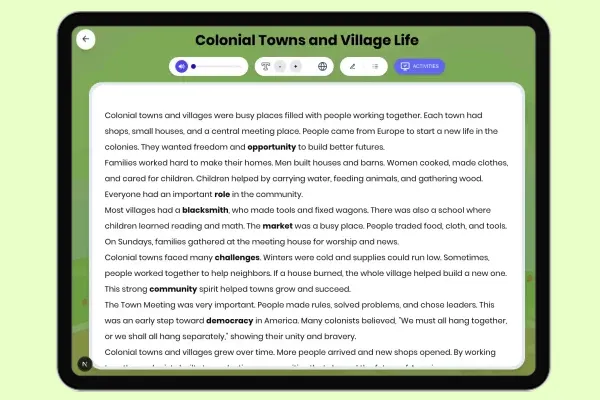
Colonial Towns and Village Life
This engaging history reading passage explores the daily life, work, and unity found in colonial towns and villages. Ali...
D2.HIS.1.3-5D2.HIS.2.3-5RI.4.3RI.4.4
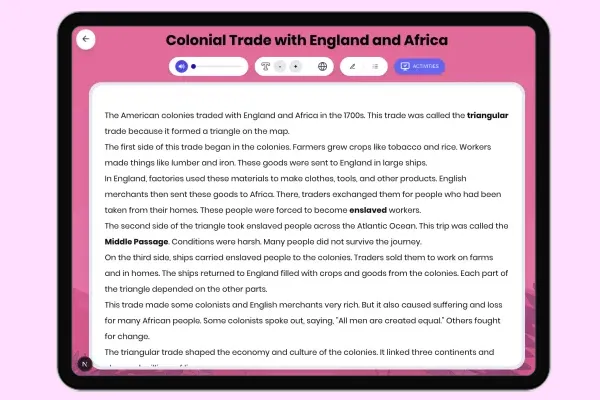
Colonial Trade with England and Africa
This history reading passage explores colonial trade between the American colonies, England, and Africa, focusing on the...
D2.HIS.2.3-5D2.HIS.14.3-5RI.4.3RI.4.4
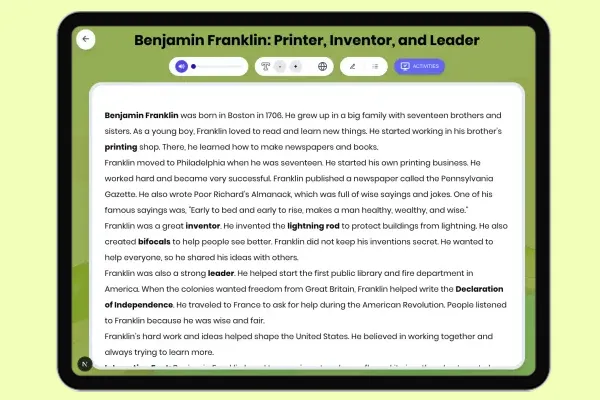
Benjamin Franklin: Printer, Inventor, and Leader
This history reading passage explores the life and achievements of Benjamin Franklin, one of America's most important ea...
D2.HIS.2.3-5D2.HIS.3.3-5RI.4.1RI.4.3
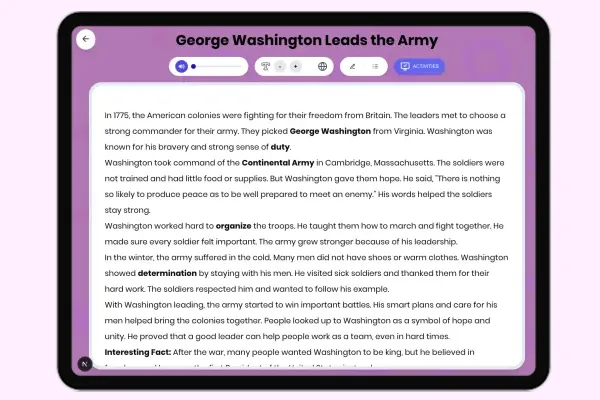
George Washington Leads the Army
This engaging history reading passage explores how George Washington bravely led the Continental Army during the America...
D2.HIS.1.3-5D2.HIS.2.3-5RI.4.3RI.4.4
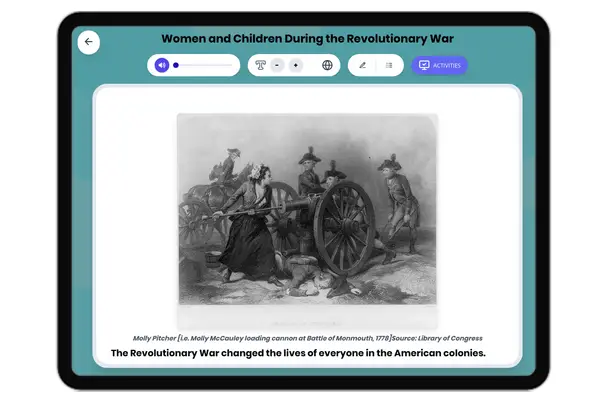
Women and Children During the Revolutionary War
This reading passage explores the important roles women and children played during the Revolutionary War. Students will ...
D2.HIS.2.3-5RI.4.3RI.5.3
African Americans Fight for Freedom
This educational passage explores the brave and inspiring story of how African Americans fought for freedom in the Unite...
D2.HIS.2.3-5D2.HIS.3.3-5RI.4.3RI.4.4
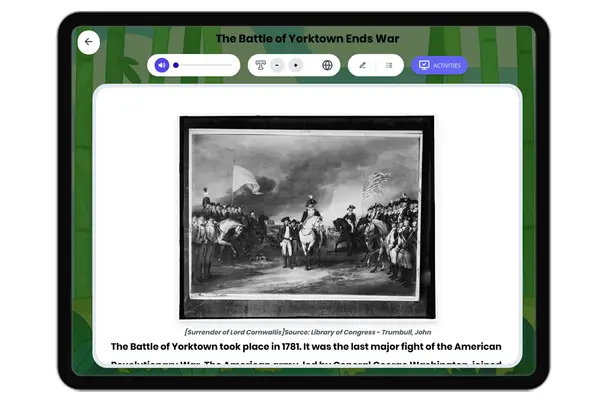
The Battle of Yorktown Ends War
This engaging U.S. history reading passage explores the Battle of Yorktown, a key event that ended the American Revoluti...
D2.HIS.1.3-5D2.HIS.2.3-5RI.4.1RI.4.3
Loyalists vs. Patriots: Divided Families
This engaging U.S. history reading passage explores the division between Loyalists and Patriots during the American Revo...