Legacy of Ancient Greece
Interactive passage with audio narration, comprehension questions, and printable PDF.
By completing this purchase you agree to our Terms of Use and Privacy Policy. Your subscription renews automatically until you cancel. You can cancel anytime from your account settings. All sales are final and non-refundable. Digital content is available for download in your account immediately upon purchase.
What's included
Part of this bundle

Legacy of Ancient Greece preview and details
About this printable Legacy of Ancient Greece reading passage (Grades 5-8)
Sample passage and quiz from Legacy of Ancient Greece
Reading passage and comprehension quiz preview
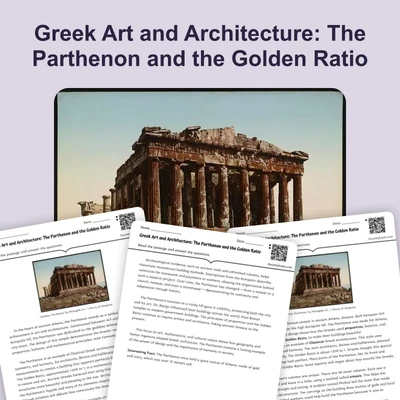
Legacy of Ancient Greece
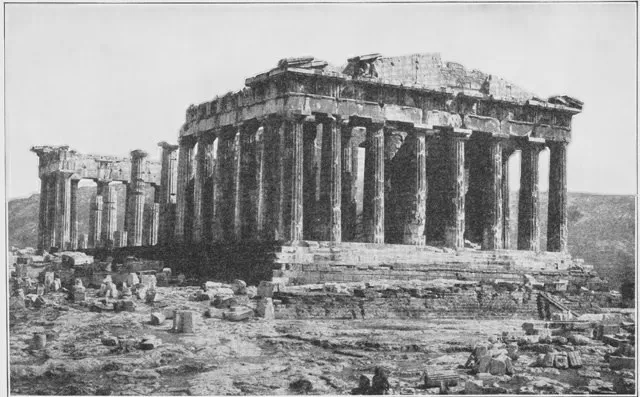
"Parthenon bw" by TroyDavis at en.wikipedia. /
Source: Wikimedia Commons
Ancient Greece has had a lasting influence on the modern world. The region known as Greece today was once home to a collection of independent city-states, such as Athens, Sparta, and Corinth, each with its own government and customs. These city-states developed around the Aegean Sea during the first millennium BCE, and their achievements continue to inspire societies across the globe.
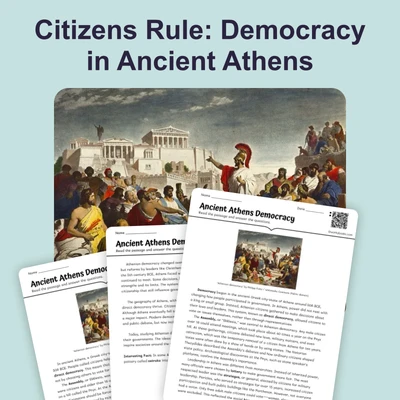
One of the most important contributions of Ancient Greece is the concept of democracy. In the fifth century BCE, Athens introduced a form of government in which free male citizens could vote on laws and decisions. This system was different from monarchies or oligarchies, where only a few held power. While Athenian democracy excluded women, slaves, and foreigners, the idea that ordinary people could participate in government was revolutionary. Ancient Greek historians, such as Herodotus, described these political gatherings in detail, and archaeological evidence, like the remains of the Pnyx assembly area, shows where citizens met to discuss important matters.
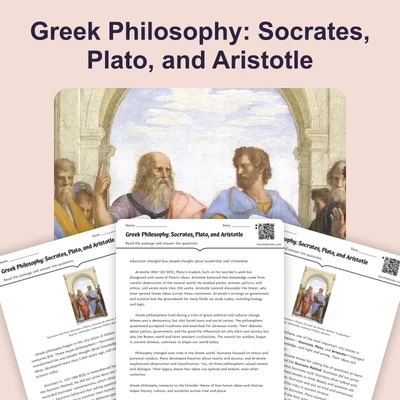
Ancient Greece was also a center for philosophy and learning. Thinkers such as Socrates, Plato, and Aristotle questioned the world around them and developed new ways to seek truth through reason and debate. Their writings, recorded on scrolls and later copied in libraries like Alexandria, explored topics from ethics to science. For example, Aristotle’s work on biology and logic shaped Western thought for centuries. The Greeks also made advances in mathematics, with figures like Euclid and Pythagoras laying the groundwork for geometry and mathematical reasoning.
Cultural achievements were another hallmark of Greek civilization. The Olympic Games, first held in Olympia in 776 BCE, brought together athletes from different city-states to compete in honor of the god Zeus. Architectural wonders such as the Parthenon, built in Athens around 447 BCE, display the Greeks’ skill in art and design. Pottery and sculpture from the era reveal stories of daily life, religion, and mythology. Archaeologists have uncovered these artifacts, providing a window into Greek society and social hierarchy.
The ideas and practices of Ancient Greece continue to shape modern society. Concepts of citizenship, rational debate, and artistic expression have endured through the ages. Philosophical texts and democratic ideals have influenced governments, educational systems, and cultural traditions worldwide. Through the study of primary sources and archaeological discoveries, historians trace the enduring legacy of Ancient Greece and its human impact on the world.
This legacy connects directly to the broader themes of cultural exchange, change over time, and the development of political systems that students study in world history.
Interesting Fact: The word "marathon" comes from a legendary run by a Greek messenger, Pheidippides, who is said to have run from the battlefield of Marathon to Athens to announce a military victory in 490 BCE.
Comprehension quiz (8 questions)
1. Which city-state started democracy?
2. When were the first Olympic Games held?
3. Who was a famous Greek philosopher?
4. Greek democracy allowed all people to vote.
5. What was the Parthenon?
6. How did Greeks impact modern society?
7. Who described Greek political gatherings?
8. What does 'hierarchy' mean?
Perfect for the way you teach
- Build comprehension skills
- Auto-graded quiz
- Differentiated reading
- Read together at home
- Improve fluency
- Quiet reading time
- Reading curriculum support
- Independent practice
- Track Lexile growth