Greek Philosophers
Interactive passage with audio narration, comprehension questions, and printable PDF.
By completing this purchase you agree to our Terms of Use and Privacy Policy. Your subscription renews automatically until you cancel. You can cancel anytime from your account settings. All sales are final and non-refundable. Digital content is available for download in your account immediately upon purchase.
What's included
Part of this bundle

Greek Philosophers preview and details
About this printable Greek Philosophers reading passage (Grades 5-8)
Sample passage and quiz from Greek Philosophers
Reading passage and comprehension quiz preview
Greek Philosophers
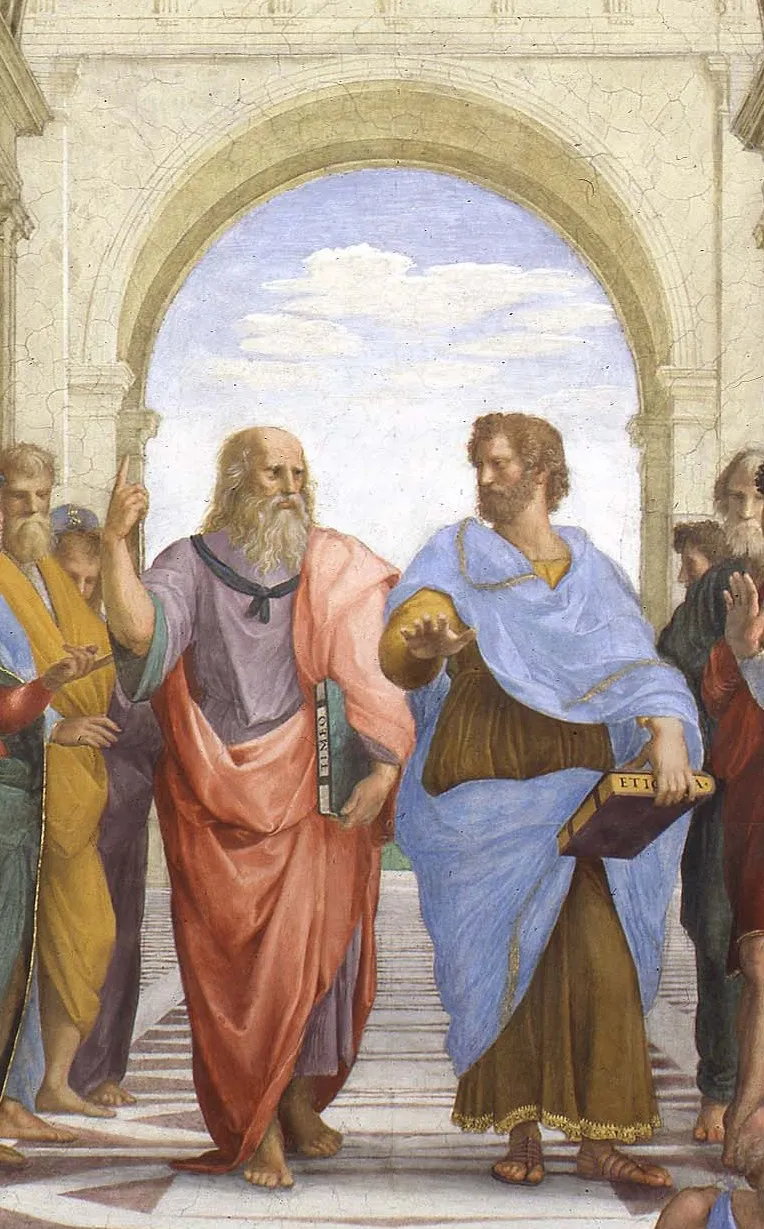
"Socrates and Plato Socrates y Platon, Escuela de Atenas, Raffae" by Raphael /
Source: Wikimedia Commons (Public domain).
Greek philosophy began in the city-state of Athens during the fifth and fourth centuries BCE. Three major philosophers—Socrates, Plato, and Aristotle—transformed the way people thought about knowledge, ethics, and the world. Their ideas, developed more than 2,400 years ago, still influence modern education and science today.
Socrates (c. 470–399 BCE) is remembered for his method of questioning, called the Socratic Method. He did not write down his teachings. Instead, his student Plato recorded Socrates’ conversations, which often took place in the public spaces of Athens. Socrates believed that asking questions led people to deeper truths and encouraged citizens to examine their beliefs. According to Plato’s writings, Socrates was sentenced to death by the Athenian government for allegedly corrupting the youth and denying the city’s gods. This event shows the tension between new ideas and traditional beliefs in ancient Greek society.
Plato (c. 427–347 BCE), influenced by Socrates, founded the Academy in Athens, one of the first institutions of higher learning. He wrote dialogues, such as "The Republic," where he discussed justice, government, and the nature of reality. Plato introduced the concept of an abstract world of "Forms," or perfect ideas that exist beyond our senses. Archaeological findings at the site of Plato’s Academy show that it attracted students from across the Greek world. Plato’s emphasis on logic and education changed how people thought about leadership and citizenship.
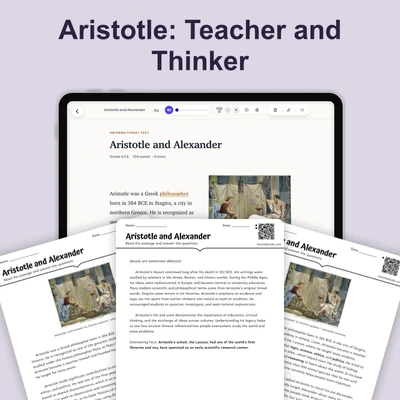
Aristotle (384–322 BCE), Plato’s student, built on his teacher’s work but disagreed with some of Plato’s ideas. Aristotle believed that knowledge came from careful observation of the natural world. He studied plants, animals, politics, and ethics, and wrote more than 200 works. Aristotle tutored Alexander the Great, who later spread Greek ideas across three continents. Aristotle’s writings on government and science laid the groundwork for many fields we study today, including biology and logic.
Greek philosophers lived during a time of great political and cultural change. Athens was a democracy, but also faced wars and social unrest. The philosophers questioned accepted traditions and searched for universal truths. Their debates about justice, government, and the good life influenced not only their own society but also the Roman world and later Western civilizations. The search for wisdom, begun in ancient Greece, continues to shape our world today.
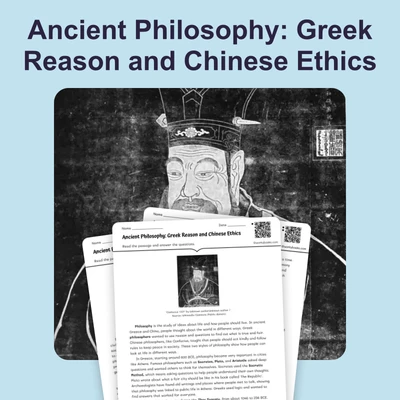
Philosophy changed over time in the Greek world. Socrates focused on ethics and personal conduct, Plato developed theories about reality and society, and Aristotle emphasized observation and classification. Yet, all three philosophers valued reason and dialogue. Their legacy shows how ideas can spread and endure, even after centuries.
Greek philosophy connects to the broader theme of how human ideas and choices shape history, culture, and societies across time and place.
Interesting Fact: The word "academy," now used for schools worldwide, comes from Plato’s Academy, which was named after a grove dedicated to the hero Akademos in Athens.
Comprehension quiz (8 questions)
1. Who was Plato's teacher?
2. What is the Socratic Method?
3. Which city-state was important for Greek philosophy?
4. Why was Socrates sentenced to death?
5. How did Aristotle differ from Plato?
6. What did Plato's Academy focus on?
7. The word 'academy' comes from Plato's school. True or false?
8. What does 'legacy' mean?
Perfect for the way you teach
- Build comprehension skills
- Auto-graded quiz
- Differentiated reading
- Read together at home
- Improve fluency
- Quiet reading time
- Reading curriculum support
- Independent practice
- Track Lexile growth