This learning resource is available in interactive and printable formats. The interactive worksheet can be played online and assigned to students. The Printable PDF version can be downloaded and printed for completion by hand.
This history reading passage explores the daily life of a pioneer family as they moved west and settled on new land in America. Students will learn about the challenges, chores, and teamwork required for pioneer families to survive and thrive on the frontier. The story follows the family’s journey in their covered wagon, their arrival at the homestead, and their efforts to build a home, farm, and community. Key vocabulary words, a timeline of events, and a variety of activities help students understand the cause-and-effect relationships and historical significance of pioneer life. The passage aligns with the C3 Framework and Common Core ELA standards, making it perfect for classroom use. Features include a Spanish translation, read-aloud audio, and comprehension and writing activities to deepen historical understanding.
CONTENT PREVIEW
Expand content preview
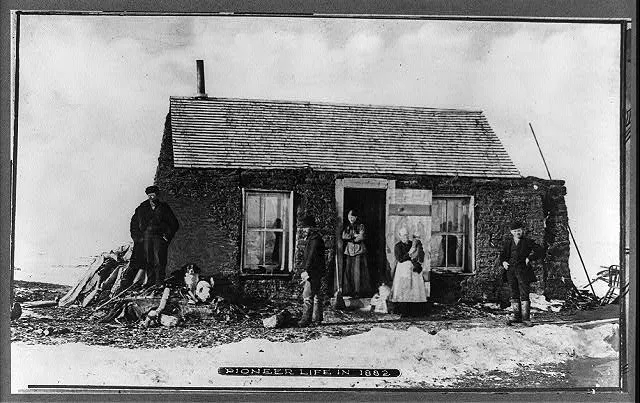
Pioneer life in 1882 Source: Library of Congress
Pioneer families played a key role in the westward expansion of the United States. These families left their homes in the East to settle in new lands out West. Their journey was filled with hardship and required great self-sufficiency.
Traveling west meant leaving behind cities, stores, and neighbors. Families packed their wagons with only the most important supplies. The trip could take months and was often full of danger. Rivers had to be crossed, storms weathered, and wild animals avoided. Once they reached their new home, the real work began. They had to clear land, build a house, and plant crops right away.
Most pioneer homes were simple log cabins. Fathers and older sons chopped down trees and built the walls. Mothers and children filled the cracks with mud or clay to keep out the wind. Every member of the family helped. Being resourceful was important. Pioneers made their own clothes, tools, and even soap. Since there were few stores, they had to grow or make almost everything they needed. If a tool broke, they fixed it themselves.
Food was gained by growing crops and raising animals. Gardens provided potatoes, corn, and beans. Chickens and cows gave eggs and milk. Sometimes, families hunted or fished for extra food. Winters were especially tough. Families worked all summer to store enough food for the cold months. They preserved fruits and vegetables by drying or canning them. If food ran low, families helped each other. Neighbors shared what little they had.
Life on the frontier was not easy. Illness, accidents, and bad weather were common. There were no doctors or hospitals nearby, so families learned how to treat injuries and sickness at home. Pioneers also made time for fun. They gathered for barn raisings, dances, and storytelling. These events brought neighbors together and gave everyone a chance to relax.
Pioneer families showed strength and bravery every day. Their hard work and unity helped them survive and build new communities.
Interesting Fact: Many pioneer children walked most of the way across the plains, sometimes traveling over 2,000 miles on foot!
What did pioneers build first?
A log cabinA storeA schoolA bridge
Which food did pioneers grow?
Potatoes and cornRice and bananasOranges and lemonsTomatoes and apples
Why did pioneers preserve food?
For winter monthsTo sell at storesFor their petsFor holidays
What was a hardship for pioneers?
Bad weatherToo many storesEasy travelMany doctors
How did pioneers show unity?
By helping neighborsBy building citiesBy working aloneBy moving back east
What did families do for fun?
Dances and storytellingWatching TVGoing to the moviesPlaying video games
Pioneer children often walked thousands of miles.
TrueFalse
What does self-sufficiency mean?
Making what you needBuying from storesBorrowing from neighborsEating out
Perfect For:
👩🏫 Teachers
• Reading comprehension practice
• Auto-graded assessments
• Literacy skill development
👨👩👧👦 Parents
• Reading practice at home
• Comprehension improvement
• Educational reading time
🏠 Homeschoolers
• Reading curriculum support
• Independent reading practice
• Progress monitoring
Reading Features:
📖
Reading Passage
Engaging fiction or nonfiction text
❓
Comprehension Quiz
Auto-graded questions
📊
Instant Feedback
Immediate results and scoring
📄
Printable Version
Download for offline reading
🔊
Read Aloud
Voice-over with word highlighting
Reviews & Ratings
No reviews yet. Be the first to share your experience!
Related Content
Native American Tribes Across America
This engaging history reading passage introduces students to Native American tribes across America, focusing on their da...
D2.HIS.1.3-5D2.HIS.2.3-5RI.4.1RI.4.2
Teepees: Homes on the Great Plains
This engaging history reading passage introduces students to teepees, the unique homes of Native American tribes on the ...
D2.HIS.2.3-5D2.HIS.14.3-5RI.4.1RI.4.2RI.4.4
Traditional Native American Clothing
This engaging history passage explores traditional Native American clothing and how it reflected the environment, values...
D2.HIS.2.3-5D2.HIS.3.3-5RI.4.3RI.4.4
The Iroquois Confederacy: A System of Peace
This engaging U.S. History reading passage introduces students to the Iroquois Confederacy, a powerful alliance of Nativ...
D2.HIS.2.3-5D2.HIS.3.3-5RI.4.3RI.4.4
The Cherokee Nation: History and Culture
This reading passage explores the rich history and culture of the Cherokee Nation, one of the largest Native American tr...
D2.HIS.2.3-5D2.HIS.14.3-5RI.4.3RI.4.4RI.4.10
The Sioux: Warriors and Tribal Leaders
This history reading passage explores the Sioux Nation, focusing on their roles as warriors and tribal leaders. Students...
D2.HIS.1.3-5D2.HIS.2.3-5RI.4.1RI.4.3
Native American Respect for Nature
This engaging history reading passage explores Native American respect for nature, emphasizing the close relationship be...
D2.HIS.2.3-5D2.HIS.3.3-5RI.4.3RI.4.4
Jamestown: The First Permanent English Colony
This engaging history passage explores the founding of Jamestown, the first permanent English colony in America. Aligned...
D2.HIS.1.3-5D2.HIS.2.3-5RI.4.3RI.4.4
Pocahontas and the Powhatan People
This engaging reading passage explores the life of Pocahontas and the Powhatan people and their important role in early ...
D2.HIS.1.3-5D2.HIS.2.3-5RI.4.1RI.4.3
Colonial Children: School and Chores
This reading passage explores the daily lives of colonial children, focusing on their experiences at school and their ma...
D2.HIS.2.3-5D2.HIS.3.3-5RI.4.1RI.4.2RI.4.4
Colonial Clothing and Homemade Goods
This engaging U.S. history passage explores the daily life of early American colonists with a focus on colonial clothing...
D2.HIS.2.3-5RI.4.3RI.4.4
Colonial Jobs: Blacksmiths, Bakers, and Craftsmen
This engaging history reading passage explores the vital roles of blacksmiths, bakers, and craftsmen in colonial America...
D2.HIS.2.3-5D2.HIS.3.3-5RI.4.3RI.4.4
Colonial Towns and Village Life
This engaging history reading passage explores the daily life, work, and unity found in colonial towns and villages. Ali...
D2.HIS.1.3-5D2.HIS.2.3-5RI.4.3RI.4.4
Colonial Trade with England and Africa
This history reading passage explores colonial trade between the American colonies, England, and Africa, focusing on the...
D2.HIS.2.3-5D2.HIS.14.3-5RI.4.3RI.4.4
Benjamin Franklin: Printer, Inventor, and Leader
This history reading passage explores the life and achievements of Benjamin Franklin, one of America's most important ea...
D2.HIS.2.3-5D2.HIS.3.3-5RI.4.1RI.4.3
George Washington Leads the Army
This engaging history reading passage explores how George Washington bravely led the Continental Army during the America...
D2.HIS.1.3-5D2.HIS.2.3-5RI.4.3RI.4.4
Women and Children During the Revolutionary War
This reading passage explores the important roles women and children played during the Revolutionary War. Students will ...
D2.HIS.2.3-5RI.4.3RI.5.3
African Americans Fight for Freedom
This educational passage explores the brave and inspiring story of how African Americans fought for freedom in the Unite...
D2.HIS.2.3-5D2.HIS.3.3-5RI.4.3RI.4.4
The Battle of Yorktown Ends War
This engaging U.S. history reading passage explores the Battle of Yorktown, a key event that ended the American Revoluti...
D2.HIS.1.3-5D2.HIS.2.3-5RI.4.1RI.4.3
Loyalists vs. Patriots: Divided Families
This engaging U.S. history reading passage explores the division between Loyalists and Patriots during the American Revo...