This history reading passage introduces students to Otto the Great, one of the most influential rulers of the Middle Ages. The text covers his rise to power, his defeat of the Magyars at the Battle of Lechfeld in 955 CE, and his coronation as Holy Roman Emperor. Students will explore evidence from primary and archaeological sources, analyze cause-and-effect relationships, and understand the significance of Otto's reign in shaping European society. The passage is supported by comprehension questions, writing activities, a glossary, and graphic organizers to help students analyze history like historians. Both English and Spanish translations, along with read aloud audio, are included. This resource aligns with CA HSS 7.1 and CCSS RH.6-8.1, RH.6-8.2, supporting inquiry-based learning and disciplinary literacy in world history.
Written by Workybooks TeamPublished by Workybooks
Preview
Sample passage and quiz content
CONTENT PREVIEW
Expand content preview
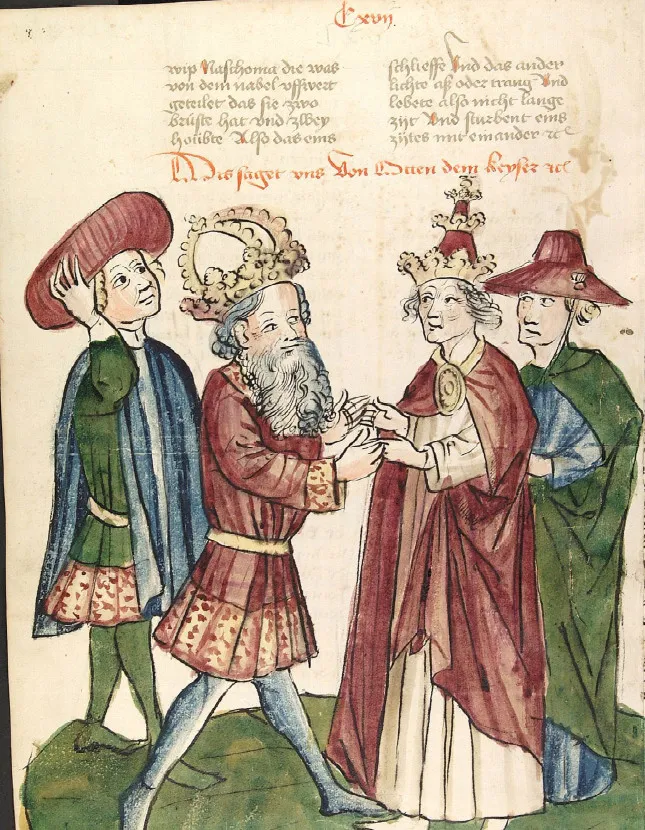
"Otto I meets Pope John XII" / Wikimedia Commons.
Otto the Great was one of the most influential rulers of the Middle Ages. He became King of East Francia in 936 CE, a region that later became part of the German states. Otto’s leadership was crucial in uniting central Europe and establishing stability after years of conflict. His reign marked a turning point for European kingdoms, especially after his victory against the Magyars and his coronation as Holy Roman Emperor.
One of Otto’s most significant achievements was his defeat of the Magyars at the Battle of Lechfeld in 955 CE. The Magyars, a nomadic people from the east, had been raiding European villages for decades. Their attacks caused fear and instability among the local populations. Many chronicles from the time, such as the Annals of Quedlinburg, describe the devastation caused by Magyar raids. Otto organized a large army, gathering support from various dukes and nobles. The battle took place near Augsburg, along the Lech River. Otto’s forces, using both heavy cavalry and disciplined infantry, managed to surround and defeat the Magyars. This victory ended the Magyar threat in western Europe and protected the people from further invasions.
After this triumph, Otto’s power and prestige grew. He strengthened the monarchy by appointing loyal bishops and church leaders to important positions, blending religious authority with royal power. This system, known as the Ottonian government, allowed him to control his vast territories more effectively. In recognition of his leadership and his protection of Christian lands, Pope John XII crowned Otto as Holy Roman Emperor in 962 CE. This event took place in Rome and signaled the revival of the empire that had once belonged to Charlemagne. The title of Holy Roman Emperor made Otto the most powerful ruler in central Europe.
Otto’s reign had lasting effects on European society and government. He brought together different regions under a single system, promoted peace, and encouraged the growth of towns and trade. Archaeological evidence, such as coins and documents from Otto’s court, show an increase in economic activity and a more organized society. Otto’s combination of military strength, religious policy, and political strategy created a foundation for the Holy Roman Empire that would last for centuries. His rule also influenced the relationship between kings and the church, setting patterns for future rulers.
Otto the Great’s defeat of the Magyars and his rise as Holy Roman Emperor changed the course of European history. His legacy demonstrates how strong leadership and wise decisions can bring peace and unity to a troubled land. The story of Otto connects to broader themes of power, religion, and the shaping of medieval Europe.
Interesting Fact: Otto’s army at the Battle of Lechfeld included soldiers from various regions, showing how alliances were crucial in medieval warfare.
When did Otto defeat the Magyars?
955 CE936 CE962 CE1000 CE
Where was Otto crowned emperor?
RomeParisAugsburgVienna
Who were the Magyars?
Nomads from the eastVikingsFrench knightsSpanish traders
Why was the Battle of Lechfeld important?
Ended Magyar raidsStarted a new warOtto lost his throneBuilt new castles
How did Otto keep control of his lands?
Appointed church leadersRaised taxesTraveled constantlyIgnored the nobles
What did Otto’s actions lead to?
Peace and growthMore invasionsSmaller kingdomsLess trade
Otto was crowned emperor in 936 CE. True or false?
TrueFalse
What does 'prestige' mean in the passage?
High status or respectMilitary defeatAncient cityReligious leader
Who it's for
Perfect for the way you teach
Teachers
Build comprehension skills
Auto-graded quiz
Differentiated reading
Parents
Read together at home
Improve fluency
Quiet reading time
Homeschoolers
Reading curriculum support
Independent practice
Track Lexile growth
Topics
Otto the GreatHoly Roman EmpireMagyarsLechfeldMiddle Agesworld history
Reviews & Ratings
No reviews yet. Be the first to share your experience!
More reading you might love
19 more
Founding of Rome
This educational passage explores the legendary origins of Ancient Rome through the stories of Romulus and Aeneas, two i...
CA HSS 6.7CCSS RH.6-8.1CCSS RH.6-8.2CCSS RH.6-8.4
Han Dynasty Suspension Bridges
This passage explores the invention and impact of suspension bridges during the Han Dynasty in Ancient China, covering h...
CA HSS 6.6CCSS RH.6-8.1CCSS RH.6-8.4CCSS RH.6-8.7
Han Dynasty Wheelbarrow
This passage explores the invention and historical significance of the wheelbarrow during the Han dynasty in ancient Chi...
CA HSS 6.6CCSS RH.6-8.1RH.6-8.2RH.6-8.4
Han Dynasty Moldboard Plow
This engaging history reading passage explores the development and impact of the moldboard plow during the Han Dynasty i...
CA HSS 6.6.4CCSS RH.6-8.1RH.6-8.2RH.6-8.4
China's Terracotta Army
This passage explores the fascinating discovery of the Terra-Cotta Army near Xi’an, China, and its significance in ancie...
CA HSS 6.1CCSS RH.6-8.1CCSS RH.6-8.4CCSS RH.6-8.7
Lascaux Cave Paintings
This engaging passage introduces students to the prehistoric art of Lascaux Cave, a remarkable archaeological discovery ...
CA HSS 6.2.1CCSS RH.6-8.1CCSS RH.6-8.4
Out of Africa: First Migration
This comprehensive history reading passage explores the Out of Africa movement and how early humans migrated across cont...
CA HSS 6.1.1CCSS RH.6-8.1RH.6-8.2RH.6-8.4
Factory Working Conditions
This world history reading passage examines the working conditions and workers' struggles during the Industrial Revoluti...
CA HSS 7.11CCSS RH.6-8.1CCSS RH.6-8.2CCSS RH.6-8.4
How Early Humans Survived the Ice Age
This passage explores how Paleolithic people adapted to a variety of landscapes, including coastal regions, mountains, p...
CA HSS 6.1CCSS RH.6-8.1CCSS RH.6-8.2CCSS RH.6-8.4
Neolithic Tools
This passage explores the profound impact of new stone tools during the Neolithic period, focusing on how these innovati...
CA HSS 6.2CCSS RH.6-8.1CCSS RH.6-8.4
How Pottery Changed Daily Life
This engaging history reading passage explores how early humans invented pottery to solve the problem of long-term food ...
CA HSS 6.1.1CCSS RH.6-8.1CCSS RH.6-8.4
Social structures in Ancient World
This passage explores the organization and significance of family life in ancient societies, focusing on how extended fa...
CA HSS 6.2CCSS RH.6-8.1CCSS RH.6-8.4CCSS RH.6-8.7
Yohanan ben Zakkai and Judaism
This passage explores the pivotal role of Yohanan ben Zakkai in preserving Jewish learning and tradition after the destr...
CA HSS 6.3.5CCSS RH.6-8.1CCSS RH.6-8.2CCSS RH.6-8.4
Thucydides the Historian
This rigorous passage introduces students to Thucydides, the ancient Greek historian who chronicled the Peloponnesian Wa...
CA HSS 6.4CCSS RH.6-8.1CCSS RH.6-8.2CCSS RH.6-8.4
Socrates the Philosopher
This engaging history reading passage explores the life and legacy of Socrates, the ancient Greek philosopher renowned f...
CA HSS 6.4.1CCSS RH.6-8.1CCSS RH.6-8.4CCSS WHST.6-8.2
Ancient Mathematics
This passage explores the essential role of mathematics in ancient civilizations, including Mesopotamia, Egypt, Greece, ...
CA HSS 6.2CCSS RH.6-8.1CCSS RH.6-8.4
Magna Carta Limits the King
This passage explores the historical significance of the Magna Carta, focusing on how English barons compelled King John...
CA HSS 7.6.5CCSS RH.6-8.1CCSS RH.6-8.2CCSS RH.6-8.4
Native American Basket Weaving
This passage examines the historical importance of basket weaving among Indigenous Americans, highlighting how different...
CA HSS 6.1CCSS RH.6-8.1RH.6-8.4
The Crusades
This passage delves into the Crusades, a series of religious wars fought from 1096 to 1291 between Christian and Muslim ...