This learning resource is available in interactive and printable formats. The interactive worksheet can be played online and assigned to students. The Printable PDF version can be downloaded and printed for completion by hand.
This detailed history reading passage explores the monumental stone pyramids built by the Maya civilization in Mesoamerica, focusing on cities like Tikal and Chichen Itza. Students will learn how the Maya used advanced mathematics, astronomy, and engineering to construct massive structures such as El Castillo, which features unique acoustic properties. The text highlights primary archaeological evidence, the significance of Maya social organization, and connections to geography. Activities include a glossary, quiz, writing prompts, graphic organizers, and a timeline, supporting analysis and critical thinking. Includes read aloud audio and Spanish translation. This resource aligns with CA HSS Framework and Common Core standards, making it ideal for middle school world history classrooms.
CONTENT PREVIEW
Expand content preview
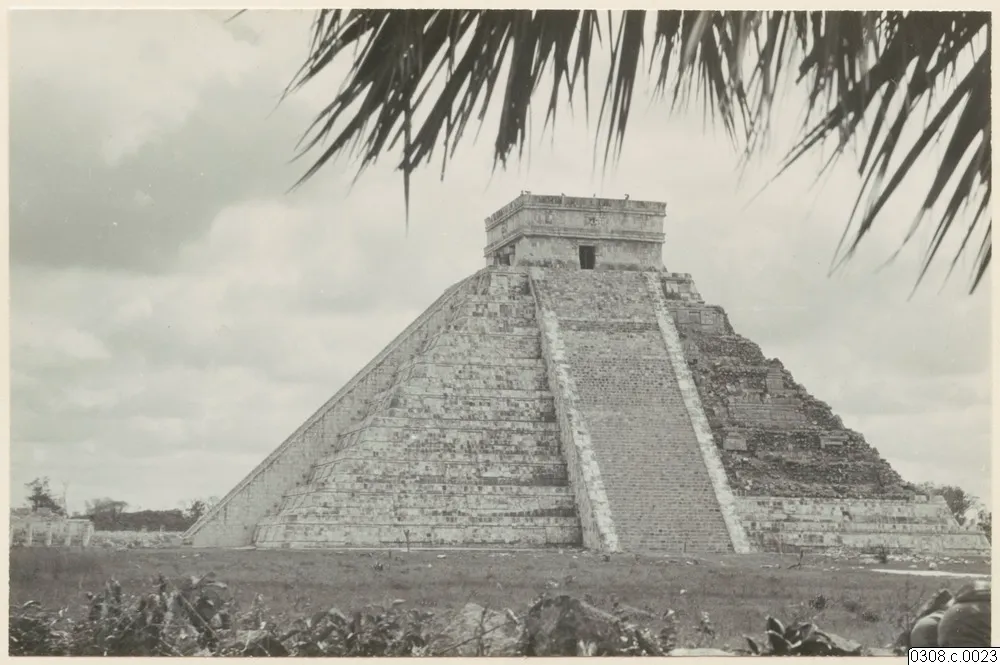
"Ancient Maya Pyramid" by Linné, Sigvald / Europeana (Public domain).
The Maya civilization constructed some of the world's most impressive ancient pyramids and temples in the jungles of present-day Mexico, Guatemala, Belize, and Honduras. Between 250 CE and 900 CE, the Maya built large city-states like Tikal and Chichen Itza. Each city was ruled by powerful kings and served as religious, political, and economic centers.
The Maya pyramids were more than just tall buildings. They were designed as sacred spaces and were often aligned with astronomical events, such as the movements of the sun and planets. The pyramid at Chichen Itza, called El Castillo, is one of the most famous examples. Built around the year 1000 CE, El Castillo was constructed with such precision that, during the spring and autumn equinoxes, the setting sun casts a shadow along the pyramid’s staircase that resembles a serpent. This effect connects to the Maya belief in the feathered serpent god, Kukulkan. Archaeologists have also discovered that if you clap at the base of the stairs, the sound echoes back like the call of a sacred bird known as the quetzal.
The construction of these pyramids required advanced knowledge of engineering, mathematics, and astronomy. Maya builders used tools made from stone, wood, and shells to cut and shape massive limestone blocks. They organized large workforces and developed systems to transport heavy stones, even without wheels or draft animals. The Maya also created complex calendars and writing systems, which can be seen in carvings and inscriptions found on pyramid walls. These achievements demonstrate a high level of social organization and division of labor. Inscriptions from Tikal, for example, describe the dedication of temples to important rulers and gods.
Pyramids were central to Maya society. They were used for religious ceremonies, including offerings and sacrifices to the gods, as well as for political gatherings. The highest platforms were often reserved for priests and elite members of society, showing the Maya’s strict social hierarchy. Over time, the design and size of the pyramids changed, reflecting shifts in power and technology. Some cities, like Tikal, built taller structures as a symbol of their dominance.
The Maya pyramids remain an important part of world history because they represent human creativity and innovation. These monumental structures help us understand how ancient societies used science, religion, and teamwork to shape their environments. Studying the Maya encourages us to think about how people today use technology and knowledge to solve problems and create lasting legacies.
Interesting Fact: El Castillo at Chichen Itza was declared a UNESCO World Heritage site in 1988 and is considered one of the New Seven Wonders of the World.
Through their monumental pyramids, the Maya civilization connects to broader themes of technological advancement, cultural achievement, and the enduring impact of early societies.
Where is El Castillo located?
Chichen ItzaTikalTeotihuacanCopan
What tool did Maya builders use?
Stone toolsIron hammersBronze axesMetal saws
When did the Classic Maya era end?
900 CE250 CE600 CE1988
Why were Maya pyramids aligned with the sun?
For religious reasonsTo grow cropsFor defenseTo store water
How did the Maya show social order?
Priests on highest platformsAll people lived in pyramidsNo leadersEveryone wore the same clothes
What impact did Maya pyramids have?
Showed creativity and teamworkMade trade harderCaused warsStopped writing
El Castillo is a New Seven Wonder.
TrueFalse
What is 'inscriptions' best defined as?
Carved words or symbolsStone blocksAstronomical toolsReligious rituals
Perfect For:
👩🏫 Teachers
• Reading comprehension practice
• Auto-graded assessments
• Literacy skill development
👨👩👧👦 Parents
• Reading practice at home
• Comprehension improvement
• Educational reading time
🏠 Homeschoolers
• Reading curriculum support
• Independent reading practice
• Progress monitoring
Reading Features:
📖
Reading Passage
Engaging fiction or nonfiction text
❓
Comprehension Quiz
Auto-graded questions
📊
Instant Feedback
Immediate results and scoring
📄
Printable Version
Download for offline reading
🔊
Read Aloud
Voice-over with word highlighting
Reviews & Ratings
No reviews yet. Be the first to share your experience!
Related Content
Native American Respect for Nature
This engaging history reading passage explores Native American respect for nature, emphasizing the close relationship be...
D2.HIS.2.3-5D2.HIS.3.3-5RI.4.3RI.4.4
Native Americans and Slavery in Early America
This comprehensive U.S. history reading passage explores the complex relationship between Native Americans and slavery d...
D2.HIS.2.3-5D2.HIS.3.3-5RI.4.3RI.4.4
Native American Tribes Across America
This engaging history reading passage introduces students to Native American tribes across America, focusing on their da...
D2.HIS.1.3-5D2.HIS.2.3-5RI.4.1RI.4.2
Traditional Native American Clothing
This engaging history passage explores traditional Native American clothing and how it reflected the environment, values...
D2.HIS.2.3-5D2.HIS.3.3-5RI.4.3RI.4.4
Native American Basket Weaving
This passage examines the historical importance of basket weaving among Indigenous Americans, highlighting how different...
Native American Treaties
This passage examines early Native American treaties, agreements that were meant to establish peace and boundaries betwe...
D2.HIS.2.3-5D2.HIS.3.3-5RI.4.3RI.4.4
Native American Land Sales
This comprehensive history reading passage examines Native American land sales in U.S. history and asks students to cons...
D2.HIS.2.3-5D2.HIS.3.3-5RI.4.3RI.4.4
Disease and Native Americans
This engaging U.S. history reading passage explores the dramatic impact of European diseases on Native American populati...
D2.HIS.2.3-5D2.HIS.3.3-5RI.4.3RI.4.4
The Cherokee Nation: History and Culture
This reading passage explores the rich history and culture of the Cherokee Nation, one of the largest Native American tr...
D2.HIS.2.3-5D2.HIS.14.3-5RI.4.3RI.4.4RI.4.10
Columbian Exchange Impact on Native Americans
This passage examines the complex effects of the Columbian Exchange on Native Americans, analyzing the causes, consequen...
D2.HIS.2.3-5D2.HIS.3.3-5RI.4.3RI.4.4
Native American Allies in Colonial Wars
This passage examines the complex role of Native American nations as allies and adversaries during the colonial wars of ...
D2.HIS.2.3-5D2.HIS.3.3-5RI.4.3RI.4.4
Spanish Missions Impact on Native American
This reading passage explores the complex impact of Spanish missions on Native American culture in what is now the south...
D2.HIS.2.3-5D2.HIS.3.3-5RI.4.3RI.4.4
Native American Civilizations Before European Contact
This engaging U.S. History reading passage explores Native American civilizations before European contact, focusing on t...
D2.HIS.2.3-5D2.HIS.3.3-5RI.4.3RI.4.4
Moccasins: Soft Leather Footwear
This passage explores the history and significance of moccasins—a soft leather footwear invented by Native American nati...
Native vs European Land Views
This passage examines the contrasting beliefs about land between Native American societies and European settlers, highli...
D2.HIS.2.3-5D2.HIS.3.3-5RI.4.3RI.4.4
Native Americans in Revolutionary War
This engaging U.S. history reading passage explores how Native American nations made difficult decisions during the Amer...
D2.HIS.2.3-5D2.HIS.3.3-5RI.4.3RI.4.4
Black History Month Word Search
RF.4.3RF.5.3L.4.4L.5.4
Pemmican: High-Energy Preserved Food
This engaging history reading passage explores the invention and significance of pemmican, a high-energy preserved food ...
The Inuit Kayak
This passage examines the history and significance of the Inuit kayak, an advanced invention developed by Arctic peoples...
American History Word Search
Word search on American History Word Search! Vocabulary practice aligned to Common Core standards!