Migration by Land and by Sea
Interactive passage with audio narration, comprehension questions, and printable PDF.
What's included
Part of this bundle

Migration by Land and by Sea preview and details
About this printable Migration by Land and by Sea reading passage (Grades 6-8)
Sample passage and quiz from Migration by Land and by Sea
Reading passage and comprehension quiz preview
Paleolithic Migration by Land and Sea
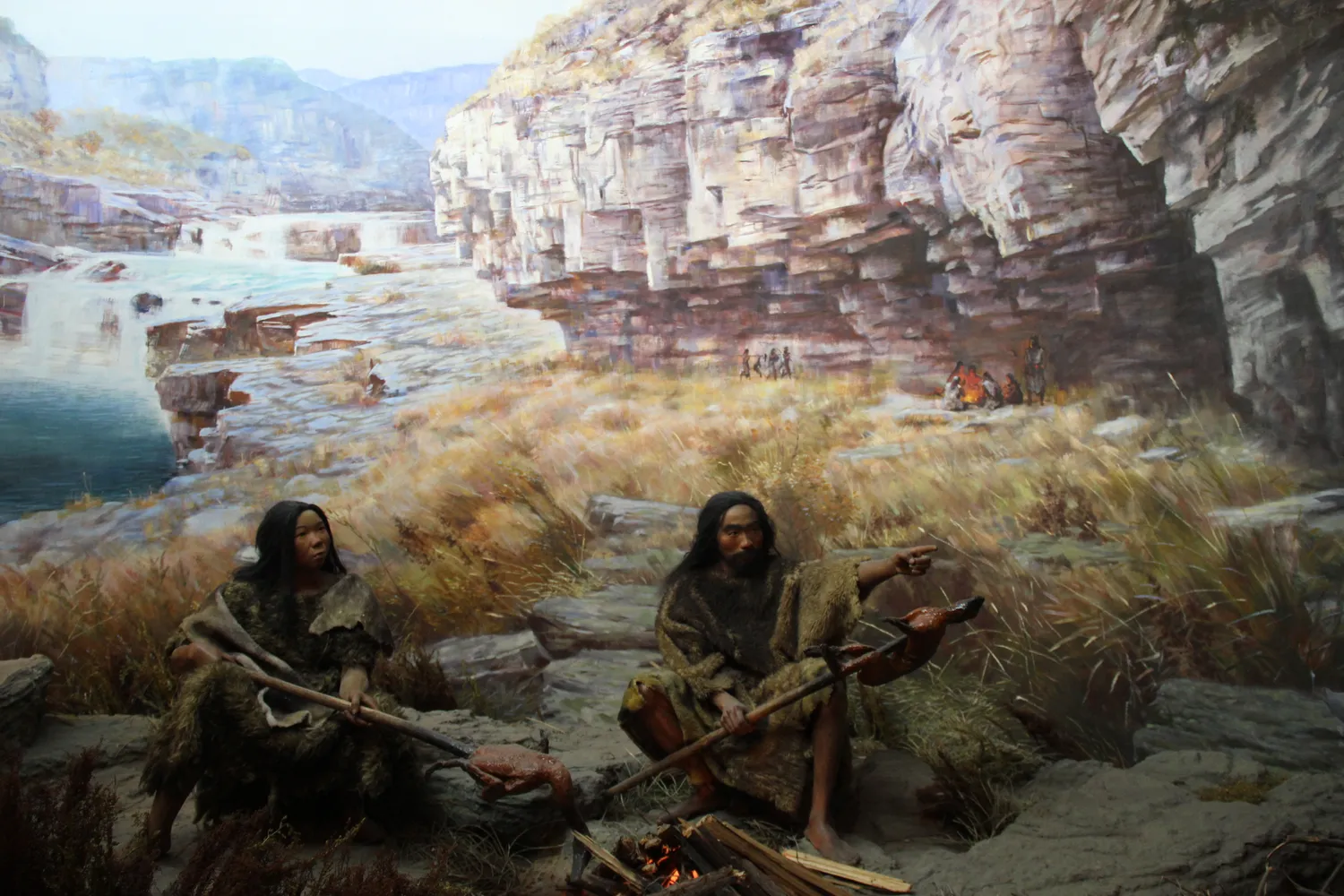
"Late Paleolithic Human Diorama (10099338786)" by Gary Todd from Xinzheng, China /
Source: Wikimedia Commons (CC0).
The movement of Paleolithic humans out of Africa marks one of the most significant events in human history. Beginning more than 60,000 years ago, groups of early humans left their African homeland and gradually spread across the globe. This migration shaped the development of cultures, technology, and societies throughout the world.
Archaeological evidence suggests that the first modern humans, known as Homo sapiens, began their journey from eastern Africa. Fossilized remains found at Omo Kibish, Ethiopia, date back about 195,000 years, but large-scale migrations started much later. Around 70,000-60,000 years ago, humans crossed into the Middle East, likely following herds of animals and searching for new resources. Excavations at Skhul Cave in Israel have revealed human remains dated to about 90,000 years ago, showing early exploration beyond Africa.
Over thousands of years, these humans adapted to diverse environments. Some groups traveled along the coastlines of South Asia, reaching Australia by at least 50,000 years ago, as indicated by ancient tools and cave art. Others moved north into Europe, where they encountered Neanderthals and learned to survive harsh Ice Age conditions. The development of advanced tools, such as blades and spear points, allowed them to hunt larger animals and gather plant foods. Evidence from Blombos Cave in South Africa shows the creation of symbolic art and jewelry, reflecting growing culture and communication skills.
One of the most remarkable migration achievements was the crossing into the Americas. During the last Ice Age, sea levels dropped and exposed a land bridge called Beringia, connecting Siberia and Alaska. Archaeologists believe humans used this route at least 15,000 years ago, based on stone tools found at sites like Monte Verde in Chile. These migrations were not simple or direct; early humans faced freezing climates, dangerous animals, and the challenge of finding food and shelter. Their ability to adapt was crucial for survival and expansion.
The spread of Paleolithic humans changed the world. As they settled new regions, they introduced new technologies and developed unique cultures. Over time, these migrations led to the incredible diversity seen among human populations today. Studying early human migration helps historians understand not just where people went, but how they overcame obstacles, interacted with the environment, and laid the foundations for modern societies.
This story of migration connects to broader history themes such as adaptation, technological change, and the impact of geography on human development. By tracing these ancient journeys, we learn how humans became a truly global species.
Interesting Fact: The ancient footprints found at Lake Mungo in Australia are over 20,000 years old, providing direct evidence of some of the earliest human settlers outside Africa.
Comprehension quiz (8 questions)
1. Where did Homo sapiens first appear?
2. What is Beringia?
3. When did humans reach Australia?
4. Why did early humans migrate?
5. How did humans survive in new places?
6. What evidence shows humans were in Chile 15,000 years ago?
7. Early human migration was simple. True or false?
8. What does 'Paleolithic' mean?
Perfect for the way you teach
- Build comprehension skills
- Auto-graded quiz
- Differentiated reading
- Read together at home
- Improve fluency
- Quiet reading time
- Reading curriculum support
- Independent practice
- Track Lexile growth