This learning resource is available in interactive and printable formats. The interactive worksheet can be played online and assigned to students. The Printable PDF version can be downloaded and printed for completion by hand.
This passage examines the rise and fall of mining towns in United States history, focusing on the boom and bust cycles that shaped local economies and communities. Through analytical text, students explore the motivations for westward expansion, the challenges miners faced, and the impact of rapid economic change. The passage integrates primary source evidence, contrasting perspectives from miners, entrepreneurs, and families, and highlights social and environmental consequences. Activities include a multiple-choice quiz, writing prompts that emphasize causation and evidence, a graphic organizer comparing causes and effects, and a detailed timeline. A Spanish translation and glossary support accessibility. This resource aligns with C3 Framework (D2.His.2.3-5, D2.His.3.3-5) and Common Core standards (RI.4.3, RI.4.4, W.4.2), providing a comprehensive, standards-based learning experience with read aloud audio and Spanish translation for diverse learners.
CONTENT PREVIEW
Expand content preview
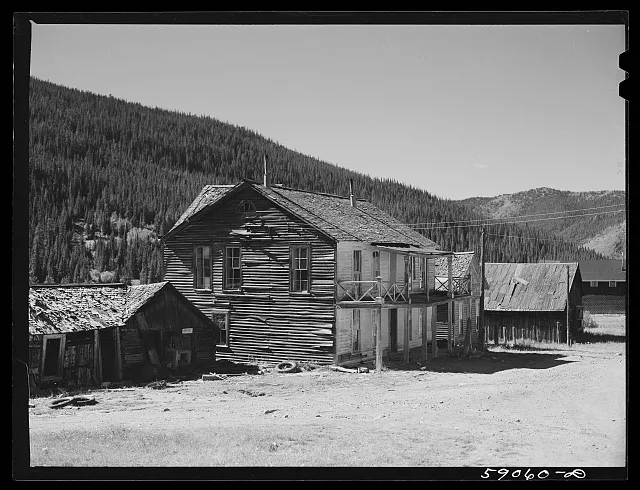
"Ghost mining town coming to life because of defense mining boom. Montezuma, Colorado" by Wolcott, Marion Post, 1910-1990 / Library of Congress.
During the 1800s, mining towns sprang up across the American West as people rushed in search of gold and silver. These boomtowns were quickly built communities that often appeared almost overnight. The discovery of valuable minerals led to rapid prosperity as thousands of prospectors, merchants, and families arrived, hoping to find fortune. However, the growth of these towns was often unstable, and just as quickly as they prospered, many faced a sharp decline when the minerals ran out.
The cycle of boom and bust shaped the economy and society of the West. When a new vein of gold or silver was found, people flocked to the site, causing prices for goods and services to surge. Entrepreneurs opened stores, banks, and hotels, creating new infrastructure to support the fast-growing population. Law enforcement and local governments tried to keep pace with the sudden changes, but often struggled to maintain order. Overcrowding, high prices, and a lack of planning sometimes led to conflict and hardship.
Problems arose when the minerals were exhausted. The resource that had attracted so many people was now gone, leaving behind empty mines, abandoned equipment, and jobless workers. With no gold or silver to support the local livelihood, many residents were forced to leave in search of better opportunities elsewhere. The once-bustling towns often became ghost towns, their wooden buildings slowly decaying in the harsh western climate.
Despite these challenges, mining towns had lasting impacts on the American West. They helped to spread new technologies, such as improved mining tools and transportation systems. The promise of sudden wealth attracted people from around the world, leading to diverse communities with different languages and cultures. However, the environmental effects were damaging. Rivers were polluted, forests were cut down, and landscapes were altered by mining operations. These changes left a permanent mark on the region.
Mining towns also influenced patterns of settlement and migration. Some towns managed to survive by shifting their economies to farming, ranching, or tourism, but most faded away. The boom-and-bust cycle showed both the opportunities and risks of the Westward Expansion period. People’s hopes for prosperity sometimes led to disappointment, but the experience of these towns remains an important chapter in U.S. history.
Interesting Fact: In Bodie, California, a famous mining town, residents would sometimes leave food on the table and tools in the mine when gold ran out, abandoning their homes overnight.
What caused mining towns to grow quickly?
Discovery of gold or silverBuilding new schoolsArrival of trainsEnd of the Civil War
What happened when minerals were gone?
Towns declinedTowns grew biggerMore people arrivedPrices dropped
What is a ghost town?
An empty, abandoned townA town near a riverA city with many peopleA mining camp
Why did prices rise in boomtowns?
High demand for goodsToo many banksLow populationCheap land
How did mining towns impact the environment?
Polluted riversBuilt new schoolsPlanted forestsImproved roads
What did some towns do to survive?
Shifted to farming or tourismStarted mining more goldBuilt more hotelsMoved to cities
Mining towns always lasted a long time. True or False?
TrueFalse
What does prosperity mean?
Success and wealthLeaving townMining toolsEmpty buildings
Perfect For:
👩🏫 Teachers
• Reading comprehension practice
• Auto-graded assessments
• Literacy skill development
👨👩👧👦 Parents
• Reading practice at home
• Comprehension improvement
• Educational reading time
🏠 Homeschoolers
• Reading curriculum support
• Independent reading practice
• Progress monitoring
Reading Features:
📖
Reading Passage
Engaging fiction or nonfiction text
❓
Comprehension Quiz
Auto-graded questions
📊
Instant Feedback
Immediate results and scoring
📄
Printable Version
Download for offline reading
🔊
Read Aloud
Voice-over with word highlighting
Reviews & Ratings
No reviews yet. Be the first to share your experience!
Related Content
Native American Tribes Across America
This engaging history reading passage introduces students to Native American tribes across America, focusing on their da...
D2.HIS.1.3-5D2.HIS.2.3-5RI.4.1RI.4.2
Teepees: Homes on the Great Plains
This engaging history reading passage introduces students to teepees, the unique homes of Native American tribes on the ...
D2.HIS.2.3-5D2.HIS.14.3-5RI.4.1RI.4.2RI.4.4
Traditional Native American Clothing
This engaging history passage explores traditional Native American clothing and how it reflected the environment, values...
D2.HIS.2.3-5D2.HIS.3.3-5RI.4.3RI.4.4
The Iroquois Confederacy: A System of Peace
This engaging U.S. History reading passage introduces students to the Iroquois Confederacy, a powerful alliance of Nativ...
D2.HIS.2.3-5D2.HIS.3.3-5RI.4.3RI.4.4
The Cherokee Nation: History and Culture
This reading passage explores the rich history and culture of the Cherokee Nation, one of the largest Native American tr...
D2.HIS.2.3-5D2.HIS.14.3-5RI.4.3RI.4.4RI.4.10
The Sioux: Warriors and Tribal Leaders
This history reading passage explores the Sioux Nation, focusing on their roles as warriors and tribal leaders. Students...
D2.HIS.1.3-5D2.HIS.2.3-5RI.4.1RI.4.3
Native American Respect for Nature
This engaging history reading passage explores Native American respect for nature, emphasizing the close relationship be...
D2.HIS.2.3-5D2.HIS.3.3-5RI.4.3RI.4.4
Jamestown: The First Permanent English Colony
This engaging history passage explores the founding of Jamestown, the first permanent English colony in America. Aligned...
D2.HIS.1.3-5D2.HIS.2.3-5RI.4.3RI.4.4
Pocahontas and the Powhatan People
This engaging reading passage explores the life of Pocahontas and the Powhatan people and their important role in early ...
D2.HIS.1.3-5D2.HIS.2.3-5RI.4.1RI.4.3
Colonial Children: School and Chores
This reading passage explores the daily lives of colonial children, focusing on their experiences at school and their ma...
D2.HIS.2.3-5D2.HIS.3.3-5RI.4.1RI.4.2RI.4.4
Colonial Clothing and Homemade Goods
This engaging U.S. history passage explores the daily life of early American colonists with a focus on colonial clothing...
D2.HIS.2.3-5RI.4.3RI.4.4
Colonial Jobs: Blacksmiths, Bakers, and Craftsmen
This engaging history reading passage explores the vital roles of blacksmiths, bakers, and craftsmen in colonial America...
D2.HIS.2.3-5D2.HIS.3.3-5RI.4.3RI.4.4
Colonial Towns and Village Life
This engaging history reading passage explores the daily life, work, and unity found in colonial towns and villages. Ali...
D2.HIS.1.3-5D2.HIS.2.3-5RI.4.3RI.4.4
Colonial Trade with England and Africa
This history reading passage explores colonial trade between the American colonies, England, and Africa, focusing on the...
D2.HIS.2.3-5D2.HIS.14.3-5RI.4.3RI.4.4
Benjamin Franklin: Printer, Inventor, and Leader
This history reading passage explores the life and achievements of Benjamin Franklin, one of America's most important ea...
D2.HIS.2.3-5D2.HIS.3.3-5RI.4.1RI.4.3
George Washington Leads the Army
This engaging history reading passage explores how George Washington bravely led the Continental Army during the America...
D2.HIS.1.3-5D2.HIS.2.3-5RI.4.3RI.4.4
Women and Children During the Revolutionary War
This reading passage explores the important roles women and children played during the Revolutionary War. Students will ...
D2.HIS.2.3-5RI.4.3RI.5.3
African Americans Fight for Freedom
This educational passage explores the brave and inspiring story of how African Americans fought for freedom in the Unite...
D2.HIS.2.3-5D2.HIS.3.3-5RI.4.3RI.4.4
The Battle of Yorktown Ends War
This engaging U.S. history reading passage explores the Battle of Yorktown, a key event that ended the American Revoluti...
D2.HIS.1.3-5D2.HIS.2.3-5RI.4.1RI.4.3
Loyalists vs. Patriots: Divided Families
This engaging U.S. history reading passage explores the division between Loyalists and Patriots during the American Revo...