National Bank Debate
Interactive passage with audio narration, comprehension questions, and printable PDF.
By completing this purchase you agree to our Terms of Use and Privacy Policy. Your subscription renews automatically until you cancel. You can cancel anytime from your account settings. All sales are final and non-refundable. Digital content is available for download in your account immediately upon purchase.
What's included
National Bank Debate preview and details
About this printable National Bank Debate reading passage (Grades 6-8)
Sample passage and quiz from National Bank Debate
Reading passage and comprehension quiz preview
National Bank Debate
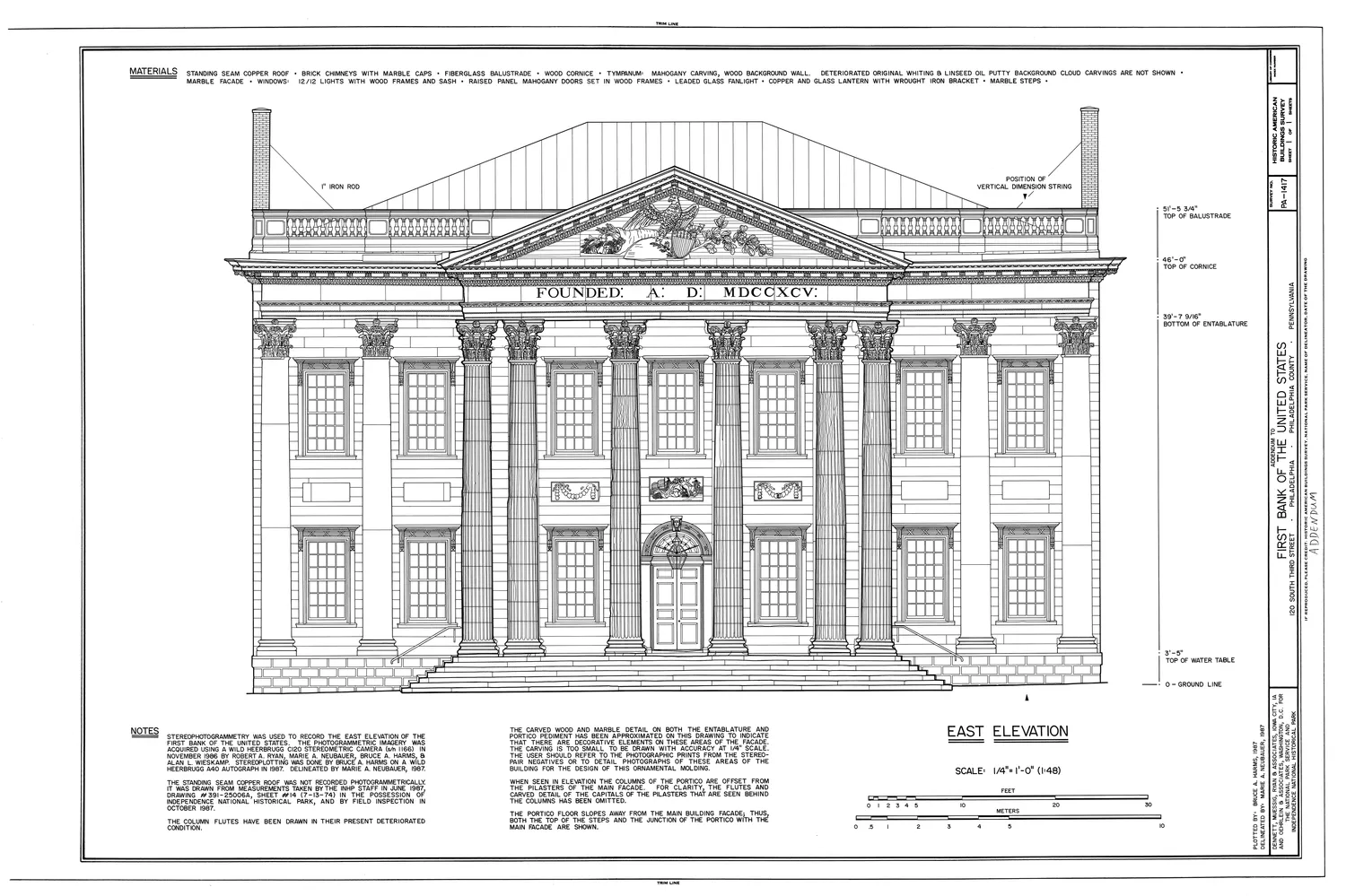
Source: Wikimedia Commons -Related names:Mason, Anne, transmitter
The debate over the national bank was one of the earliest and most important arguments in the new United States government. In 1790, Alexander Hamilton, the Secretary of the Treasury, proposed creating a national bank to help manage the country’s finances, collect taxes, and provide loans. Hamilton believed that such a bank would strengthen the economy and unify the different states under a stable financial system. However, his plan quickly became a source of conflict among the nation’s leaders.
Thomas Jefferson and James Madison, two influential members of President George Washington’s cabinet, opposed Hamilton’s idea. They argued that the Constitution did not specifically give Congress the power to create a bank. This disagreement led to a larger debate about how to interpret the Constitution. Hamilton supported a loose construction of the Constitution, meaning he believed the government could do things not directly stated in the document, as long as they were necessary to achieve its goals. Jefferson and Madison, in contrast, supported strict construction, believing the government could only do what the Constitution clearly allowed.
This difference in constitutional interpretation was not just about the bank. It reflected deeper concerns about federal power and the balance between national and state governments. Hamilton thought a strong central government was needed for economic growth and national unity. He pointed to the Constitution’s “necessary and proper” clause as evidence that Congress could create a bank to carry out its financial duties. Jefferson and Madison worried that too much federal power could threaten individual freedoms and the rights of the states. They believed that giving Congress the power to create a bank would set a dangerous precedent for expanding government authority.
The debate was intense and divided leaders in Congress and the country. Supporters of Hamilton argued that a national bank was essential for borrowing money, paying debts from the Revolutionary War, and handling the government’s income and expenses. Opponents saw the bank as favoring wealthy investors and northern states, while ignoring the interests of farmers and the South. Both sides used evidence from the Constitution and the needs of the young country to defend their positions.
In 1791, President Washington asked both sides to write their arguments. After careful consideration, he sided with Hamilton and signed the bill to create the First Bank of the United States. The bank was established in Philadelphia and played a key role in stabilizing the nation’s economy. However, the debate did not end with its creation. The arguments about federalism, constitutional powers, and economic policy continued for years and led to the development of the first political parties in the United States: the Federalists, who supported Hamilton’s views, and the Democratic-Republicans, who followed Jefferson and Madison.
The National Bank Debate was more than just an argument over money. It helped define how Americans would interpret the Constitution and set the stage for future conflicts about government power. The issues raised during this debate continue to influence American political discussions today.
Interesting Fact: The First Bank of the United States operated for 20 years, but when its charter expired in 1811, Congress did not renew it—leading to another heated debate about the role of national banks.
Comprehension quiz (8 questions)
1. Who proposed the national bank?
2. In what year did the bank open?
3. Where was the First Bank located?
4. Why did Jefferson and Madison oppose the bank?
5. What did Hamilton believe about federal power?
6. What resulted from the bank debate?
7. The First Bank lasted 20 years. True or false?
8. What is 'strict construction'?
Common Core standards for National Bank Debate
Explain events, procedures, ideas, or concepts in a historical, scientific, or technical text, including what happened and why, based on specific information in the text.
Determine the meaning of general academic and domain-specific words or phrases in a text relevant to a grade 4 topic or subject area.
Write informative/explanatory texts to examine a topic and convey ideas and information clearly.
Perfect for the way you teach
- Build comprehension skills
- Auto-graded quiz
- Differentiated reading
- Read together at home
- Improve fluency
- Quiet reading time
- Reading curriculum support
- Independent practice
- Track Lexile growth