Native Languages: Loss and Revival
Interactive passage with audio narration, comprehension questions, and printable PDF.
By completing this purchase you agree to our Terms of Use and Privacy Policy. Your subscription renews automatically until you cancel. You can cancel anytime from your account settings. All sales are final and non-refundable. Digital content is available for download in your account immediately upon purchase.
What's included
Native Languages: Loss and Revival preview and details
About this printable Native Languages: Loss and Revival reading passage (Grades 6-8)
Sample passage and quiz from Native Languages: Loss and Revival
Reading passage and comprehension quiz preview
Native American Languages
The loss of Native American languages in the United States is a result of historical government policies and efforts to force cultural assimilation. In the late 1800s and early 1900s, the U.S. government established boarding schools that separated Native children from their families. At these schools, students were often punished for speaking their tribal languages. This practice was part of a systematic attempt to replace Native traditions with English language and American customs, which was known as assimilation.
Because of these policies, thousands of children lost the chance to learn their ancestors' languages. Many Native American languages, which are unique and important parts of cultural identity, became endangered or nearly extinct. Linguists, who study the science of language, estimate that over 300 tribal languages once existed in North America, but today only about 175 remain, and many have very few fluent speakers left. This drastic decline in linguistic diversity has had long-lasting effects on Native communities.
The consequences of language loss go beyond just words. Native languages carry traditional knowledge, values, and history. When a language disappears, so does a unique way of seeing the world. Elders who still speak these languages are considered cultural treasures, but as they age, the risk of losing these heritages increases. For many tribes, this loss is deeply painful and threatens the survival of their cultures.
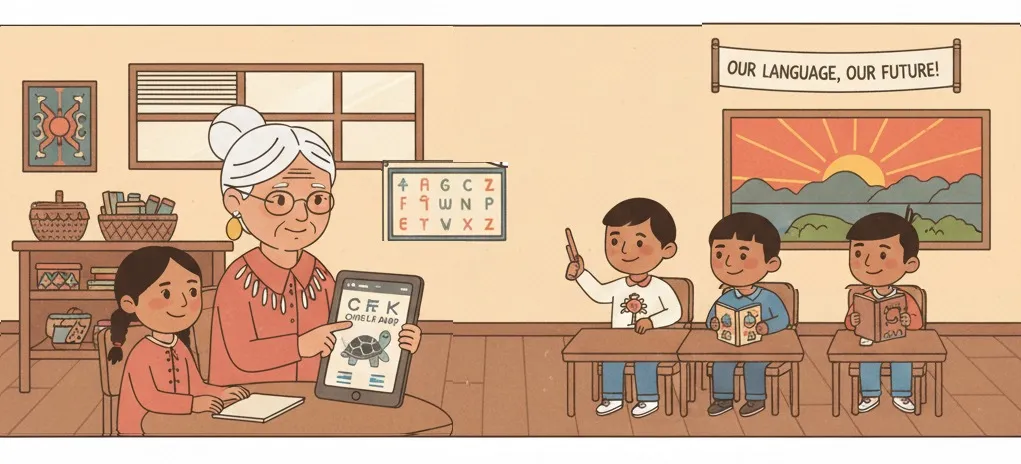
In recent decades, communities have begun important work to reverse this damage through revitalization programs. These efforts include language immersion schools, summer camps, and digital recordings of elders. Technology has also become a powerful tool, as apps and online courses help younger generations learn tribal languages. These programs focus on preservation and passing on knowledge before the last fluent speakers are gone.
Revival is not easy. Many tribes face challenges such as limited resources, few available teachers, and historical trauma. However, the determination to reclaim language as a core part of identity remains strong. Tribes work with universities, museums, and non-profit organizations to document words and create teaching materials. Some tribes have even passed laws declaring their languages official within their nations.
Despite significant obstacles, these collaborations are showing results. Children who learn their heritage languages develop stronger connections to their culture and community. The success of these revitalization efforts is a testament to the resilience and pride of Native peoples. The fight to save Native languages is ongoing, but every new speaker is a victory for cultural survival.
Interesting Fact: The Cherokee language was one of the first Native American languages to have a written alphabet, created by Sequoyah in the early 1800s.
Comprehension quiz (8 questions)
1. Why were Native children punished in boarding schools?
2. What is assimilation?
3. Who created the Cherokee written alphabet?
4. What do revitalization programs do?
5. Why is language loss painful for tribes?
6. What is a challenge for language revival?
7. Language immersion means using a language all the time. True or false?
8. What does "linguistic" mean?
Common Core standards for Native Languages: Loss and Revival
Explain events, procedures, ideas, or concepts in a historical, scientific, or technical text, including what happened and why, based on specific information in the text.
Determine the meaning of general academic and domain-specific words or phrases in a text relevant to a grade 4 topic or subject area.
Write informative/explanatory texts to examine a topic and convey ideas and information clearly.
Perfect for the way you teach
- Build comprehension skills
- Auto-graded quiz
- Differentiated reading
- Read together at home
- Improve fluency
- Quiet reading time
- Reading curriculum support
- Independent practice
- Track Lexile growth