This learning resource is available in interactive and printable formats. The interactive worksheet can be played online and assigned to students. The Printable PDF version can be downloaded and printed for completion by hand.
This history passage explores the historical location of the Navajo Tribe, focusing on their homeland in the American Southwest and how geography influenced their way of life. Students will learn about the significance of the region, key terms like reservation and adaptation, and the impact of European settlers. The passage aligns with the C3 Framework for Social Studies, helping students understand cultural and environmental factors in history. Activities include a glossary, multiple-choice quiz, writing prompts, and a timeline of important events. Audio integration supports diverse learners, making this resource perfect for classroom or independent study. This content helps students connect the past to the present and deepens understanding of Navajo culture and resilience.
CONTENT PREVIEW
Expand content preview
The Navajo Tribe is one of the largest Native American groups in the United States. Their traditional homeland is in the American Southwest, mostly in what is today northern Arizona, New Mexico, and southern Utah. This region is known for its deserts, canyons, and colorful mesas. The Navajo people have lived in this area for centuries, long before European settlers arrived.
The land where the Navajo lived is called Diné Bikéyah, which means "Navajo land" in their own language. This area is rich in natural resources like water, plants, and animals, which helped the Navajo develop a strong culture. They built homes called hogans using wood, earth, and stone. The Navajo raised sheep and goats, which gave them wool for weaving famous rugs and blankets.
In the 1800s, the Navajo faced many challenges. The U.S. government forced them to leave their homeland during a tragic event called the Long Walk in 1864. Thousands of Navajo were moved to a distant place called Bosque Redondo in eastern New Mexico. After several years, the Navajo were allowed to return to part of their original land. Today, most Navajo live on the Navajo Nation Reservation, the largest reservation in the United States.
The location of the Navajo homeland is important in history because it shows how geography can shape a group's culture and way of life. The Navajo have a deep connection to their land, which is still central to their traditions and beliefs.
Interesting Fact: The Navajo Nation is larger than ten U.S. states and even has its own government and police force!
Where is the Navajo homeland?
Southwest United StatesPacific NorthwestSoutheast United StatesGreat Plains
What is a hogan?
A Navajo homeA type of rugA government buildingA woven blanket
What event happened in 1864?
The Long WalkNavajo Nation startedFirst rug wovenNavajo arrival in Utah
Why is Diné Bikéyah important?
It's the Navajo homelandIt's their main cropIt's a famous leaderIt's a type of blanket
How did geography shape Navajo life?
Helped with resources and cultureKept them from farmingMade travel easyHad no effect
What happened after the Long Walk?
Navajo returned homeNavajo moved to CanadaNew tribes arrivedNavajo built cities
The Navajo Nation is the largest reservation. True or false?
TrueFalse
What does 'reservation' mean here?
Land set aside for tribesA dinner bookingA woven rugA type of animal
Perfect For:
👩🏫 Teachers
• Reading comprehension practice
• Auto-graded assessments
• Literacy skill development
👨👩👧👦 Parents
• Reading practice at home
• Comprehension improvement
• Educational reading time
🏠 Homeschoolers
• Reading curriculum support
• Independent reading practice
• Progress monitoring
Reading Features:
📖
Reading Passage
Engaging fiction or nonfiction text
❓
Comprehension Quiz
Auto-graded questions
📊
Instant Feedback
Immediate results and scoring
📄
Printable Version
Download for offline reading
🔊
Read Aloud
Voice-over with word highlighting
Reviews & Ratings
No reviews yet. Be the first to share your experience!
Related Content
Native American Respect for Nature
This engaging history reading passage explores Native American respect for nature, emphasizing the close relationship be...
D2.HIS.2.3-5D2.HIS.3.3-5RI.4.3RI.4.4
Native Americans and Slavery in Early America
This comprehensive U.S. history reading passage explores the complex relationship between Native Americans and slavery d...
D2.HIS.2.3-5D2.HIS.3.3-5RI.4.3RI.4.4
Native American Tribes Across America
This engaging history reading passage introduces students to Native American tribes across America, focusing on their da...
D2.HIS.1.3-5D2.HIS.2.3-5RI.4.1RI.4.2
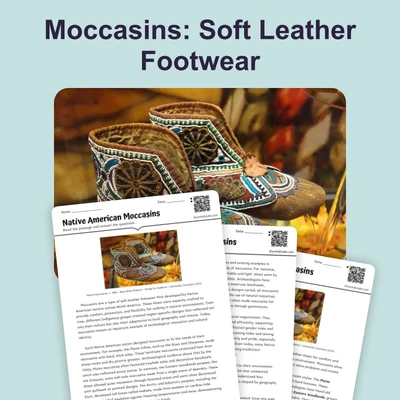
Traditional Native American Clothing
This engaging history passage explores traditional Native American clothing and how it reflected the environment, values...
D2.HIS.2.3-5D2.HIS.3.3-5RI.4.3RI.4.4
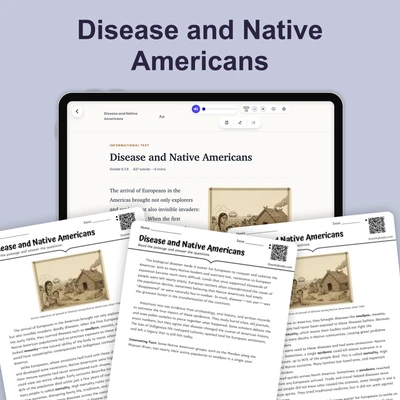
Disease and Native Americans
This engaging U.S. history reading passage explores the dramatic impact of European diseases on Native American populati...
D2.HIS.2.3-5D2.HIS.3.3-5RI.4.3RI.4.4
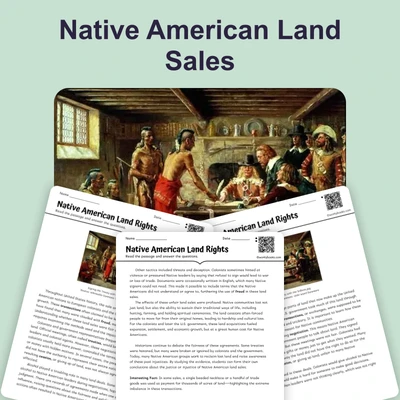
Native American Land Sales
This comprehensive history reading passage examines Native American land sales in U.S. history and asks students to cons...
D2.HIS.2.3-5D2.HIS.3.3-5RI.4.3RI.4.4
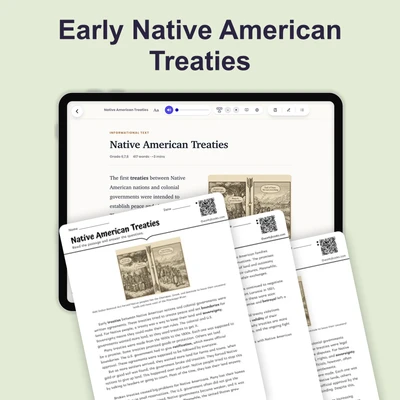
Native American Treaties
This passage examines early Native American treaties, agreements that were meant to establish peace and boundaries betwe...
D2.HIS.2.3-5D2.HIS.3.3-5RI.4.3RI.4.4
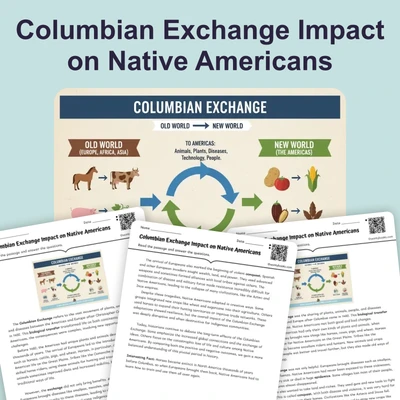
Columbian Exchange Impact on Native Americans
This passage examines the complex effects of the Columbian Exchange on Native Americans, analyzing the causes, consequen...
D2.HIS.2.3-5D2.HIS.3.3-5RI.4.3RI.4.4
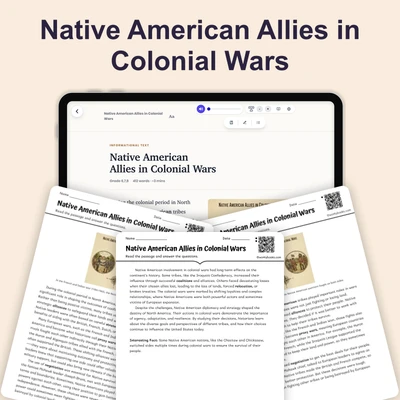
Native American Allies in Colonial Wars
This passage examines the complex role of Native American nations as allies and adversaries during the colonial wars of ...
D2.HIS.2.3-5D2.HIS.3.3-5RI.4.3RI.4.4
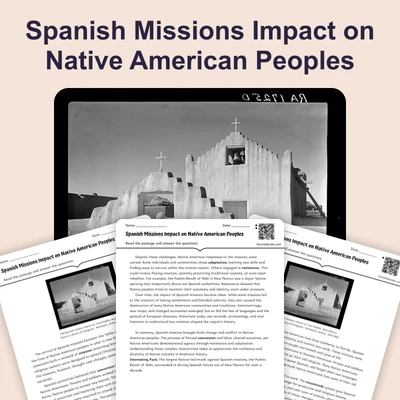
Spanish Missions Impact on Native American
This reading passage explores the complex impact of Spanish missions on Native American culture in what is now the south...
D2.HIS.2.3-5D2.HIS.3.3-5RI.4.3RI.4.4
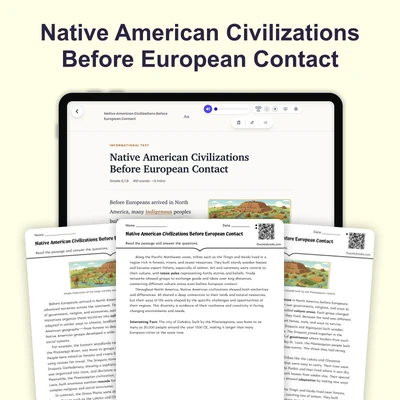
Native American Civilizations Before European Contact
This engaging U.S. History reading passage explores Native American civilizations before European contact, focusing on t...
D2.HIS.2.3-5D2.HIS.3.3-5RI.4.3RI.4.4
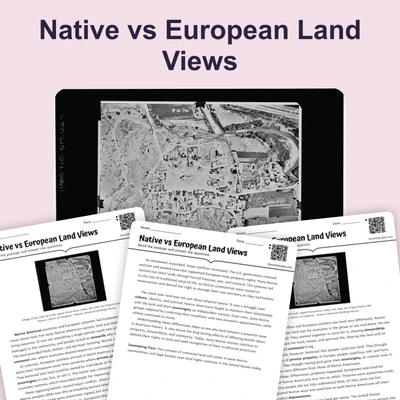
Native vs European Land Views
This passage examines the contrasting beliefs about land between Native American societies and European settlers, highli...
D2.HIS.2.3-5D2.HIS.3.3-5RI.4.3RI.4.4
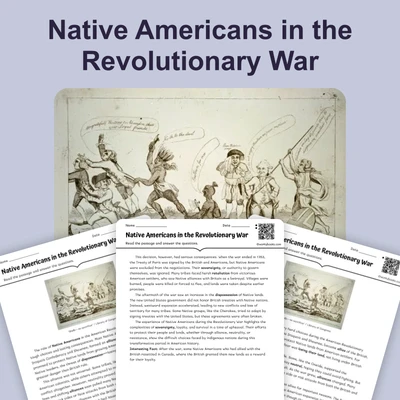
Native Americans in Revolutionary War
This engaging U.S. history reading passage explores how Native American nations made difficult decisions during the Amer...
D2.HIS.2.3-5D2.HIS.3.3-5RI.4.3RI.4.4
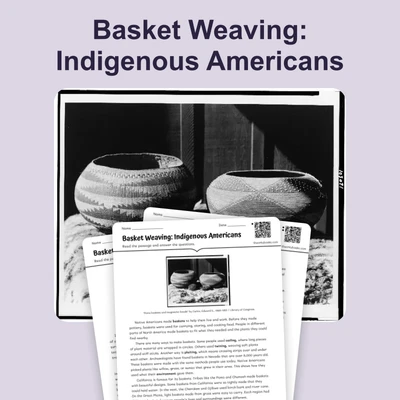
Native American Basket Weaving
This passage examines the historical importance of basket weaving among Indigenous Americans, highlighting how different...
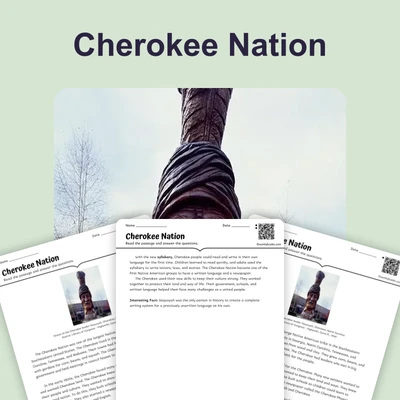
The Cherokee Nation: History and Culture
This reading passage explores the rich history and culture of the Cherokee Nation, one of the largest Native American tr...
D2.HIS.2.3-5D2.HIS.14.3-5RI.4.3RI.4.4RI.4.10
Native Languages: Loss and Revival
This engaging U.S. history reading passage examines the history of Native American language loss and ongoing efforts tow...
D2.HIS.2.3-5D2.HIS.3.3-5RI.4.3RI.4.4
New Nation America
This history reading passage, 'New Nation America,' covers how the United States struggled to become a united country af...
HSS 5.6.1RI.4.2
Informational Text — American Flag
This informational text on the American flag will teach students about what the stars, stripes, and colors on the flag r...
RI.3.10
The Full Moon in Native American Culture
W.4.5
Deadly Diseases: Smallpox in the Americas
This engaging U.S. history reading passage explores how smallpox, a deadly disease, changed the Americas during Colonial...