This learning resource is available in interactive and printable formats. The interactive worksheet can be played online and assigned to students. The Printable PDF version can be downloaded and printed for completion by hand.
This engaging world history reading passage focuses on Navajo weaving, a significant cultural and technological achievement of the Diné (Navajo) people. Students will explore how the Navajo developed intricate weaving techniques to create rugs and blankets with geometric patterns, reflecting both tradition and innovation. The passage examines the historical context, methods, and cultural significance of these textiles, drawing on archaeological evidence and primary sources. Activities include a multiple-choice quiz, writing prompts, graphic organizers, and a timeline, all aligned with CA HSS 6.1, 7.4, and CCSS RI.6-8 standards. The resource features a Spanish translation and read aloud audio to support diverse learners. Ideal for developing historical analysis and ELA informational text skills.
CONTENT PREVIEW
Expand content preview
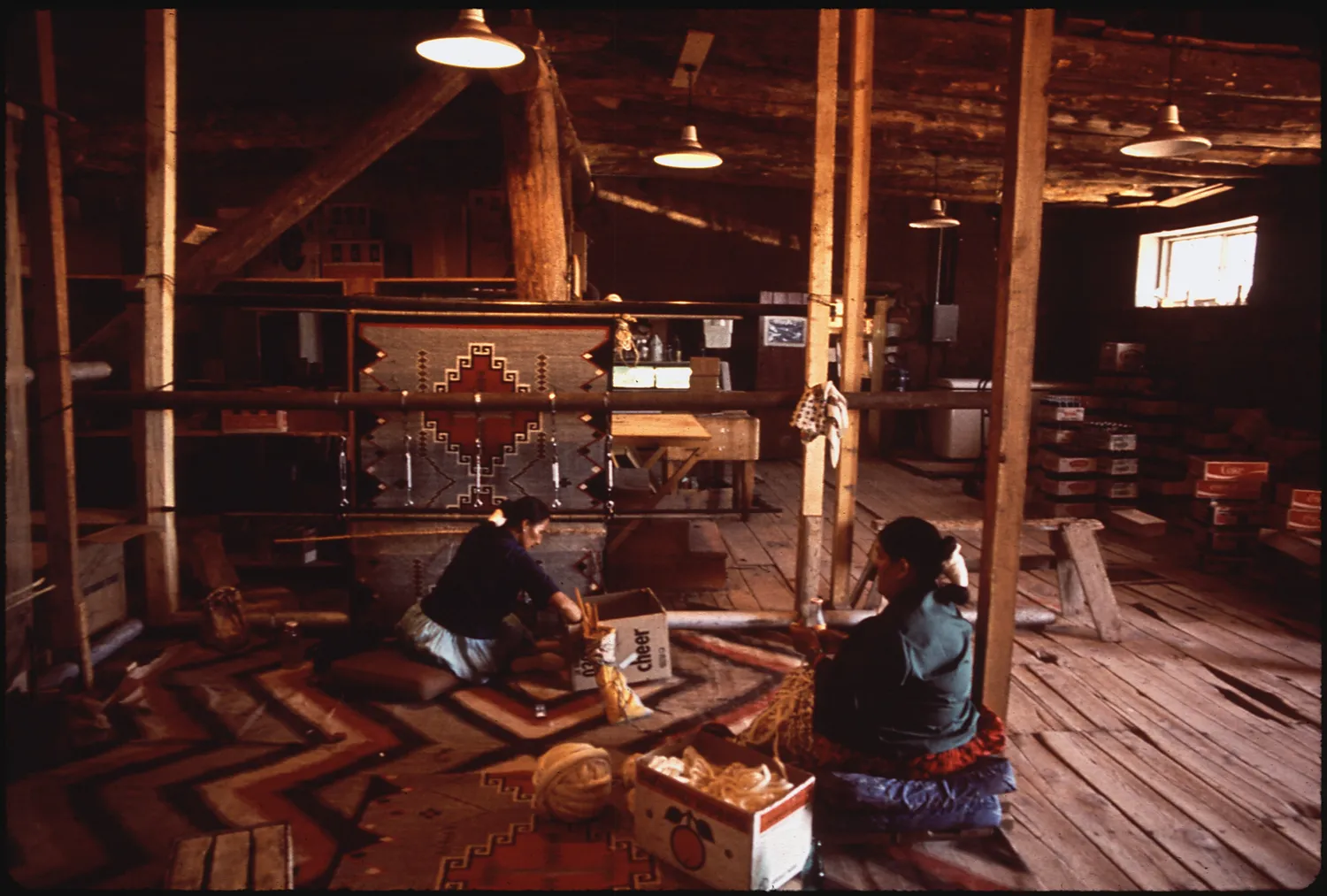
Navajo weavers at Hubbel Trading Post, by Terry Eiler / Wikimedia Commons
The Diné, known as the Navajo people, are renowned for their skillful weaving of textiles. Navajo weaving is not just a craft; it is a centuries-old tradition that combines art, technology, and cultural identity. Originating in the American Southwest, the Navajo developed unique weaving methods that produced blankets and rugs with complex geometric patterns. These designs are more than decoration—they carry stories, beliefs, and symbols important to the Navajo community.
Navajo weaving began to develop in the late 1600s after the Diné acquired sheep from Spanish colonists in present-day New Mexico and Arizona. The introduction of the Churro sheep provided high-quality wool, which became the foundation for Navajo textiles. Early examples, such as the famous "Chief's Blankets," date from around 1800 and were highly valued by many tribes and traders. These blankets were woven with strong, even threads and featured horizontal stripes and diamond patterns. Archaeological evidence, like preserved woven fragments and old looms found in the region, shows how Navajo techniques changed over time, adapting to new materials and outside influences.
The weaving process is both technical and creative. First, the wool is washed, carded, and spun into yarn. Weavers use upright looms, usually constructed from local wood, to create the textile. Each step, from dyeing the yarn with natural plants and minerals to weaving intricate patterns, requires patience and years of practice. Weaving is often taught within families, passed down from elders to younger generations. Designs are chosen carefully; for example, the step-pattern called "Spider Woman Cross" is said to honor a Navajo legend about a spiritual being who taught weaving to the people.
Textiles played a vital role in Navajo daily life and economy. Blankets and rugs were used for clothing, trade, and ceremonial purposes. Social status in the community could be shown through the quality and complexity of one’s textiles. Over time, as railroads and trading posts appeared in the late 1800s, Navajo weaving gained international recognition. Weavers began to create new styles for outside markets, while also preserving traditional techniques and symbols. Today, Navajo textiles remain a symbol of cultural continuity, identity, and resilience.
Navajo weaving is significant because it blends innovation, adaptation, and heritage. It connects the Diné to their ancestors and landscape, while also demonstrating their contributions to world history and technology. The art of weaving continues to thrive, reminding us how human creativity can shape—and be shaped by—geography, trade, and cultural exchange.
Interesting Fact: Some traditional Navajo weavers intentionally include a small flaw, called a "spirit line," in their rugs as a symbolic pathway for the weaver's spirit to exit the textile.
What is the Diné's other name?
NavajoApachePuebloAztec
Which animal's wool was most important?
Churro sheepGoatCowHorse
When did Navajo weaving gain world recognition?
Late 1800sEarly 1600s1950s1300s
Why are geometric patterns important?
They carry stories and beliefsThey are easy to makeThey are copied from other tribesThey use only circles
How did railroads affect Navajo weaving?
Brought weaving to wider marketsStopped weaving traditionsMade sheep less importantDestroyed patterns
What does a 'spirit line' symbolize?
Pathway for the weaver's spiritMistake in the rugA trade routeA border pattern
Navajo weavers used looms. (True/False)
TrueFalse
What does 'resilience' mean in the passage?
Keeping traditions aliveChanging colorsMaking new loomsTrading sheep
Perfect For:
👩🏫 Teachers
• Reading comprehension practice
• Auto-graded assessments
• Literacy skill development
👨👩👧👦 Parents
• Reading practice at home
• Comprehension improvement
• Educational reading time
🏠 Homeschoolers
• Reading curriculum support
• Independent reading practice
• Progress monitoring
Reading Features:
📖
Reading Passage
Engaging fiction or nonfiction text
❓
Comprehension Quiz
Auto-graded questions
📊
Instant Feedback
Immediate results and scoring
📄
Printable Version
Download for offline reading
🔊
Read Aloud
Voice-over with word highlighting
Reviews & Ratings
No reviews yet. Be the first to share your experience!
Related Content
Native American Respect for Nature
This engaging history reading passage explores Native American respect for nature, emphasizing the close relationship be...
D2.HIS.2.3-5D2.HIS.3.3-5RI.4.3RI.4.4
Native Americans and Slavery in Early America
This comprehensive U.S. history reading passage explores the complex relationship between Native Americans and slavery d...
D2.HIS.2.3-5D2.HIS.3.3-5RI.4.3RI.4.4
Native American Tribes Across America
This engaging history reading passage introduces students to Native American tribes across America, focusing on their da...
D2.HIS.1.3-5D2.HIS.2.3-5RI.4.1RI.4.2
Traditional Native American Clothing
This engaging history passage explores traditional Native American clothing and how it reflected the environment, values...
D2.HIS.2.3-5D2.HIS.3.3-5RI.4.3RI.4.4
Native American Basket Weaving
This passage examines the historical importance of basket weaving among Indigenous Americans, highlighting how different...
Native American Treaties
This passage examines early Native American treaties, agreements that were meant to establish peace and boundaries betwe...
D2.HIS.2.3-5D2.HIS.3.3-5RI.4.3RI.4.4
Native American Land Sales
This comprehensive history reading passage examines Native American land sales in U.S. history and asks students to cons...
D2.HIS.2.3-5D2.HIS.3.3-5RI.4.3RI.4.4
Disease and Native Americans
This engaging U.S. history reading passage explores the dramatic impact of European diseases on Native American populati...
D2.HIS.2.3-5D2.HIS.3.3-5RI.4.3RI.4.4
The Cherokee Nation: History and Culture
This reading passage explores the rich history and culture of the Cherokee Nation, one of the largest Native American tr...
D2.HIS.2.3-5D2.HIS.14.3-5RI.4.3RI.4.4RI.4.10
Columbian Exchange Impact on Native Americans
This passage examines the complex effects of the Columbian Exchange on Native Americans, analyzing the causes, consequen...
D2.HIS.2.3-5D2.HIS.3.3-5RI.4.3RI.4.4
Native American Allies in Colonial Wars
This passage examines the complex role of Native American nations as allies and adversaries during the colonial wars of ...
D2.HIS.2.3-5D2.HIS.3.3-5RI.4.3RI.4.4
Spanish Missions Impact on Native American
This reading passage explores the complex impact of Spanish missions on Native American culture in what is now the south...
D2.HIS.2.3-5D2.HIS.3.3-5RI.4.3RI.4.4
Native American Civilizations Before European Contact
This engaging U.S. History reading passage explores Native American civilizations before European contact, focusing on t...
D2.HIS.2.3-5D2.HIS.3.3-5RI.4.3RI.4.4
Moccasins: Soft Leather Footwear
This passage explores the history and significance of moccasins—a soft leather footwear invented by Native American nati...
Native vs European Land Views
This passage examines the contrasting beliefs about land between Native American societies and European settlers, highli...
D2.HIS.2.3-5D2.HIS.3.3-5RI.4.3RI.4.4
Native Americans in Revolutionary War
This engaging U.S. history reading passage explores how Native American nations made difficult decisions during the Amer...
D2.HIS.2.3-5D2.HIS.3.3-5RI.4.3RI.4.4
Pemmican: High-Energy Preserved Food
This engaging history reading passage explores the invention and significance of pemmican, a high-energy preserved food ...
Black History Month Word Search
RF.4.3RF.5.3L.4.4L.5.4
The Inuit Kayak
This passage examines the history and significance of the Inuit kayak, an advanced invention developed by Arctic peoples...
American History Word Search
Word search on American History Word Search! Vocabulary practice aligned to Common Core standards!