New England Farms vs. Southern Plantations
Interactive passage with audio narration, comprehension questions, and printable PDF.
By completing this purchase you agree to our Terms of Use and Privacy Policy. Your subscription renews automatically until you cancel. You can cancel anytime from your account settings. All sales are final and non-refundable. Digital content is available for download in your account immediately upon purchase.
What's included
Part of this bundle

New England Farms vs. Southern Plantations preview and details
About this printable New England Farms vs. Southern Plantations reading passage (Grades 3-5)
Sample passage and quiz from New England Farms vs. Southern Plantations
Reading passage and comprehension quiz preview
New England Farms vs. Southern Plantations
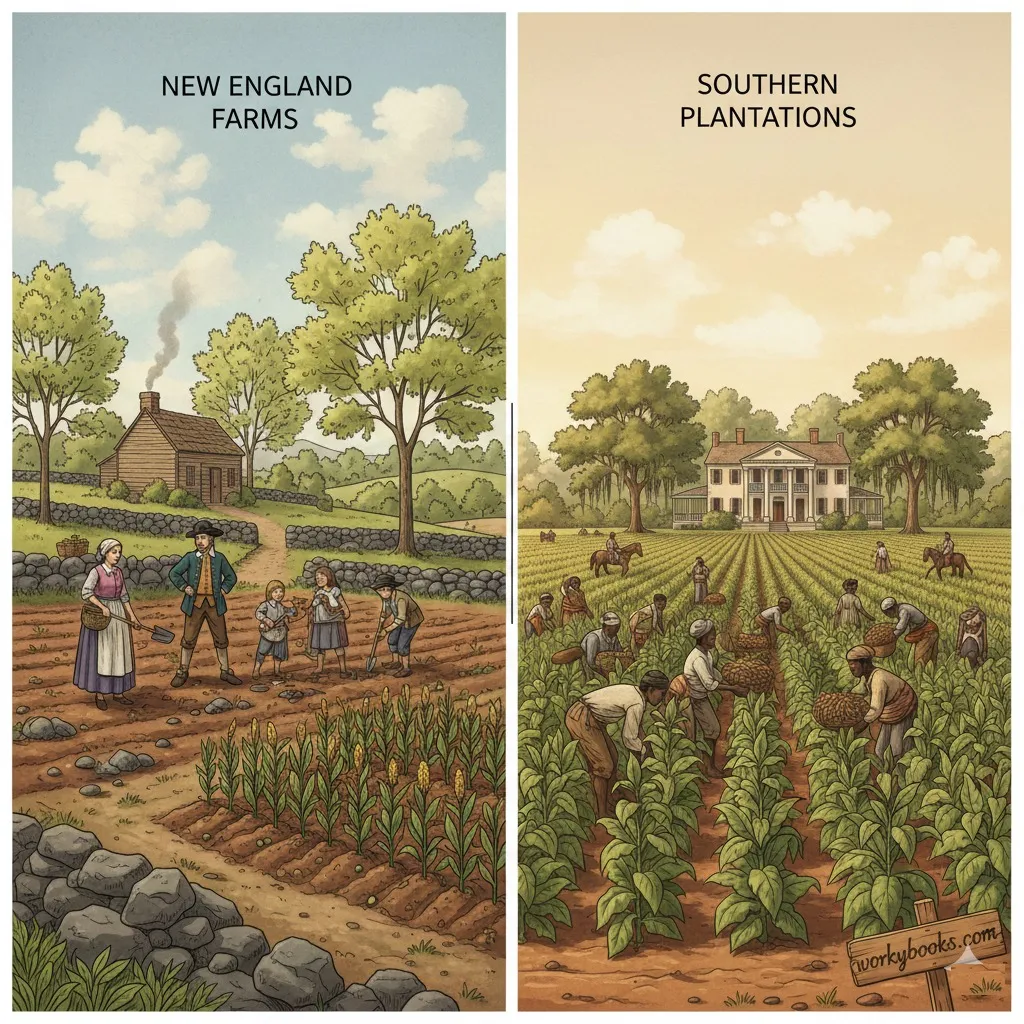
In Colonial America, there were big differences between New England farms and Southern plantations. The land, weather, and people’s needs shaped how these two regions developed. These differences helped create the unique history of each place.
New England is in the northern part of the colonies. Its land has rocky soil and many hills. The weather is cool, with long winters and short growing seasons. Because of this, New England farms were usually small. Families grew just enough food for themselves. They planted crops like corn, beans, and squash. They also raised cows, chickens, and sheep for milk, eggs, and wool. Everyone in the family worked together to help with chores. The small size of the farms meant they did not need many extra workers.
In contrast, the Southern colonies had warm weather and rich, flat soil. This land was perfect for growing crops that need a lot of space, like tobacco, rice, and cotton. Southern farms, called plantations, were very large. Plantation owners wanted to make money by selling these crops. To do this, they needed many workers. Sadly, they forced many enslaved Africans to work on the plantations. These workers planted, cared for, and harvested the crops. The hard work of enslaved people made the plantations successful and wealthy.
New England and the South used different labor systems. In New England, most farm work was done by family members or hired help. In the South, the plantation system depended on enslaved labor. This created major differences in daily life and in the wealth of each region.
Regional differences shaped the economy and culture. In New England, towns were close together, and people often worked together in their communities. In the South, plantations were spread out, and life was more divided between owners and workers. Over time, these differences led to different ways of thinking and living in the two regions.
New England’s rocky soil and cool weather made small family farms possible. The South’s rich, warm land made huge plantations possible. These natural features helped shape not just the land, but also the history and people of Colonial America.
Interesting Fact: Some New England farmers also earned money by trading fish, lumber, or handmade goods, while Southern plantations often traded their crops with Europe.
Comprehension quiz (8 questions)
1. What type of soil did New England have?
2. What were Southern farms called?
3. Who did most of the work on plantations?
4. Why were New England farms small?
5. How did Southern plantations make money?
6. What does 'labor system' mean?
7. Enslaved people worked on plantations. True or false?
8. Which word means 'a very large farm'?
Common Core standards for New England Farms vs. Southern Plantations
Explain events, procedures, ideas, or concepts in a historical, scientific, or technical text, including what happened and why, based on specific information in the text.
Determine the meaning of general academic and domain-specific words or phrases in a text relevant to a grade 4 topic or subject area.
Write informative/explanatory texts to examine a topic and convey ideas and information clearly.
Perfect for the way you teach
- Build comprehension skills
- Auto-graded quiz
- Differentiated reading
- Read together at home
- Improve fluency
- Quiet reading time
- Reading curriculum support
- Independent practice
- Track Lexile growth