New York and Philadelphia: Middle Colonies Cities
Interactive passage with audio narration, comprehension questions, and printable PDF.
By completing this purchase you agree to our Terms of Use and Privacy Policy. Your subscription renews automatically until you cancel. You can cancel anytime from your account settings. All sales are final and non-refundable. Digital content is available for download in your account immediately upon purchase.
What's included
Part of this bundle

New York and Philadelphia: Middle Colonies Cities preview and details
About this printable New York and Philadelphia: Middle Colonies Cities reading passage (Grades 3-5)
Sample passage and quiz from New York and Philadelphia: Middle Colonies Cities
Reading passage and comprehension quiz preview
Colonial New York Philadelphia
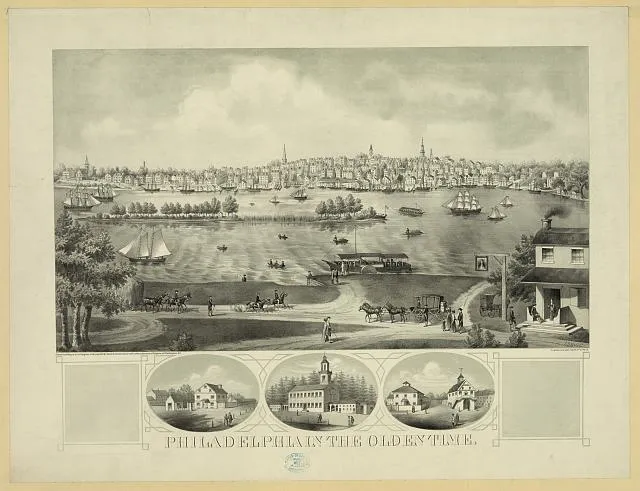
Source: Library of Congress - Wade, Frederick J.
Colonial New York and Philadelphia were the largest cities in the Middle Colonies. These cities grew quickly because they were located near rivers and the Atlantic Ocean. Their busy ports allowed ships to bring goods from Europe and send products from America to other countries. This trade helped both cities become important centers for business and new ideas.
People from many places came to New York and Philadelphia. Merchants from England, farmers from Germany, and families from Africa and other parts of Europe settled there. This mix of people made the cities very diverse. Each group brought its own languages, foods, and traditions. This diversity made city life interesting and sometimes challenging, but it also helped the cities grow stronger.
As the cities grew, new businesses opened. There were blacksmiths, bakers, printers, and shopkeepers. Ships filled with goods arrived daily at the docks. These goods included sugar, tea, cloth, and tools. In return, ships carried American wheat, corn, and lumber to faraway lands.
The busy streets of New York and Philadelphia were always full of people. Children played in the alleys while adults worked in shops or at the docks. The cities had markets where people could buy and sell food, clothes, and other goods. This made life different from the quiet farms that surrounded them.
Both cities became places where new ideas spread quickly. People talked about freedom, rights, and laws. Newspapers printed stories from around the world. Meetings in city halls and churches gave people a chance to share their thoughts. This helped inspire changes that would later shape America.
New York and Philadelphia also faced problems. Fires and diseases sometimes spread quickly in the crowded neighborhoods. But the people learned to work together to solve these problems. They built fire companies, hospitals, and schools to help their neighbors.
Over time, both cities became symbols of hope and opportunity. Many people believed they could build a better life there. The growth of New York and Philadelphia helped make the Middle Colonies some of the most important in early America.
Interesting Fact: Benjamin Franklin started the first public library in Philadelphia, helping many people learn and share new ideas.
Comprehension quiz (8 questions)
1. Which two cities are discussed?
2. Why did these cities grow quickly?
3. Who started the first public library?
4. What is a port used for?
5. How did diversity help the cities?
6. What problem did cities face?
7. Newspapers helped share ideas. True or false?
8. What does 'diverse' mean?
Common Core standards for New York and Philadelphia: Middle Colonies Cities
Explain events, procedures, ideas, or concepts in a historical, scientific, or technical text, including what happened and why, based on specific information in the text.
Determine the meaning of general academic and domain-specific words or phrases in a text relevant to a grade 4 topic or subject area.
Write informative/explanatory texts to examine a topic and convey ideas and information clearly.
Perfect for the way you teach
- Build comprehension skills
- Auto-graded quiz
- Differentiated reading
- Read together at home
- Improve fluency
- Quiet reading time
- Reading curriculum support
- Independent practice
- Track Lexile growth