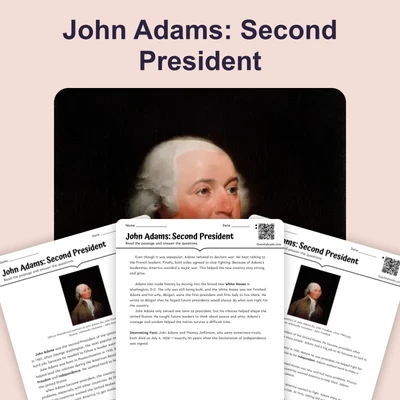
This learning resource is available in interactive and printable formats. The interactive worksheet can be played online and assigned to students. The Printable PDF version can be downloaded and printed for completion by hand.
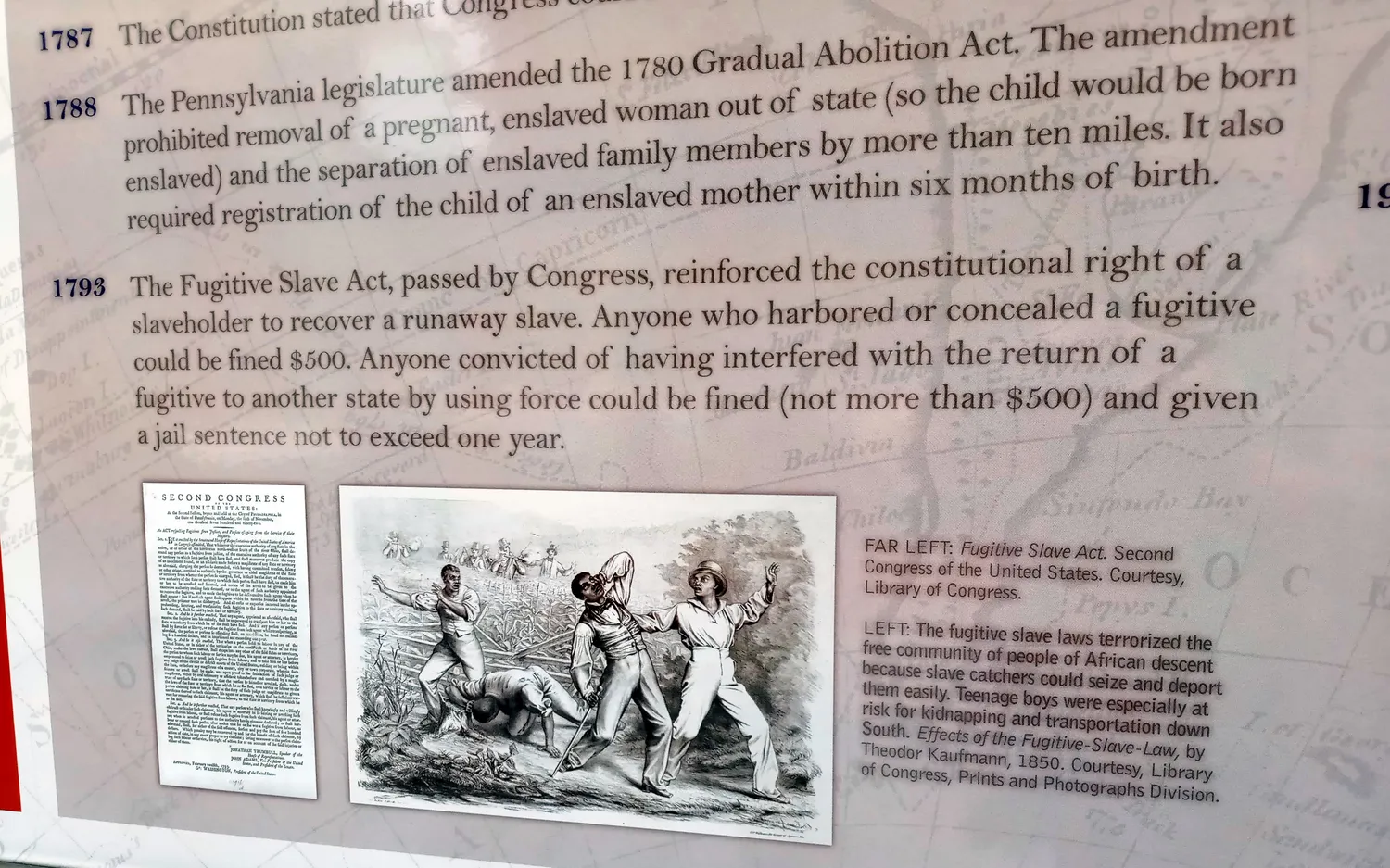
This engaging U.S. history reading passage explores the movement toward abolition in the Northern states following the Revolutionary War. Students will learn how the ideals of liberty and equality influenced states like Pennsylvania and Massachusetts to implement gradual emancipation laws and become free states. The passage examines the complexities and conflicts faced by lawmakers, the role of manumission, and the impact on African Americans who gained freedom. Aligned with HSS 5.6.6, 8.7.2, and CCSS.RI.6-8.1, this resource includes a rigorous main text, differentiated simplified version, glossary, Spanish translation, comprehension activities, writing prompts, and graphic organizers. It features a public domain historical image and is designed for use in classrooms, with read aloud audio support. The lesson builds critical thinking and analysis skills while meeting key history and literacy standards.
CONTENT PREVIEW
Expand content preview
Gradual Abolition, Fugitive Slave Act - President's House Site 2022-06 (76).jpg Source: Wikimedia Commons - Kreuz und quer
The end of the American Revolutionary War in 1783 brought new questions about freedom and equality to the newly formed United States. Many Northern states began to reconsider the institution of slavery. Revolutionary ideals, such as liberty and justice, inspired lawmakers and citizens to challenge the existence of slavery in their communities. However, the path to abolition was neither immediate nor simple.
States like Pennsylvania led the movement by passing the Act for the Gradual Abolition of Slavery in 1780. This law did not free all enslaved people at once. Instead, it established gradual emancipation, meaning children born to enslaved mothers after the law’s passage would eventually become free. This cautious approach aimed to balance the interests of slaveholders and those who demanded liberty for all, reflecting the social and economic complexities of the time.
Massachusetts took a different route. Influenced by court cases and the words of its new constitution, which stated that "all men are born free and equal," Massachusetts courts declared slavery illegal by the mid-1780s. This legal interpretation effectively turned the state into a free state. Vermont was also among the first to prohibit slavery in its constitution. Each state's approach demonstrated the diversity of solutions to the same problem: how to end slavery in a society built on both freedom and inequality.
Some states, like New York and New Jersey, followed with their own gradual emancipation laws in the 1790s and early 1800s. These laws often resulted in long waiting periods before enslaved people gained freedom. In some cases, enslaved individuals who served in the Revolutionary War were granted manumission, or legal release from slavery, as a reward for their service. This practice reflected the complicated relationship between ideals and reality; not every person was freed immediately, and many faced significant challenges even after gaining their freedom.
The process of abolition was shaped by both moral arguments and practical concerns. Many Northern citizens believed that slavery contradicted the revolutionary values for which Americans had fought. However, economic interests and racial prejudices slowed progress. Some people feared that a sudden end to slavery would disrupt the economy or lead to social unrest. The gradual approach allowed society to adjust, but it also delayed justice for many African Americans.
By the early 1800s, most Northern states had become free states, at least in law. The region became a center for the abolition movement, which sought to end slavery everywhere in the United States. Yet, the struggle for true equality continued, as free African Americans faced discrimination and limited rights. The changes in the North set the stage for national debates about slavery, contributing to tensions that would eventually lead to the Civil War.
Interesting Fact: The Pennsylvania law of 1780 was the first legislative act to begin abolishing slavery in any nation’s history, making it a landmark in the global fight for human rights.
Which state passed the first abolition law?
PennsylvaniaNew YorkMassachusettsVermont
What does 'gradual emancipation' mean?
Immediate freedom for allFreedom after a waiting periodFreedom only for someNo freedom at all
Which state ended slavery through court decisions?
MassachusettsPennsylvaniaNew JerseyNew York
Why did some oppose ending slavery quickly?
Feared economic problemsWanted more slavesDisliked the RevolutionFeared more wars
How did some enslaved people gain freedom?
By manumissionBy fighting in EuropeBy moving westBy buying land
What was a result of Northern abolition?
National debates on slavery grewSlavery grew in the NorthNo changes in the SouthRevolution continued
Most Northern states were free by 1800. True or false?
TrueFalse
What is 'abolition'?
Movement to end slaveryNew group of statesNew countryType of government
Perfect For:
👩🏫 Teachers
• Reading comprehension practice
• Auto-graded assessments
• Literacy skill development
👨👩👧👦 Parents
• Reading practice at home
• Comprehension improvement
• Educational reading time
🏠 Homeschoolers
• Reading curriculum support
• Independent reading practice
• Progress monitoring
Reading Features:
📖
Reading Passage
Engaging fiction or nonfiction text
❓
Comprehension Quiz
Auto-graded questions
📊
Instant Feedback
Immediate results and scoring
📄
Printable Version
Download for offline reading
🔊
Read Aloud
Voice-over with word highlighting
Reviews & Ratings
No reviews yet. Be the first to share your experience!
Related Content
Native American Tribes Across America
This engaging history reading passage introduces students to Native American tribes across America, focusing on their da...
D2.HIS.1.3-5D2.HIS.2.3-5RI.4.1RI.4.2
Teepees: Homes on the Great Plains
This engaging history reading passage introduces students to teepees, the unique homes of Native American tribes on the ...
D2.HIS.2.3-5D2.HIS.14.3-5RI.4.1RI.4.2RI.4.4
Traditional Native American Clothing
This engaging history passage explores traditional Native American clothing and how it reflected the environment, values...
D2.HIS.2.3-5D2.HIS.3.3-5RI.4.3RI.4.4
The Iroquois Confederacy: A System of Peace
This engaging U.S. History reading passage introduces students to the Iroquois Confederacy, a powerful alliance of Nativ...
D2.HIS.2.3-5D2.HIS.3.3-5RI.4.3RI.4.4
The Cherokee Nation: History and Culture
This reading passage explores the rich history and culture of the Cherokee Nation, one of the largest Native American tr...
D2.HIS.2.3-5D2.HIS.14.3-5RI.4.3RI.4.4RI.4.10
The Sioux: Warriors and Tribal Leaders
This history reading passage explores the Sioux Nation, focusing on their roles as warriors and tribal leaders. Students...
D2.HIS.1.3-5D2.HIS.2.3-5RI.4.1RI.4.3
Native American Respect for Nature
This engaging history reading passage explores Native American respect for nature, emphasizing the close relationship be...
D2.HIS.2.3-5D2.HIS.3.3-5RI.4.3RI.4.4
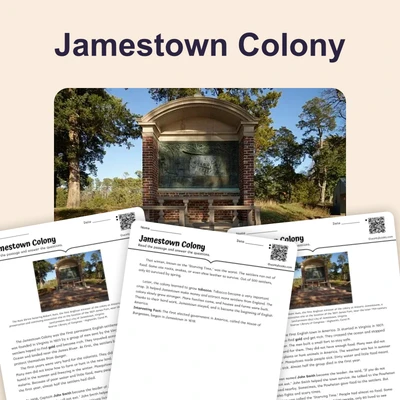
Jamestown: The First Permanent English Colony
This engaging history passage explores the founding of Jamestown, the first permanent English colony in America. Aligned...
D2.HIS.1.3-5D2.HIS.2.3-5RI.4.3RI.4.4
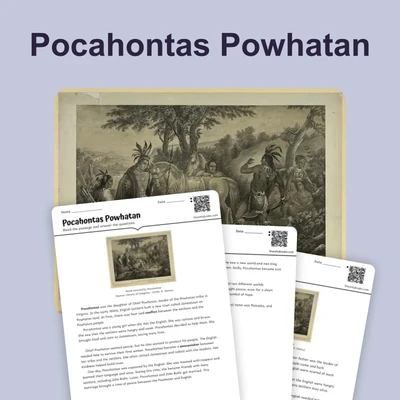
Pocahontas and the Powhatan People
This engaging reading passage explores the life of Pocahontas and the Powhatan people and their important role in early ...
D2.HIS.1.3-5D2.HIS.2.3-5RI.4.1RI.4.3
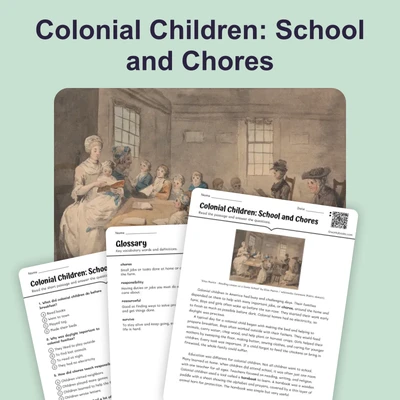
Colonial Children: School and Chores
This reading passage explores the daily lives of colonial children, focusing on their experiences at school and their ma...
D2.HIS.2.3-5D2.HIS.3.3-5RI.4.1RI.4.2RI.4.4
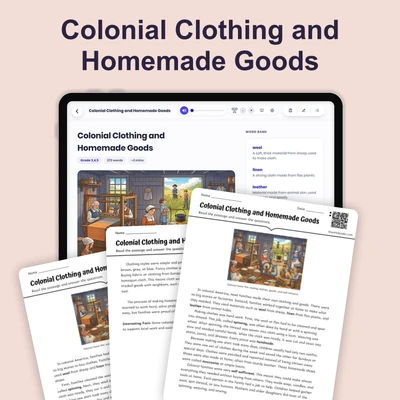
Colonial Clothing and Homemade Goods
This engaging U.S. history passage explores the daily life of early American colonists with a focus on colonial clothing...
D2.HIS.2.3-5RI.4.3RI.4.4
Colonial Jobs: Blacksmiths, Bakers, and Craftsmen
This engaging history reading passage explores the vital roles of blacksmiths, bakers, and craftsmen in colonial America...
D2.HIS.2.3-5D2.HIS.3.3-5RI.4.3RI.4.4
Colonial Towns and Village Life
This engaging history reading passage explores the daily life, work, and unity found in colonial towns and villages. Ali...
D2.HIS.1.3-5D2.HIS.2.3-5RI.4.3RI.4.4
Colonial Trade with England and Africa
This history reading passage explores colonial trade between the American colonies, England, and Africa, focusing on the...
D2.HIS.2.3-5D2.HIS.14.3-5RI.4.3RI.4.4
Benjamin Franklin: Printer, Inventor, and Leader
This history reading passage explores the life and achievements of Benjamin Franklin, one of America's most important ea...
D2.HIS.2.3-5D2.HIS.3.3-5RI.4.1RI.4.3
George Washington Leads the Army
This engaging history reading passage explores how George Washington bravely led the Continental Army during the America...
D2.HIS.1.3-5D2.HIS.2.3-5RI.4.3RI.4.4
Women and Children During the Revolutionary War
This reading passage explores the important roles women and children played during the Revolutionary War. Students will ...
D2.HIS.2.3-5RI.4.3RI.5.3
African Americans Fight for Freedom
This educational passage explores the brave and inspiring story of how African Americans fought for freedom in the Unite...
D2.HIS.2.3-5D2.HIS.3.3-5RI.4.3RI.4.4
The Battle of Yorktown Ends War
This engaging U.S. history reading passage explores the Battle of Yorktown, a key event that ended the American Revoluti...
D2.HIS.1.3-5D2.HIS.2.3-5RI.4.1RI.4.3
Loyalists vs. Patriots: Divided Families
This engaging U.S. history reading passage explores the division between Loyalists and Patriots during the American Revo...