NOW National Organization for Women Founded 1966 — Reading Comprehension
Rate this
Premium Resource
Present
Present in classroom. No work saved
Assign
Classroom with student accounts, Track progress
Quick Play
No student accounts, assign with a link
Grades
6
7
8
Standards
D2.HIS.2.3-5
D2.HIS.3.3-5
RI.4.3
RI.4.4
W.4.2
PRINT+DIGITAL RESOURCE
This learning resource is available in interactive and printable formats. The interactive worksheet can be played online and assigned to students. The Printable PDF version can be downloaded and printed for completion by hand.
This history passage examines the founding of the National Organization for Women (NOW) in 1966, a pivotal moment in the United States women's rights movement. Students will analyze the causes, motivations, and consequences of NOW's creation, exploring multiple perspectives and the complexities of fighting for gender equality. The passage integrates primary source evidence, including a quote from NOW's Statement of Purpose, and emphasizes disciplinary vocabulary such as 'discrimination,' 'activist,' and 'legislation.' Activities include a reading comprehension quiz, writing prompts, and a graphic organizer, all aligned with C3 Framework and Common Core standards. The resource features a timeline of key events, a glossary, and a Spanish translation, making it accessible and engaging for diverse learners. Read aloud audio is also provided to support comprehension and literacy skills.
CONTENT PREVIEW
Expand content preview
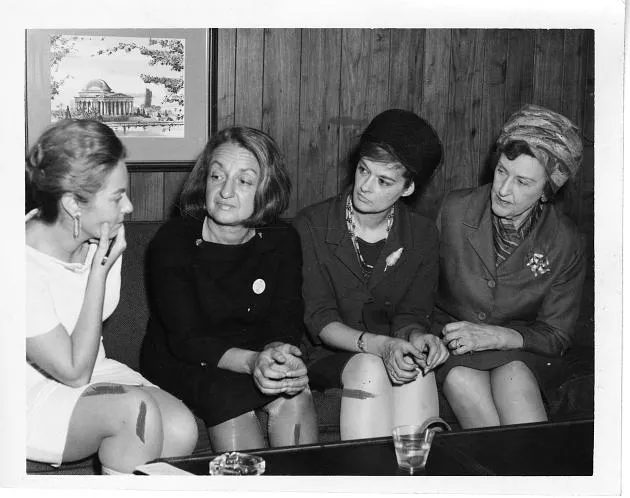
"NOW women" by Unknown author. Source: Wikimedia Commons (Public domain).
In 1966, the National Organization for Women (NOW) was founded to address the growing demand for equality between men and women in the United States. During the 1960s, women faced widespread discrimination in the workplace, schools, and the legal system. Traditional gender roles limited women's opportunities, and many jobs were closed to them. Even women who worked often received lower pay than men for the same work. The founders of NOW believed that these problems required organized efforts and advocacy to bring about real change.
The creation of NOW was inspired by frustration with slow progress on women's rights. Despite earlier advances, such as the right to vote in 1920, women still struggled for fairness in daily life. The leaders who organized NOW included Betty Friedan, Pauli Murray, and Shirley Chisholm. They saw that laws and policies were not always enforced equally. As a result, they wanted to build an organization that would use activism—including marches, legal challenges, and public campaigns—to demand justice for women.
NOW's early goals focused on several major challenges. First, they wanted equal employment opportunities. Many companies refused to hire women or promoted men more quickly. Second, NOW called for equal educational access. At the time, some schools and colleges limited or excluded women from certain programs. Third, NOW fought for changes in the law, including better protection against workplace discrimination and support for working mothers. Members argued that these changes would benefit not only women but also society as a whole.
However, the struggle for equality was not simple. Some Americans resisted these changes, fearing they would disrupt traditional family roles or challenge existing beliefs. NOW's leaders used a variety of strategies to win support. They wrote articles, organized rallies, and lobbied lawmakers. These efforts helped raise public awareness and pressured the government to enforce civil rights laws more fairly. Over time, NOW's advocacy led to important achievements, such as Title IX in 1972, which banned sex discrimination in education.
Despite progress, the movement faced internal debates over priorities and strategies. Some members wanted to focus on legal reforms, while others pushed for broader social changes. This diversity of ideas sometimes caused disagreements, yet it also made the organization stronger and more responsive. The history of NOW shows how social change often requires both unity and respectful debate.
Today, NOW continues to stand for women's rights in the United States. Its legacy includes not only major legal victories but also a wider understanding of gender equality and the importance of activism. The story of NOW is a reminder that progress depends on determination, organized effort, and the willingness to challenge injustice.
Interesting Fact: In 1968, NOW became the first large national group to call for the legalization of abortion, showing its commitment to addressing controversial women's health issues.
When was NOW founded?
1966197219201980
Who was NOT a founder of NOW?
Shirley ChisholmPauli MurrayBetty FriedanSusan B. Anthony
What law did NOW help influence in 1972?
Title IXCivil Rights ActEmancipation ProclamationVoting Rights Act
Why was NOW created?
To fight for women's equalityTo support only menTo end World War IITo start new schools
How did NOW try to create change?
Activism and legal challengesBuilding factoriesSelling productsStaying silent
Why did some people resist NOW's goals?
Feared changes to family rolesWanted more lawsSupported women's rightsLiked new policies
NOW no longer exists today. True or false?
TrueFalse
What does 'advocacy' mean in the passage?
Supporting a causeIgnoring a problemBuilding housesTraveling abroad
Perfect For:
👩🏫 Teachers
• Reading comprehension practice
• Auto-graded assessments
• Literacy skill development
👨👩👧👦 Parents
• Reading practice at home
• Comprehension improvement
• Educational reading time
🏠 Homeschoolers
• Reading curriculum support
• Independent reading practice
• Progress monitoring
Reading Features:
📖
Reading Passage
Engaging fiction or nonfiction text
❓
Comprehension Quiz
Auto-graded questions
📊
Instant Feedback
Immediate results and scoring
📄
Printable Version
Download for offline reading
🔊
Read Aloud
Voice-over with word highlighting
Reviews & Ratings
No reviews yet. Be the first to share your experience!
Related Content
Native American Tribes Across America
This engaging history reading passage introduces students to Native American tribes across America, focusing on their da...
D2.HIS.1.3-5D2.HIS.2.3-5RI.4.1RI.4.2
Teepees: Homes on the Great Plains
This engaging history reading passage introduces students to teepees, the unique homes of Native American tribes on the ...
D2.HIS.2.3-5D2.HIS.14.3-5RI.4.1RI.4.2RI.4.4
Traditional Native American Clothing
This engaging history passage explores traditional Native American clothing and how it reflected the environment, values...
D2.HIS.2.3-5D2.HIS.3.3-5RI.4.3RI.4.4
The Iroquois Confederacy: A System of Peace
This engaging U.S. History reading passage introduces students to the Iroquois Confederacy, a powerful alliance of Nativ...
D2.HIS.2.3-5D2.HIS.3.3-5RI.4.3RI.4.4
The Cherokee Nation: History and Culture
This reading passage explores the rich history and culture of the Cherokee Nation, one of the largest Native American tr...
D2.HIS.2.3-5D2.HIS.14.3-5RI.4.3RI.4.4RI.4.10
The Sioux: Warriors and Tribal Leaders
This history reading passage explores the Sioux Nation, focusing on their roles as warriors and tribal leaders. Students...
D2.HIS.1.3-5D2.HIS.2.3-5RI.4.1RI.4.3
Native American Respect for Nature
This engaging history reading passage explores Native American respect for nature, emphasizing the close relationship be...
D2.HIS.2.3-5D2.HIS.3.3-5RI.4.3RI.4.4
Jamestown: The First Permanent English Colony
This engaging history passage explores the founding of Jamestown, the first permanent English colony in America. Aligned...
D2.HIS.1.3-5D2.HIS.2.3-5RI.4.3RI.4.4
Pocahontas and the Powhatan People
This engaging reading passage explores the life of Pocahontas and the Powhatan people and their important role in early ...
D2.HIS.1.3-5D2.HIS.2.3-5RI.4.1RI.4.3
Colonial Children: School and Chores
This reading passage explores the daily lives of colonial children, focusing on their experiences at school and their ma...
D2.HIS.2.3-5D2.HIS.3.3-5RI.4.1RI.4.2RI.4.4
Colonial Clothing and Homemade Goods
This engaging U.S. history passage explores the daily life of early American colonists with a focus on colonial clothing...
D2.HIS.2.3-5RI.4.3RI.4.4
Colonial Jobs: Blacksmiths, Bakers, and Craftsmen
This engaging history reading passage explores the vital roles of blacksmiths, bakers, and craftsmen in colonial America...
D2.HIS.2.3-5D2.HIS.3.3-5RI.4.3RI.4.4
Colonial Towns and Village Life
This engaging history reading passage explores the daily life, work, and unity found in colonial towns and villages. Ali...
D2.HIS.1.3-5D2.HIS.2.3-5RI.4.3RI.4.4
Colonial Trade with England and Africa
This history reading passage explores colonial trade between the American colonies, England, and Africa, focusing on the...
D2.HIS.2.3-5D2.HIS.14.3-5RI.4.3RI.4.4
Benjamin Franklin: Printer, Inventor, and Leader
This history reading passage explores the life and achievements of Benjamin Franklin, one of America's most important ea...
D2.HIS.2.3-5D2.HIS.3.3-5RI.4.1RI.4.3
George Washington Leads the Army
This engaging history reading passage explores how George Washington bravely led the Continental Army during the America...
D2.HIS.1.3-5D2.HIS.2.3-5RI.4.3RI.4.4
Women and Children During the Revolutionary War
This reading passage explores the important roles women and children played during the Revolutionary War. Students will ...
D2.HIS.2.3-5RI.4.3RI.5.3
African Americans Fight for Freedom
This educational passage explores the brave and inspiring story of how African Americans fought for freedom in the Unite...
D2.HIS.2.3-5D2.HIS.3.3-5RI.4.3RI.4.4
The Battle of Yorktown Ends War
This engaging U.S. history reading passage explores the Battle of Yorktown, a key event that ended the American Revoluti...
D2.HIS.1.3-5D2.HIS.2.3-5RI.4.1RI.4.3
Loyalists vs. Patriots: Divided Families
This engaging U.S. history reading passage explores the division between Loyalists and Patriots during the American Revo...