Ohio Valley Conflict
Interactive passage with audio narration, comprehension questions, and printable PDF.
By completing this purchase you agree to our Terms of Use and Privacy Policy. Your subscription renews automatically until you cancel. You can cancel anytime from your account settings. All sales are final and non-refundable. Digital content is available for download in your account immediately upon purchase.
What's included
Ohio Valley Conflict preview and details
About this printable Ohio Valley Conflict reading passage (Grades 6-8)
Sample passage and quiz from Ohio Valley Conflict
Reading passage and comprehension quiz preview
Ohio Valley Conflict
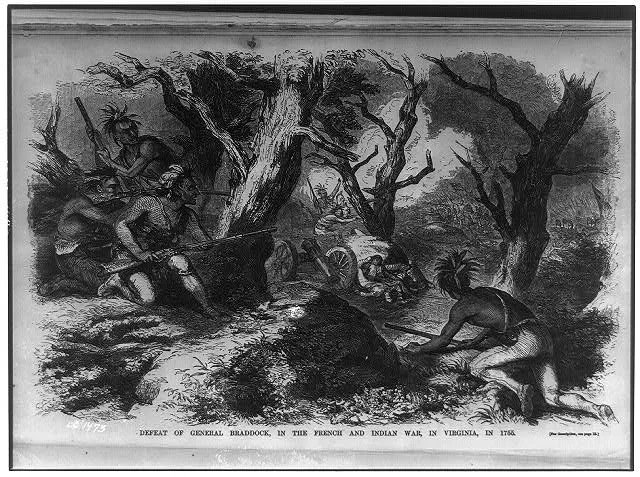
Source: Library of Congress - Andrew, John, 1815-1870
The Ohio Valley became a critical battleground during the 1700s as Native nations, France, and Britain all sought control over this strategic territory. The lush forests and river systems of the region made it an important resource for trade, especially the fur trade. Native American groups such as the Shawnee, Delaware, and Miami had lived in and managed these lands for generations, using their deep knowledge to thrive on the frontier. However, European powers saw the Ohio Valley as key to their own expansion and economic ambitions.
Competition for the region grew intense as both France and Britain established forts and trading posts. The French built forts to protect their trade routes and alliances with Native nations, while the British encouraged colonists to move west, sometimes ignoring agreements made with Native peoples. This overlapping claim to the same land created constant tension. The Native nations, recognizing the threat to their independence, sometimes made alliances with one European power to balance against the other, but these relationships were complex and frequently shifted based on changing circumstances.
One major problem was the different ways each group understood land ownership and territory. Native nations often viewed land as a shared resource, while Europeans wanted permanent possession. As British settlers pushed further into the Ohio Valley, Native American leaders protested and attempted to defend their homelands. The British, motivated by the promise of new land and profits from the fur trade, rarely respected these boundaries. France, too, was determined to maintain its influence in North America by keeping control of the region.
As competition escalated, small conflicts and misunderstandings turned violent. Skirmishes erupted, and alliances shifted rapidly. In 1754, the conflict boiled over with clashes near present-day Pittsburgh, marking the beginning of the French and Indian War. This war was part of a much larger global struggle between Britain and France. Native nations faced difficult choices, as siding with either European power could mean losing their lands or autonomy. Many tried to protect their interests by negotiating or fighting when necessary.
The outcome of the Ohio Valley Conflict had lasting consequences. When Britain eventually emerged victorious in the French and Indian War, it claimed vast new territories. However, Native nations continued to resist British control, leading to further struggles on the American frontier. The conflict in the Ohio Valley not only shaped the outcome of the war but also set the stage for future disputes over land, sovereignty, and identity in North America.
Interesting Fact: The Ohio Valley was so important that George Washington gained his early military experience there, helping spark the French and Indian War.
Comprehension quiz (8 questions)
1. Who lived in the Ohio Valley first?
2. Which two European powers fought over the region?
3. What economic activity was important in the Ohio Valley?
4. Why did Native nations form alliances?
5. What caused tension in the Ohio Valley?
6. What happened in 1754?
7. Native nations always sided with Britain. True or false?
8. What does 'strategic' mean in the passage?
Common Core standards for Ohio Valley Conflict
Explain events, procedures, ideas, or concepts in a historical, scientific, or technical text, including what happened and why, based on specific information in the text.
Determine the meaning of general academic and domain-specific words or phrases in a text relevant to a grade 4 topic or subject area.
Write informative/explanatory texts to examine a topic and convey ideas and information clearly.
Perfect for the way you teach
- Build comprehension skills
- Auto-graded quiz
- Differentiated reading
- Read together at home
- Improve fluency
- Quiet reading time
- Reading curriculum support
- Independent practice
- Track Lexile growth