Pacific Northwest Totem Poles — Reading Comprehension
Rate this
Premium Resource
Present
Present in classroom. No work saved
Assign
Classroom with student accounts, Track progress
Quick Play
No student accounts, assign with a link
Grades
5
6
7
8
PRINT+DIGITAL RESOURCE
This learning resource is available in interactive and printable formats. The interactive worksheet can be played online and assigned to students. The Printable PDF version can be downloaded and printed for completion by hand.
This detailed passage explores the history and significance of Pacific Northwest totem poles, monumental cedar carvings created by the Haida, Tlingit, and Kwakwaka'wakw peoples. Students will learn how these poles served as artistic masterpieces, cultural records, and symbols of social hierarchy. The passage highlights archaeological and historical evidence, including primary sources and specific examples of famous totem poles. Activities include a reading comprehension quiz, writing prompts, graphic organizers, and a Spanish translation. The lesson is aligned with CA HSS 6.1 and 6-8.RH.1-4 standards, making it ideal for world and U.S. history classes. This resource also features a read aloud audio option, a glossary of key terms, and opportunities for students to analyze historical causation, continuity, and the impact of geography on cultural development.
CONTENT PREVIEW
Expand content preview
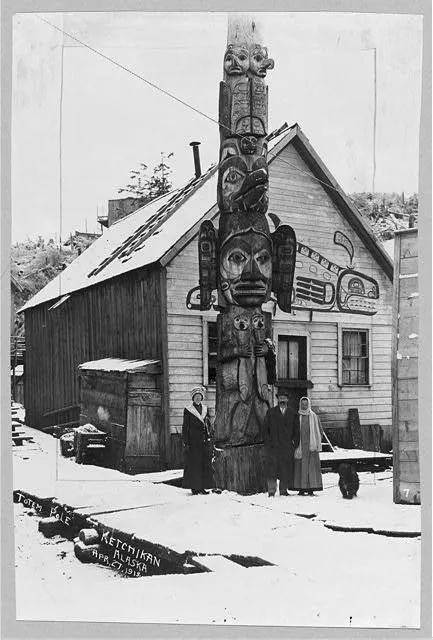
"Totem pole, April 27 1913" / Library of Congress.
Totem poles are monumental wooden carvings created by Indigenous peoples of the Pacific Northwest Coast, such as the Haida, Tlingit, and Kwakwaka'wakw. These towering poles, some reaching over 60 feet tall, are carved from giant cedar trees that grow in the region’s temperate rainforests. The tradition of totem pole carving dates back at least several centuries, with the oldest surviving poles from the early 1800s. However, oral histories and archaeological evidence suggest the practice may be much older.
The main purpose of a totem pole is to serve as a visual record of a family, clan, or community’s history. Carvers often include crests—symbolic animal figures like eagles, bears, ravens, and wolves—that represent the identity and ancestry of the group. For example, a clan with a Raven as its crest might feature a large raven figure near the top of its pole. Some poles commemorate important events, tell legendary stories, or mark the lives of respected leaders. The Potlatch ceremony, a complex social event among Pacific Northwest peoples, often included the raising of a new totem pole to honor a chief or significant occasion.
The construction of a totem pole required great craftsmanship and teamwork. Skilled carvers used tools made from stone, bone, and later iron after European contact. Each figure on a pole was carefully designed and painted, with shapes and colors holding specific meanings. For example, black often symbolized power or prestige, while red indicated blood or life. Primary sources, such as the journals of explorer George Vancouver in the late 1700s, describe seeing tall wooden poles standing outside clan houses in Haida villages. Archaeological findings of early carving tools and cedar shavings at sites like Ninstints (Haida Gwaii) provide further evidence of the long tradition of pole carving.
Totem poles also reflected the social hierarchy of Pacific Northwest societies. Only families with certain rights, wealth, or status could commission a pole. The stories and crests displayed were not just decorative but signaled the clan’s heritage and position within the community. Over time, the art of totem pole carving continued despite challenges such as colonization, bans on Potlatch ceremonies, and changes in materials and techniques. Today, modern Indigenous artists are reviving and preserving these traditions, using them to teach about cultural continuity and pride.
Totem poles are significant because they combine art, history, and social meaning. They demonstrate the ingenuity of Indigenous peoples in adapting to their environment and using natural resources. These monumental carvings remain important cultural symbols and sources of identity for Native communities across the Pacific Northwest.
Totem poles show how societies keep their history alive through art and storytelling, connecting to broader themes of cultural heritage and historical recordkeeping.
Interesting Fact: The tallest totem pole in the world, carved by Mungo Martin and others in 1955, stands over 173 feet tall in Alert Bay, British Columbia.
Which tree is used for totem poles?
CedarPineOakMaple
Who are the Haida?
Indigenous people of Pacific NorthwestEuropean explorersEarly American settlersSouth American tribe
Which color symbolized power on totem poles?
BlackGreenYellowBlue
Why were crests carved on poles?
Show family identityMark territoryScare animalsFor climbing
What is a Potlatch?
Ceremonial feastType of danceKind of toolAnimal figure
What effect did colonization have?
Created challenges to carvingMade poles tallerIncreased cedar forestsChanged animal crests
Totem poles are only found in Europe. True or false?
TrueFalse
What does 'hierarchy' mean?
System of status or rankArt of paintingWood carving skillFamily celebration
Perfect For:
👩🏫 Teachers
• Reading comprehension practice
• Auto-graded assessments
• Literacy skill development
👨👩👧👦 Parents
• Reading practice at home
• Comprehension improvement
• Educational reading time
🏠 Homeschoolers
• Reading curriculum support
• Independent reading practice
• Progress monitoring
Reading Features:
📖
Reading Passage
Engaging fiction or nonfiction text
❓
Comprehension Quiz
Auto-graded questions
📊
Instant Feedback
Immediate results and scoring
📄
Printable Version
Download for offline reading
🔊
Read Aloud
Voice-over with word highlighting
Reviews & Ratings
No reviews yet. Be the first to share your experience!
Related Content
Native American Respect for Nature
This engaging history reading passage explores Native American respect for nature, emphasizing the close relationship be...
D2.HIS.2.3-5D2.HIS.3.3-5RI.4.3RI.4.4
Native Americans and Slavery in Early America
This comprehensive U.S. history reading passage explores the complex relationship between Native Americans and slavery d...
D2.HIS.2.3-5D2.HIS.3.3-5RI.4.3RI.4.4
Native American Tribes Across America
This engaging history reading passage introduces students to Native American tribes across America, focusing on their da...
D2.HIS.1.3-5D2.HIS.2.3-5RI.4.1RI.4.2
Traditional Native American Clothing
This engaging history passage explores traditional Native American clothing and how it reflected the environment, values...
D2.HIS.2.3-5D2.HIS.3.3-5RI.4.3RI.4.4
Native American Basket Weaving
This passage examines the historical importance of basket weaving among Indigenous Americans, highlighting how different...
Native American Treaties
This passage examines early Native American treaties, agreements that were meant to establish peace and boundaries betwe...
D2.HIS.2.3-5D2.HIS.3.3-5RI.4.3RI.4.4
Native American Land Sales
This comprehensive history reading passage examines Native American land sales in U.S. history and asks students to cons...
D2.HIS.2.3-5D2.HIS.3.3-5RI.4.3RI.4.4
Disease and Native Americans
This engaging U.S. history reading passage explores the dramatic impact of European diseases on Native American populati...
D2.HIS.2.3-5D2.HIS.3.3-5RI.4.3RI.4.4
The Cherokee Nation: History and Culture
This reading passage explores the rich history and culture of the Cherokee Nation, one of the largest Native American tr...
D2.HIS.2.3-5D2.HIS.14.3-5RI.4.3RI.4.4RI.4.10
Columbian Exchange Impact on Native Americans
This passage examines the complex effects of the Columbian Exchange on Native Americans, analyzing the causes, consequen...
D2.HIS.2.3-5D2.HIS.3.3-5RI.4.3RI.4.4
Native American Allies in Colonial Wars
This passage examines the complex role of Native American nations as allies and adversaries during the colonial wars of ...
D2.HIS.2.3-5D2.HIS.3.3-5RI.4.3RI.4.4
Spanish Missions Impact on Native American
This reading passage explores the complex impact of Spanish missions on Native American culture in what is now the south...
D2.HIS.2.3-5D2.HIS.3.3-5RI.4.3RI.4.4
Native American Civilizations Before European Contact
This engaging U.S. History reading passage explores Native American civilizations before European contact, focusing on t...
D2.HIS.2.3-5D2.HIS.3.3-5RI.4.3RI.4.4
Moccasins: Soft Leather Footwear
This passage explores the history and significance of moccasins—a soft leather footwear invented by Native American nati...
Native vs European Land Views
This passage examines the contrasting beliefs about land between Native American societies and European settlers, highli...
D2.HIS.2.3-5D2.HIS.3.3-5RI.4.3RI.4.4
Native Americans in Revolutionary War
This engaging U.S. history reading passage explores how Native American nations made difficult decisions during the Amer...
D2.HIS.2.3-5D2.HIS.3.3-5RI.4.3RI.4.4
Pemmican: High-Energy Preserved Food
This engaging history reading passage explores the invention and significance of pemmican, a high-energy preserved food ...
Black History Month Word Search
RF.4.3RF.5.3L.4.4L.5.4
The Inuit Kayak
This passage examines the history and significance of the Inuit kayak, an advanced invention developed by Arctic peoples...
American History Word Search
Word search on American History Word Search! Vocabulary practice aligned to Common Core standards!