This learning resource is available in interactive and printable formats. The interactive worksheet can be played online and assigned to students. The Printable PDF version can be downloaded and printed for completion by hand.
This comprehensive passage explores the Plains tipis, the portable cone-shaped homes ingeniously designed by Native American nations of the Great Plains. Students will learn about the sophisticated geometric construction methods, the cultural and historical context of the tipi, and its adaptation to the harsh environment of the Plains. The passage provides specific archaeological and primary source examples, explains the impact of geography on daily life, and highlights the significance of the tipi in social structure and survival. Also included are a glossary of academic vocabulary, differentiated and Spanish versions of the passage, comprehension questions, writing activities, and graphic organizers. Aligned to CA HSS 6.1, 7.1, 8.1 and CCSS RI.6-8.1, RI.6-8.4, this resource offers read aloud audio and a Spanish translation to support all learners. Keywords: tipi, Native American, Plains, portable homes, buffalo hide, nomadic, world history.
CONTENT PREVIEW
Expand content preview
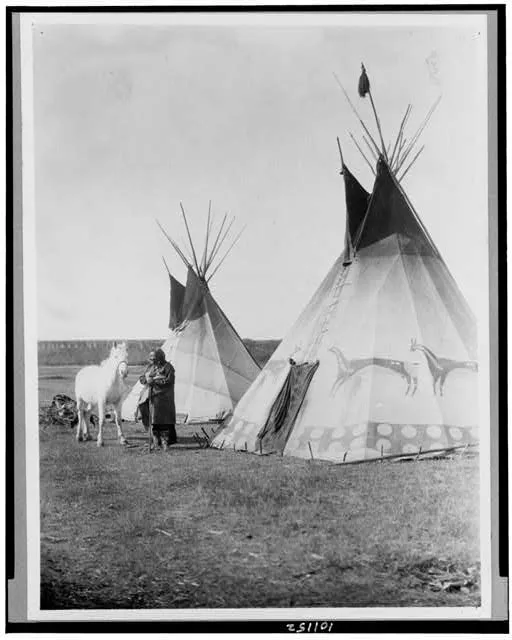
"Blackfoot tipis" by Wanamaker, Rodman, 1863-1928 / Library of Congress.
The tipi was a portable, cone-shaped home used by many Native American nations of the North American Great Plains, such as the Lakota, Cheyenne, and Blackfeet. The environment of the Plains, with its wide grasslands, harsh winters, and dry summers, demanded innovative housing. Tipis were a sophisticated solution, featuring a framework of long wooden poles covered with buffalo hides. They could be quickly set up or taken down, making them perfect for the nomadic lifestyle of tribes who followed buffalo herds for survival.
The construction of a tipi required careful engineering and mathematical knowledge. Tribes selected straight, lightweight lodgepole pines for the frame. Usually, 12 to 20 poles, each about 15 to 18 feet long, were arranged in a circle, with their tops bound together to form the cone. This created a sturdy structure able to withstand fierce Plains winds. Buffalo hides were sewn together using sinew (animal tendons) and wrapped around the frame. An opening at the top allowed smoke from the central fire to escape, while flaps could be adjusted to control airflow and temperature.
Tipis were not just practical; they also held deep symbolic meaning. The circle represented the cycles of nature and community. Designs painted on the hides often told family stories or honored spiritual beliefs. According to accounts recorded by George Catlin in the 1830s and archaeological studies, tipis varied in size, but some could house families of eight to twelve people. The Blackfeet, for example, were known to decorate their tipis with geometric patterns, and some Lakota tipis featured painted visions seen during important rituals.
Living in tipis influenced daily life and social structure. Women were primarily responsible for building, maintaining, and moving the tipis, demonstrating their vital role in family and community. The ability to move homes quickly allowed Plains nations to efficiently follow the migrations of buffalo, which were central to their economy and diet. This connection between mobility and survival is supported by archaeological evidence of tipi rings—stone circles left behind after tipis were moved—found across the Plains, especially in present-day Montana, Wyoming, and Alberta.
Over time, the use of tipis continued even as horses, introduced to the Plains in the 1700s, increased the speed and range of travel. The tipi's design proved so effective in the Plains environment that it remained in use well into the late 19th century, even after changes brought by European contact. Today, tipis are recognized as a remarkable example of human adaptation and ingenuity.
The study of Plains tipis connects to broader themes of world history, such as how geography shapes technology and daily life, and how humans use innovation to adapt to their environment.
Interesting Fact: Some tipis had painted "rain flaps" that could be adjusted to block wind and rain—an early example of climate control in portable homes!
What shape is a tipi?
Cone-shapedSquareRoundRectangle
Which animal's hide covered tipis?
BuffaloHorseBearDeer
Who mainly built and moved tipis?
WomenChildrenEldersMen
Why did Plains people need portable homes?
To follow buffalo herdsTo hide from enemiesFor religious reasonsFor farming
How did the tipi's design help in harsh weather?
Withstood strong windsKept out all animalsCreated extra spaceGrew food inside
What does 'symbolic' mean in the passage?
Stands for an ideaMade of metalVery largeBelongs to one person
Tipi rings are evidence of old campsites.
TrueFalse
What is 'innovation'?
A new idea or inventionA kind of animalA type of foodA tradition
Perfect For:
👩🏫 Teachers
• Reading comprehension practice
• Auto-graded assessments
• Literacy skill development
👨👩👧👦 Parents
• Reading practice at home
• Comprehension improvement
• Educational reading time
🏠 Homeschoolers
• Reading curriculum support
• Independent reading practice
• Progress monitoring
Reading Features:
📖
Reading Passage
Engaging fiction or nonfiction text
❓
Comprehension Quiz
Auto-graded questions
📊
Instant Feedback
Immediate results and scoring
📄
Printable Version
Download for offline reading
🔊
Read Aloud
Voice-over with word highlighting
Reviews & Ratings
No reviews yet. Be the first to share your experience!
Related Content
Native American Respect for Nature
This engaging history reading passage explores Native American respect for nature, emphasizing the close relationship be...
D2.HIS.2.3-5D2.HIS.3.3-5RI.4.3RI.4.4
Native Americans and Slavery in Early America
This comprehensive U.S. history reading passage explores the complex relationship between Native Americans and slavery d...
D2.HIS.2.3-5D2.HIS.3.3-5RI.4.3RI.4.4
Native American Tribes Across America
This engaging history reading passage introduces students to Native American tribes across America, focusing on their da...
D2.HIS.1.3-5D2.HIS.2.3-5RI.4.1RI.4.2
Traditional Native American Clothing
This engaging history passage explores traditional Native American clothing and how it reflected the environment, values...
D2.HIS.2.3-5D2.HIS.3.3-5RI.4.3RI.4.4
Native American Basket Weaving
This passage examines the historical importance of basket weaving among Indigenous Americans, highlighting how different...
Native American Treaties
This passage examines early Native American treaties, agreements that were meant to establish peace and boundaries betwe...
D2.HIS.2.3-5D2.HIS.3.3-5RI.4.3RI.4.4
Native American Land Sales
This comprehensive history reading passage examines Native American land sales in U.S. history and asks students to cons...
D2.HIS.2.3-5D2.HIS.3.3-5RI.4.3RI.4.4
Disease and Native Americans
This engaging U.S. history reading passage explores the dramatic impact of European diseases on Native American populati...
D2.HIS.2.3-5D2.HIS.3.3-5RI.4.3RI.4.4
The Cherokee Nation: History and Culture
This reading passage explores the rich history and culture of the Cherokee Nation, one of the largest Native American tr...
D2.HIS.2.3-5D2.HIS.14.3-5RI.4.3RI.4.4RI.4.10
Columbian Exchange Impact on Native Americans
This passage examines the complex effects of the Columbian Exchange on Native Americans, analyzing the causes, consequen...
D2.HIS.2.3-5D2.HIS.3.3-5RI.4.3RI.4.4
Native American Allies in Colonial Wars
This passage examines the complex role of Native American nations as allies and adversaries during the colonial wars of ...
D2.HIS.2.3-5D2.HIS.3.3-5RI.4.3RI.4.4
Spanish Missions Impact on Native American
This reading passage explores the complex impact of Spanish missions on Native American culture in what is now the south...
D2.HIS.2.3-5D2.HIS.3.3-5RI.4.3RI.4.4
Native American Civilizations Before European Contact
This engaging U.S. History reading passage explores Native American civilizations before European contact, focusing on t...
D2.HIS.2.3-5D2.HIS.3.3-5RI.4.3RI.4.4
Moccasins: Soft Leather Footwear
This passage explores the history and significance of moccasins—a soft leather footwear invented by Native American nati...
Native vs European Land Views
This passage examines the contrasting beliefs about land between Native American societies and European settlers, highli...
D2.HIS.2.3-5D2.HIS.3.3-5RI.4.3RI.4.4
Native Americans in Revolutionary War
This engaging U.S. history reading passage explores how Native American nations made difficult decisions during the Amer...
D2.HIS.2.3-5D2.HIS.3.3-5RI.4.3RI.4.4
Pemmican: High-Energy Preserved Food
This engaging history reading passage explores the invention and significance of pemmican, a high-energy preserved food ...
Black History Month Word Search
RF.4.3RF.5.3L.4.4L.5.4
The Inuit Kayak
This passage examines the history and significance of the Inuit kayak, an advanced invention developed by Arctic peoples...
American History Word Search
Word search on American History Word Search! Vocabulary practice aligned to Common Core standards!